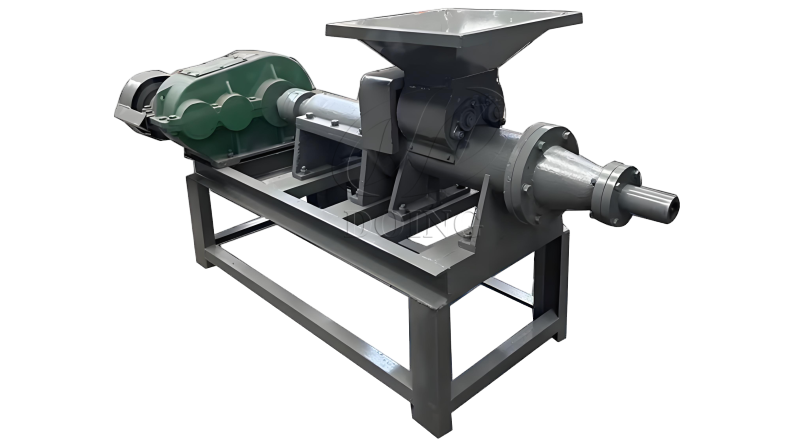

Coconut shells are high in lignin, which is exactly what makes them a good choice for producing high-quality activated carbon. Before you can turn coconut shells into charcoal, you need to go through carbonization. In a coconut shell pyrolysis plant, getting good results means controlling each stage of the coconut shell carbonization process carefully. Here is a step-by-step look at how the coconut shell carbonization process works in a coconut shell pyrolysis machine.
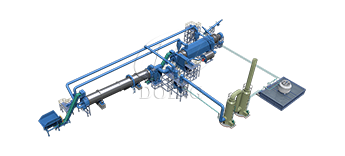
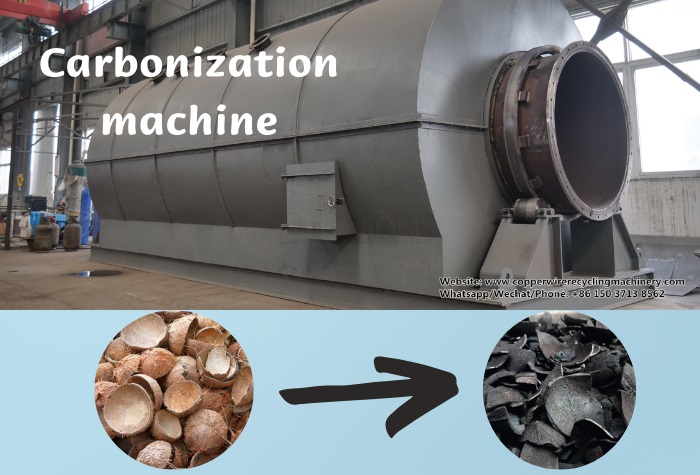 DOING coconut shell carbonization machine
Pretreatment Stage: Ensuring Uniform Particle Size and Optimal Moisture
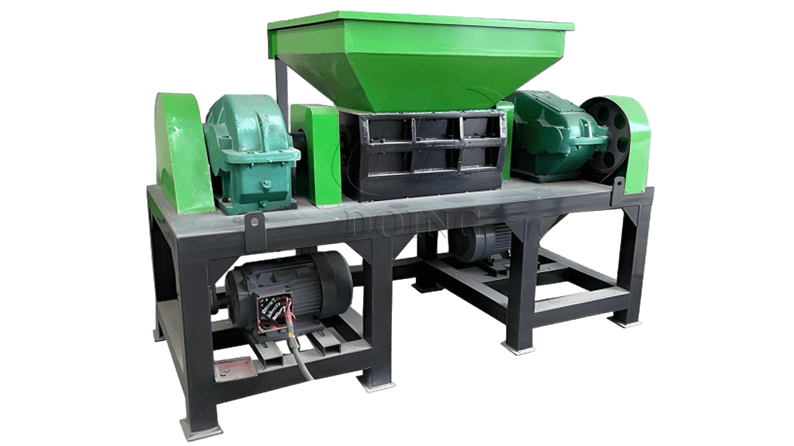
Coconut shells undergo rigorous pretreatment before entering the coconut shell pyrolysis machine. Crushing the coconut shells into 2-3 cm particles increases the heating surface and ensures uniform carbonization. Drying is crucial, maintaining the moisture content below 15% through natural air drying or a dryer. Excessive moisture content consumes significant heat during the coconut shell carbonization process, prolonging the carbonization process and potentially resulting in incomplete carbonization. Excessive moisture content can easily lead to localized overheating, affecting the pore structure of the coconut shell charcoal. Pretreated coconut shell particles are uniform in texture and have an appropriate moisture content, enabling an efficient coconut shell carbonization process.
Drying Stage: Removes Residual Moisture and Initiates Pyrolysis Preparation
After entering the coconut shell pyrolysis machine, pretreated coconut shell pellets first enter the drying stage. The furnace temperature gradually rises to 100-150°C. Within this range, the remaining free and bound water in the coconut shell is completely evaporated, and the pellets gradually become dry and brittle. While no significant chemical changes occur during the drying stage, it creates favorable conditions for the subsequent pyrolysis reaction and reduces moisture interference with the coconut shell carbonization process. The coconut shell pyrolysis machine utilizes a constant temperature control system to ensure a stable temperature during the drying stage, preventing local overheating that could cause premature decomposition of the coconut shell pellets and preparing them for the next stage.
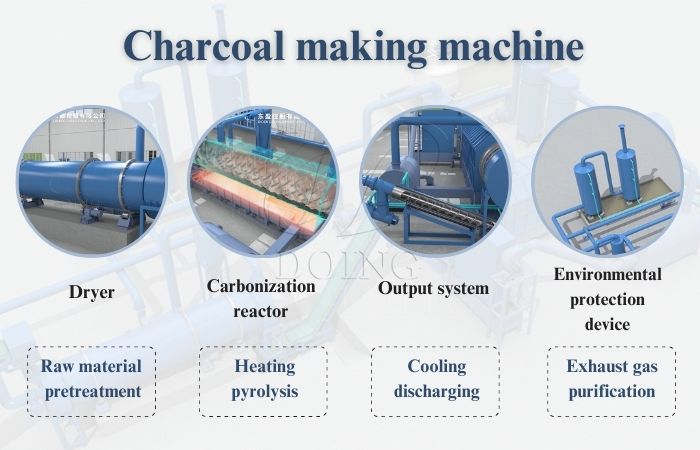 Coconut shell charcoal production process
Pyrolysis Stage: Decomposition of Organic Components and Release of Volatile Substances
When the furnace temperature reaches 200-500°C, the coconut shell enters the pyrolysis stage, the most critical step in the coconut shell carbonization process. In an oxygen-deficient environment, organic components in the coconut shell, such as cellulose, hemicellulose, and lignin, begin to decompose, releasing volatile substances such as methane, hydrogen, and tar. As the temperature rises, volatiles are continuously released, gradually destroying the structure of the coconut shell particles and changing their color from tan to dark brown. The DOING coconut shell pyrolysis machine's gas recovery system collects these volatiles, purifies them, and partially reuses them as fuel, achieving energy recycling and reducing both energy consumption and pollution.
Carbonization Stage: Carbon Concentration and Formation of a Stable Structure
As the temperature continues to rise to 500-800°C, the coconut shell enters the advanced carbonization stage. During this stage, the remaining organic components further decompose and recombine, reducing non-carbon elements (such as hydrogen and oxygen) while gradually concentrating carbon, ultimately forming a coconut shell charcoal with a stable structure. The temperature and duration of the carbonization stage directly impact the quality of the coconut shell charcoal: too low a temperature results in incomplete carbonization and low carbon content; too high a temperature causes excessive shrinkage and reduced porosity. The coconut shell pyrolysis machine's intelligent temperature control system maintains a temperature tolerance within ±5°C, precisely controlling the carbonization rhythm and ensuring a hard, well-developed, and adsorbent coconut shell charcoal.
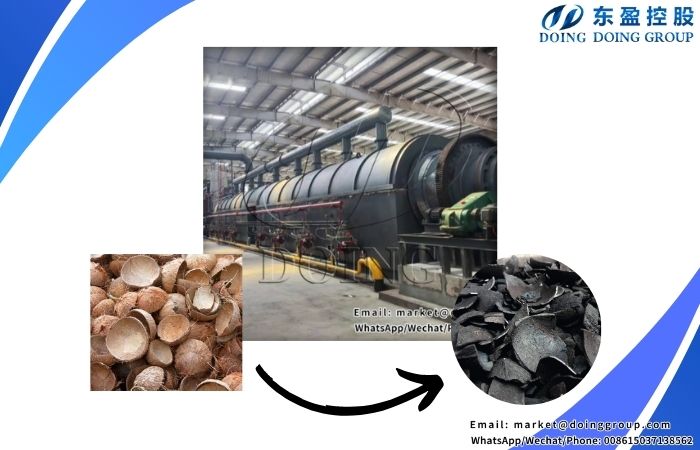 DOING coconut shell pyrolysis plant
Cooling Stage: Stabilizing the Carbon to Ensure Safety and Quality
After carbonization, the high-temperature coconut shell charcoal enters a cooling stage. The coconut shell pyrolysis machine utilizes a water cooling system, circulating water to lower the carbon temperature to below 50°C, preventing oxidation or combustion from contact with air. The cooled coconut shell charcoal is then processed into various particle sizes for applications in water purification, air purification, and food decolorization. This completes the coconut shell carbonization process.
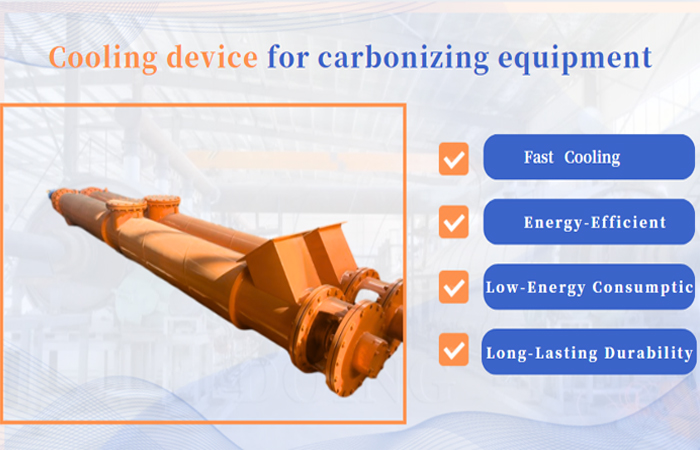 Cooling device for carbonizing equipment
The coconut shell carbonization process in a coconut shell pyrolysis machine is closely linked, and precise control of each stage is crucial. DOING's continuous coconut shell pyrolysis machines, with their superior temperature control technology, efficient gas recovery system, and automated processes, ensure a stable and efficient coconut shell carbonization process, producing high-quality coconut shell charcoal. With DOING's equipment, it becomes straightforward to turn coconut shells into charcoal on a continuous basis.
Southeast Asia, India, and Sri Lanka have large amounts of waste coconut shells. This makes those regions a good place to set up coconut shell pyrolysis machines, since the raw material is cheap and easy to get. If you are planning a project to turn coconut shells into charcoal, get in touch with us. We provide full technical support, from project planning and equipment selection to installation and worker training.

Please provide us with project information as much as possible.