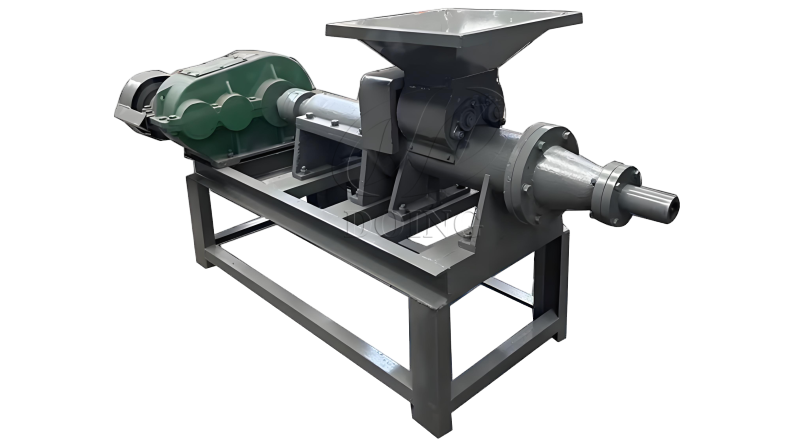

If you're making charcoal, whether from coconut shells, rice husks, sawdust, or other biomass, the end product's quality can vary a lot depending on how you run the process. People often think charcoal is just burnt wood, but good charcoal—especially for BBQ or industrial use—needs to meet clear standards. Buyers want consistent heat, low ash content charcoal, and long burning time. So as a manufacturer, knowing how to judge charcoal quality evaluation helps you improve your production and sell better. Below are the main points to look at.
1. Combustion performance
The first thing most users care about is how well the charcoal burns. Good charcoal should light without too much trouble, but more importantly, it needs to give off steady heat and keep burning for a while. The key here is fixed carbon content. Higher fixed carbon means more heat and less smoke. On the other hand, if the charcoal has too much volatile matter, it will catch fire fast but burn out quickly, which is not ideal for things like grilling. A good product usually has low volatiles and a high calorific value, so you get reliable performance from start to finish.
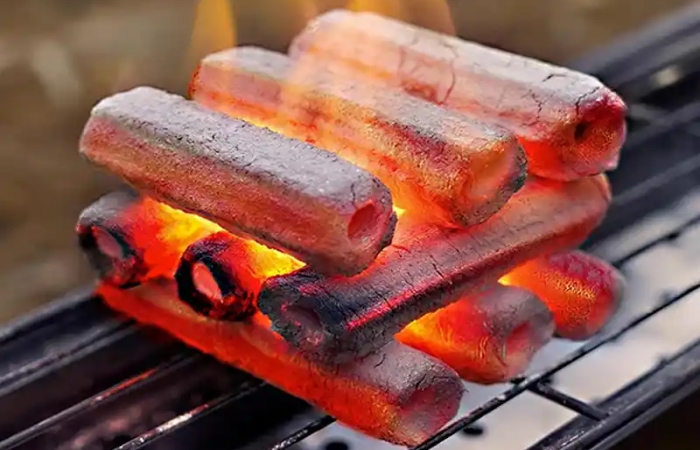 Charcoal with high fixed carbon content
2. Physical and chemical purity
Purity matters a lot, especially if your charcoal is exported or used for food contact. Ash content is a big one—low ash content charcoal means less leftover powder after burning, and that's what most buyers look for. Moisture is another simple but important point. Wet charcoal not only burns poorly but also sparks and smokes more. Sulfur content is also checked in some markets because high sulfur affects air quality. Cleaner charcoal always wins trust from serious buyers.
3. Physical performance
This is about how well the charcoal holds up during packing, shipping, and use. If the charcoal breaks easily into small pieces or dust, it's hard to sell. Good charcoal should have enough mechanical strength to survive transport without falling apart. Density also plays a role. Denser charcoal usually burns longer and feels heavier in hand, which many customers see as a sign of quality. So the physical form matters just as much as the chemical makeup.
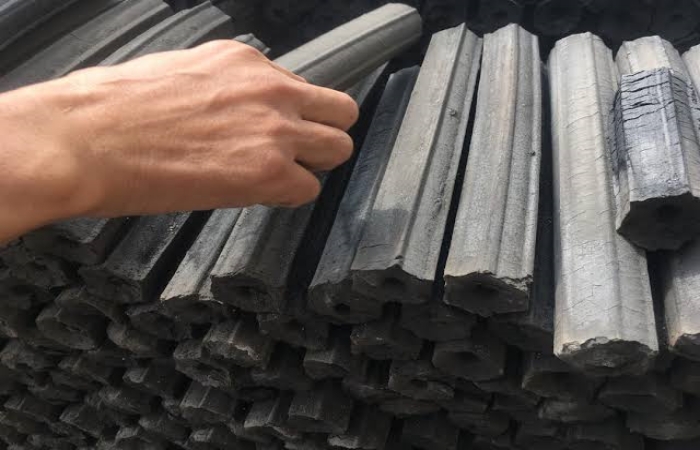 High-quality biomass charcoal
4. Environmental and safety standards
These are becoming more important every year. Some buyers test for heavy metals or other unwanted substances, especially when charcoal is used for cooking. Nobody wants harmful elements ending up in food or air. Modern production also needs to control emissions. A responsible maker keeps an eye on things like smoke release and possible pollutants. Meeting these standards is not just about passing tests—it's about making sure your product is safe and acceptable in different markets around the world.
5. Charcoal Stability
High-quality charcoal content does not necessarily mean maximum yield, but rather achieving the optimal combination of charcoal stability and functionality for the target application (e.g., soil amendment vs. combustion). We need to select appropriate raw material types and pyrolysis processes (especially temperature, heating rate, and residence time) based on the intended application of the charcoal product to achieve suitable charcoal stability. For example, the EU EBC and China NY/T 3672-2020 standards require biochar to have a residence time >100 years and prohibit fossil-derived raw materials. Biochar produced by pyrolysis of agricultural and forestry waste under anaerobic conditions at 300–700°C contains stable aromatic charcoal with a residence time of hundreds to thousands of years; high-temperature charcoal (>500°C) from wood-based raw materials (such as sawdust and bamboo shavings) is more stable than straw or sludge charcoal.
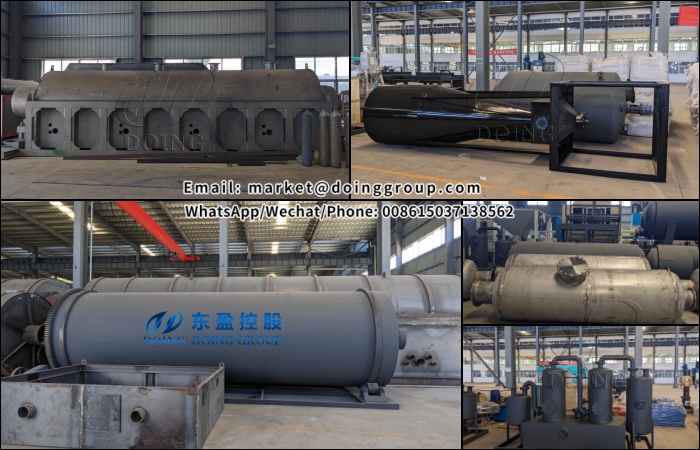 DOING biomass carbonization machine
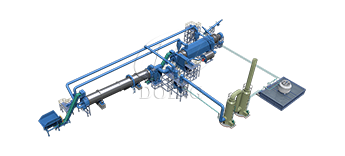
At HENAN DOING Company, we design our biomass carbonization machine with these charcoal evalution quality points in mind. For example, our double-drum design with heated air flow uses an inner drum for pre-heating and moisture removal, while the outer drum handles the main pyrolysis. This setup reduces the water‑gas reaction, so you lose less fixed carbon. For most materials, we recommend a 50‑minute cycle at 500°C, which gives enough time for full carbonization and helps both the charcoal yield and fixed carbon content stay high. Our PLC automatic control system can monitor and adjust all parameters in real time, allowing this continuous charcoal production line to be run without a large team. The exhaust treatment system helps meet global environmental standards. Also, the combustible gas produced during carbonization can be reused as fuel, which lowers your energy and operating costs. The low ash content charcoal you get meets the good quality standards we talked about above. Plus, DOING biomass carbonization machine offers both continuous and batch type machines, with different capacities and configurations, so you can choose what fits your material and output needs.
If you want to know more about which charcoal carbonization machine and technical process suits your raw materials or target market, just let us know. Send us an inquiry with your daily processing capacity and the biomass you plan to use. Our team can walk you through the options and help you get the right setup for better charcoal quality.

Please provide us with project information as much as possible.