
For a long time, coconut shells were regarded as a difficult waste disposal challenge. Today, however—thanks to the perfect synergy between their unique natural composition and the processes used to produce biochar—coconut shell waste transformed into valuable resources has become a practical reality. In short, the inherent advantages of coconut shells—namely their hardness, density, and high carbon content—can be transformed through processes such as pyrolysis into a high-end carbon material of exceptional performance and broad applicability.
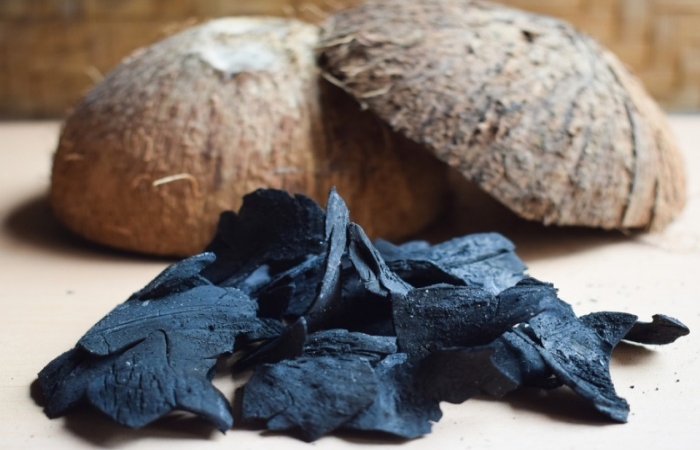 Producing biochar from coconut shells
Natural Properties Suited for Biochar
Coconut shells have a few specific traits that make them stand out as biochar raw material. They offer high carbon content with low ash—usually between 2% and 4%. That means the final coconut shell biochar product is cleaner and more consistent, which matters in applications where purity counts. The shells are also naturally hard and dense, so the coconut shell biochar produced tends to hold its shape well and creates less dust during handling and shipping. Plus, the internal structure of the shell provides a good foundation for developing useful porosity later during heat treatment.
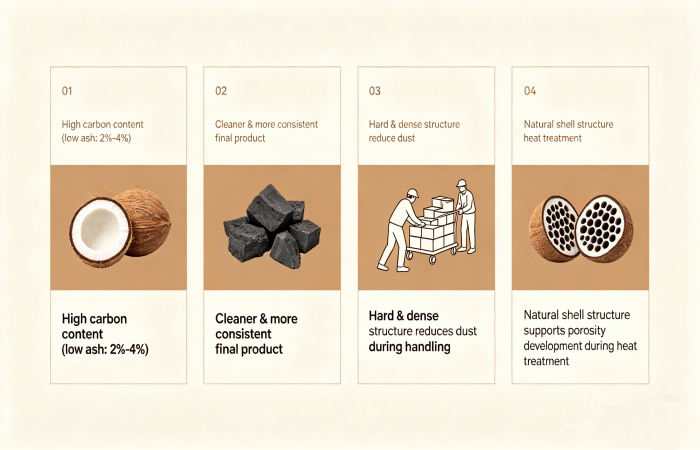 The advantages of coconut shells for biochar production
Pyrolysis—Turning Coconut Shell Waste Matter into Welth
By subjecting coconut shells to high-temperature pyrolysis(carbonization process) under oxygen-deficient conditions, we can effectively "turn waste matter into wealth," transforming them into coconut shell biochar. This process serves to amplify the material's superior characteristics—a benefit derived from the coconut shell's exceptionally high carbon content. Following high-temperature pyrolysis, the elemental carbon content of the resulting biochar can reach as high as 93%, signifying a product of exceptional purity and stability.
Furthermore, the process capitalizes on the coconut shell's immense specific surface area: through pyrolysis-induced activation, the biochar develops an intricately structured internal network of micropores and mesopores, resulting in a specific surface area (BET) ranging from 89 to 202 m²/g. The higher this value, the greater the material's adsorption capacity—enabling it to capture a larger volume of pollutant molecules.
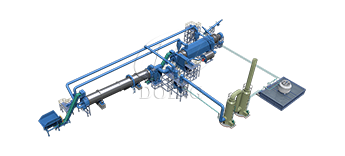
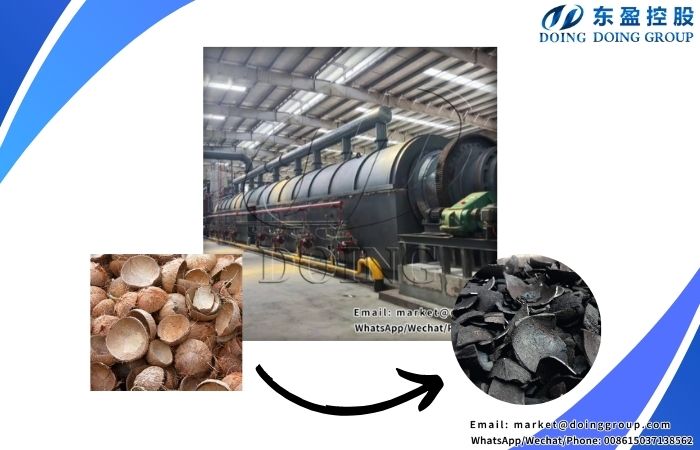 Biomass pyrolysis and carbonization equipment
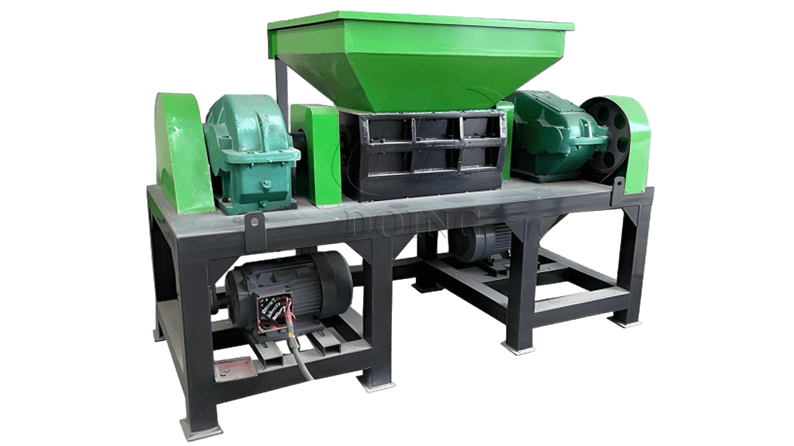
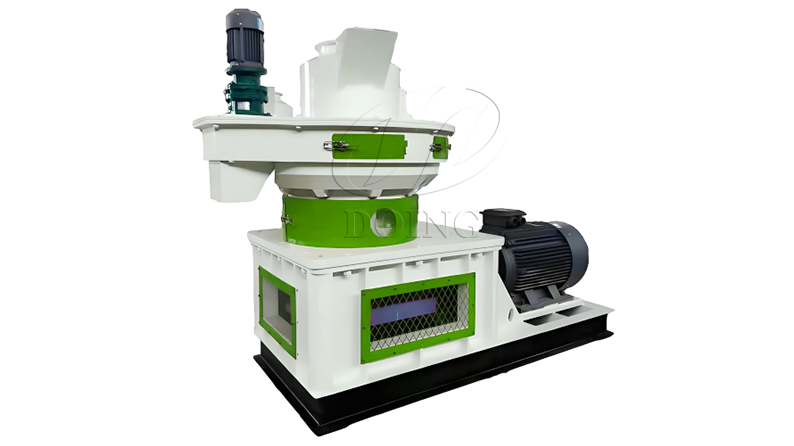
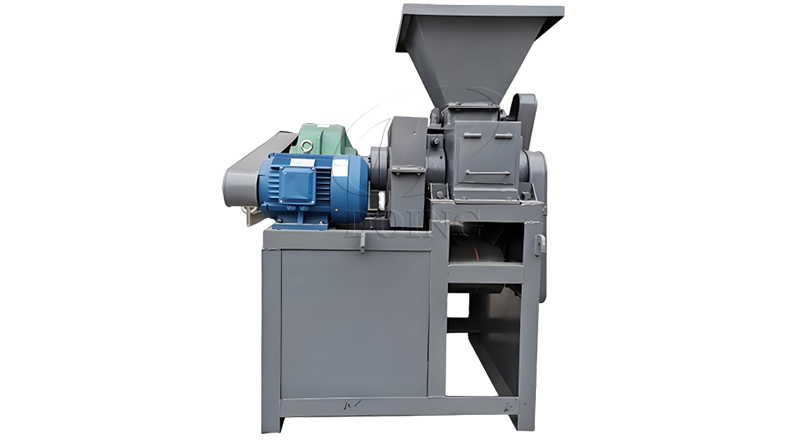
HENAN DOING's biomass pyrolysis system is capable of efficiently converting biomass and various organic wastes within a high-temperature, oxygen-free environment. Through this process, not only are waste coconut shells transformed into high-value biochar, but syngas and thermal energy are simultaneously produced—thereby facilitating resource recycling and generating significant economic and environmental benefits.
Practical Uses for Coconut Shell Biochar
After carbonization, coconut shell biochar finds its way into several established markets. Water filtration is a major one, both for drinking water and industrial wastewater treatment, where that high surface area helps trap organic compounds and chlorine. In agriculture, the coconut shell biochar is added to soil to improve moisture retention and provide a stable habitat for beneficial microorganisms. Other applications include gold recovery operations, where the material's hardness and purity reduce losses during processing, and use as a reliable carbon source in specialized industrial settings. And based on the market research, the raw coconut shell charcoal prices were around USD 1,000-USD2800 per MT.
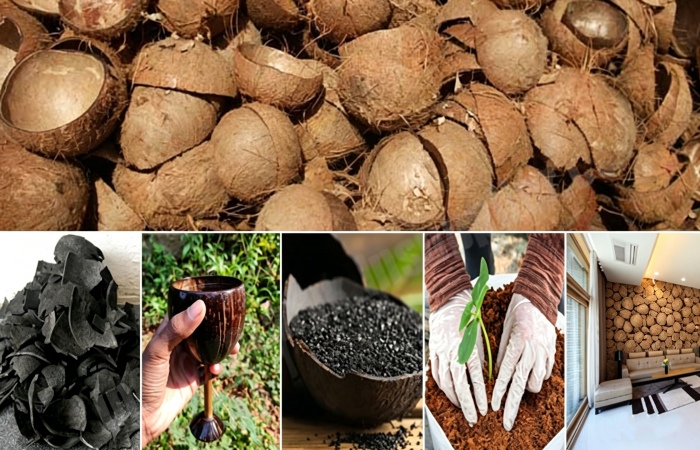 Applications of coconut shell charcoal
Consequently, converting agricultural waste into high-value biochar holds immense profit potential. In the world's major coconut-producing nations—where raw materials are abundant—establishing and operating a coconut shell carbonization business is particularly feasible. This applies especially to the following countries:
①Indonesia: The world's leading coconut producer, boasting an annual output of 17 million tons; raw coconut shells are in virtually limitless supply, and export demand is exceptionally high.
②The Philippines: Consistently ranks among the top coconut producers; characterized by relatively relaxed environmental regulations and a mature foreign trade infrastructure, it stands as a major exporter of carbonized coconut shells.
③India: The southern regions produce vast quantities of coconuts; there is great domestic demand for carbon products—particularly for water purification and mining applications—making local processing and sales highly profitable.
④Sri Lanka, Thailand, Vietnam, and Brazil: These nations possess abundant coconut shell resources and generate significant volumes of agricultural and forestry waste, while government policies actively support the resource-oriented utilization of solid waste.
As long as you have access to waste coconut shells, you can readily deploy our coconut shell biochar pyrolysis equipment to launch a business with low initial costs and achieve high returns. Henan Doing Company offers complimentary services, including plant construction proposals, profit projections, equipment quotations, and guidance on establishing operations abroad. As a specialized manufacturer of coconut shell charcoal pyrolysis machines, Henan DOING provides comprehensive, end-to-end services to help you seize this golden business opportunity in the coconut shell processing industry!

Please provide us with project information as much as possible.