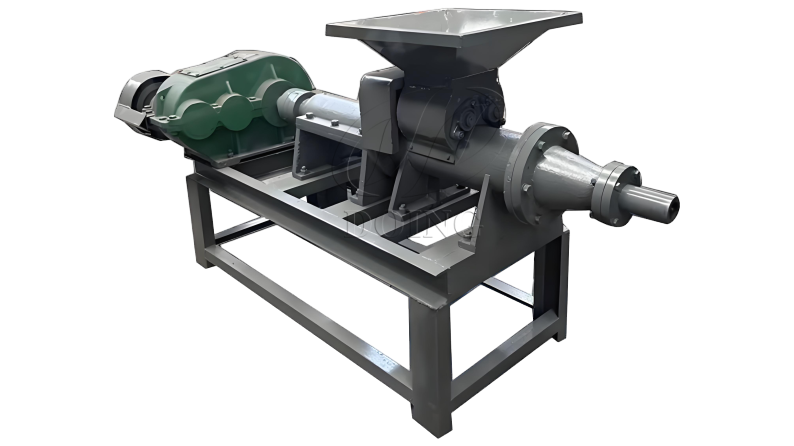

Biochar produced by DOING carbonization equipment achieved an H/C molar ratio below 0.3 in the tested sample, according to the available SGS test result. The H/C molar ratio is commonly used to characterize the chemical structure and degree of carbonization of biochar. Lower H/C values are generally associated with a more aromatic and highly carbonized structure.
| Specific SGS Report Information | |
| Report No. | SHE26-C07002 |
| Work Order No. | MNE263388TJ |
| Sample Received | September 9, 2026 |
| Testing Period | September 9–11, 2026 |
| Report Date | September 12, 2026 |
| Test Item | H/C Molar Ratio |
| Test Result | 0.27 |
The H/C molar ratio compares the molar amounts of hydrogen and carbon in a carbonaceous material. It is commonly used as an indicator of biochar structure because the ratio changes during thermochemical conversion.
As biomass is heated during carbonization, hydrogen-containing volatile compounds are released and the remaining carbon becomes progressively more condensed and aromatic. As a result, H/C generally decreases as the degree of carbonization increases. Research has identified H/C as a useful indicator of aromaticity and carbonization in biochar.
For the tested DOING biochar, the reported H/C molar ratio was below 0.3. This result is consistent with a highly carbonized and more condensed carbon structure. The result is a characterization of this specific sample rather than a universal specification for all biochar produced from different biomass feedstocks.
The H/C ratio is not determined by equipment alone. It depends on the interaction between the biomass characteristics and the carbonization process.
| Factor | Influence on Biochar |
| Feedstock type | Different chemical compositions produce different carbon structures |
| Moisture content | Influences heat demand and process conditions |
| Particle size | Affects heat transfer and material movement |
| Carbonization temperature | Greater thermal severity generally promotes lower H/C |
| Residence time | Influences the extent of thermal conversion |
| Process conditions | Affect the final chemical structure and composition |
Published research shows that H/C can decrease as pyrolysis temperature increases, although the actual result varies with feedstock and process conditions.
For industrial production, the target operating conditions should therefore be established according to the actual biomass and required biochar properties rather than applying one fixed parameter to every material.
H/C ratio is useful because it provides information about the structural characteristics of biochar. Lower values are generally associated with greater aromaticity and a more condensed carbon structure. Therefore, the H/C ratio is of great significance in assessing the degree of carbonization and the stability of biochar carbon sinks.
H/C is also used in established biochar certification frameworks. The European Biochar Certificate (EBC) guidelines specify an H/Corg limit of less than 0.7 for several biochar certification classes, with stricter requirements for certain classes. The EBC describes H/Corg as an indicator of the degree of carbonization and biochar stability.
However, H/C is only one part of biochar characterization. Depending on the intended application, other properties such as organic carbon, ash, pH, elemental composition and contaminants may also need to be evaluated.
The available SGS test provides independent laboratory evidence for the tested DOING biochar sample. The key reported result is an H/C molar ratio below 0.3.
 SGS testing of biochar produced by DOING carbonization equipment
This distinction is important: the SGS result demonstrates the measured property of the tested sample. It does not mean that every type of biomass processed under every operating condition will produce the same H/C ratio.
For potential customers, the value of this SGS report is that it provides an independent reference for supplier evaluation and technical due diligence. Customers can compare the documented test result with their own feedstock and target biochar properties, and decide whether further project-specific testing is needed before investment.
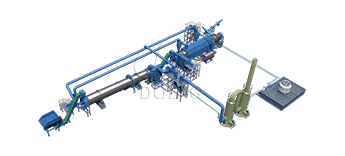
DOING ECO provides continuous biomass carbonization equipment for biomass waste processing and charcoal production. For projects with specific biochar requirements, we can evaluate the solution based on your feedstock type, moisture content, required capacity and target product properties.
The SGS test result can serve as an additional technical reference when evaluating DOING ECO's carbonization equipment, while the final equipment configuration should be based on the customer's actual feedstock and project requirements.
Share your biomass information and production requirements with our team to discuss the appropriate carbonization process and equipment configuration.
H/C refers to the hydrogen-to-carbon molar ratio, while H/Corg specifically uses organic carbon in the calculation. The two values should not be treated as identical unless the testing method clearly defines them in the same way.
No. Application suitability depends on the required product specifications and applicable regulations or certification criteria. H/C is one characterization parameter rather than a universal application standard.
Yes. Biochar properties also depend on factors such as ash content, mineral composition, surface area, functional groups, pH and contaminants. Therefore, the same H/C ratio does not indicate identical overall product characteristics.
The measured value depends on the sample condition and analytical method. Storage, post-treatment and exposure to environmental conditions can influence some biochar properties, so standardized sampling and testing are important.
Third-party testing provides an independent measurement of specified product properties. It can help manufacturers and customers verify whether a tested biochar sample meets a defined technical or application requirement. For carbonization projects, this independent result can also be used as a reference during supplier evaluation and technical discussions.

Please provide us with project information as much as possible.



Copyright © 2015-2026 DOING Holdings - Henan Doing Environmental Protection Technology Co., Ltd | Privacy Policy | All Rights Reserved