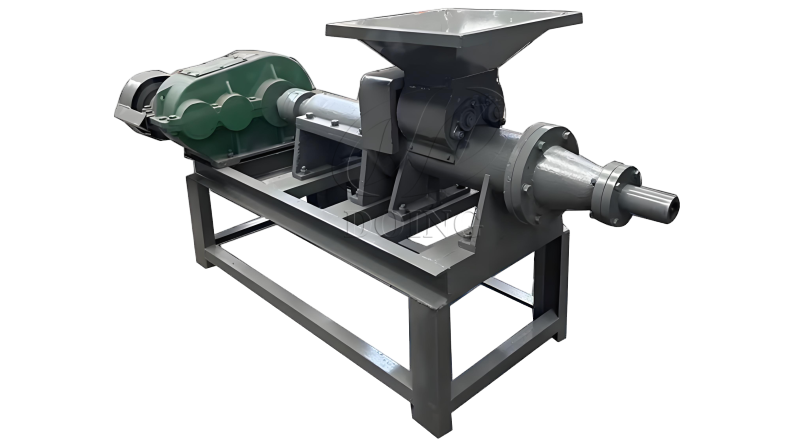

As market demand for high quality machine-made charcoal and biomass fuels steadily increases, many investors have turned their attention to the charcoal production industry. To establish a charcoal production line, preliminary planning is crucial. This article provides a detailed breakdown of the preparatory work required for charcoal production, guiding you through the critical stages of plant construction and operational launch.
Before starting charcoal production, investors need to clearly identify who their target customers are. These could be in the catering and barbecue industry, industrial smelting, or agricultural soil amendment. Different application scenarios impose varying requirements on the charcoal's fixed carbon content, calorific value, and shape. Based on this, the initial production capacity and investment budget can be planned, providing a clear direction for subsequent site selection and procurement.
Raw materials constitute the foundation of charcoal production. Common biomass feedstocks for charcoal making include wood scraps, sawdust, rice husks, coconut shells, and fruit wood. You should pick different biomass materials based on how you plan to use the charcoal.
For making BBQ charcoal, use hard hardwoods like oak, fruitwood, or locust wood. You can also use coconut shells. For biochar that improves soil, choose farming and forestry leftovers, like rice husks, crop stalks, and sawdust. For making activated carbon, the best choices are fruit shells-based raw materials, such as coconut shells, walnut shells, and apricot kernels.
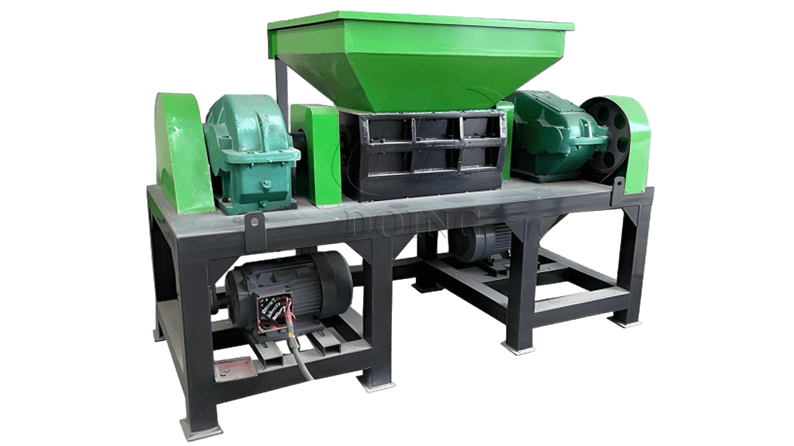
During the preparatory phase, it is essential to survey the distribution of biomass resources within the local area and its surroundings to ensure a long-term and stable supply of raw materials. Additionally, attention must be paid to the moisture content and size of the raw materials; if the moisture level is excessively high or the size is too large, drying or crushing treatment is typically required prior to carbonization.
Charcoal making factory site selection must not only prioritize convenient transportation to minimize logistics costs, but also ensure the facility is situated away from residential areas and complies with local industrial land regulations. The charcoal production facility must be rationally divided into the following areas: raw material storage, production and processing, finished product storage, and administrative offices. Given the flammability of both raw materials and finished charcoal, the planning of fire safety facilities and the provision of safety passageways are also essential preparatory work.
The performance of the equipment directly determines charcoal yield, quality, and compliance with environmental standards during the production process; this constitutes the core element of all preparatory work. Before purchasing carbonization equipment, it is crucial to engage in thorough communication with the equipment supplier:
①Charcoal Carbonization Solution: Do not be swayed by claims of General-Purpose Equipment; instead, verify whether the manufacturer can provide a customized charcoal making solution tailored specifically to your biomass raw materials and carbonization objectives.
②Equipment Details: To ensure durability and longevity, pay close attention to specific equipment details, such as the material of the carbonization furnace body (high-temperature-resistant steel materials), sealing components, transmission system, charcoal product conveying system, energy-saving features, and environmental protection design.
③Comprehensive After-Sales Support: Regarding the installation of the carbonization production line, inquire whether the supplier offers on-site installation and commissioning services, technical training, a one-year warranty, and the supply of spare parts/consumables.
④Transparent Pricing: Ensure the quotation is fully transparent, covering the cost of the equipment, installation, transportation, and training, with absolutely no hidden fees.
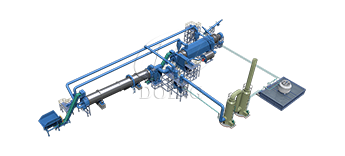
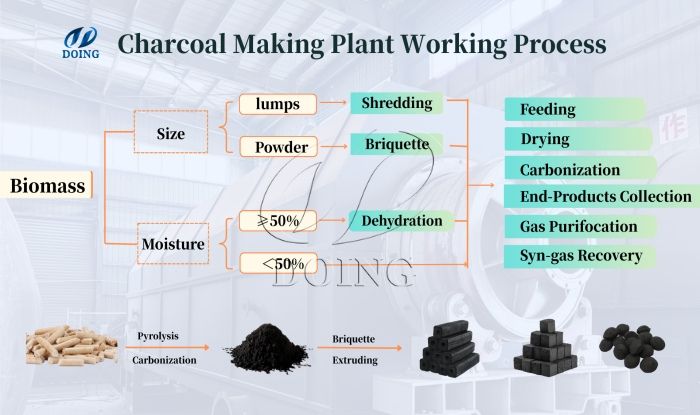 DOING charcoal producing carbonization solution
Henan Doing Company possesses 15 years of extensive industry experience in the R&D and manufacturing of biomass carbonization equipment. DOING charcoal producing machine solutions can process many kinds of biomass raw materials efficiently. It runs steadily and produces a high amount of charcoal. And the equipment is outfitted with the flue gas recovery and purification system that captures and recycles combustible gases generated during production, utilizing them as a heat source for the unit itself. This approach not only reduces energy consumption but also ensures that the entire charcoal production process complies with environmental regulations.
Since charcoal production involves pyrolysis process, compliance with local environmental emission standards is a prerequisite for the smooth execution of the project. Prior to the delivery of equipment to the site, an Environmental Impact Assessment (EIA) report must be submitted to the relevant authorities, and the necessary approval procedures must be completed in advance.
Furthermore, before formal production, operators must undergo systematic technical and safety training. This ensures that workers are familiar with the operating procedures for the charcoal production machine, proficient in emergency response methods, and capable of ensuring safe production.
From raw material preparation and equipment selection to staff training, comprehensive preliminary preparation serves as the cornerstone for the successful implementation of a charcoal production project. If you are currently planning a charcoal production project or would like to receive further advice on charcoal making, please feel free to contact Henan Doing Company for a consultation at any time.

Please provide us with project information as much as possible.



Copyright © 2015-2026 DOING Holdings - Henan Doing Environmental Protection Technology Co., Ltd | Privacy Policy | All Rights Reserved