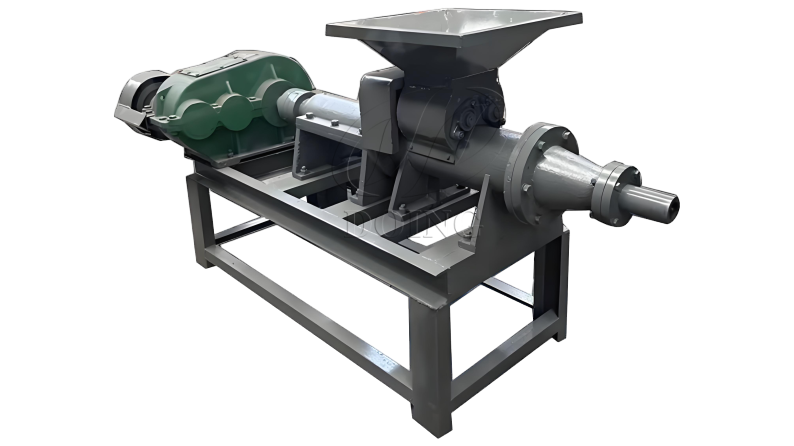

A coconut-shell activated carbon project is not simply a charcoal-production project. Its commercial viability depends on reliable feedstock supply, controlled carbonization, a validated activation route, product specifications, compliance planning and access to qualified buyers. Equipment is one part of the project; it cannot by itself establish product performance, market access or investment returns.
Investors usually evaluate two routes: an integrated facility covering feedstock preparation, carbonization, activation, finishing and packaging; or an activation-and-finishing facility that purchases qualified coconut-shell charcoal. The appropriate route depends on feedstock control, customer specifications, available capital, operating capability and local project conditions.
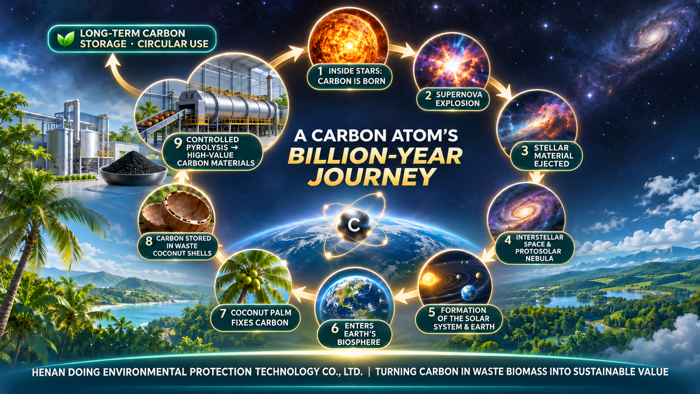
Conceptual illustration: a carbon atom’s long journey to coconut-shell biomass and controlled pyrolysis. This visual provides background context only; it does not prove carbon-storage performance, product quality, carbon-credit eligibility or project economics.
Coconut shells are hard nut-shell biomass with relatively dense structures. After carbonization and a separate activation step, they can form pore structures used in adsorption applications. Suitability for a particular grade depends on feedstock properties, activation conditions, product testing and the customer’s specification.
Coconut-shell-derived activated carbon may be evaluated for application categories such as gold-recovery circuits, municipal or industrial water treatment, air or vapour treatment, food-and-beverage purification, and selected chemical applications. These categories are not interchangeable: each buyer may require different test methods, particle sizes, ash limits, hardness, traceability and compliance documentation.
Gold-recovery customers may assess adsorption performance, attrition resistance, particle-size distribution, ash and supply reliability.
Water-treatment customers may assess iodine number, particle size, ash, pH, leachables and applicable market-access documentation.
Food, beverage, pharmaceutical or electronics-related buyers may require additional hygiene, heavy-metal, traceability and compliance records.
A project should define its target buyer and product specification before fixing the carbonization, activation, screening, washing and testing scope.
Coconut-shell charcoal is carbonized shell material produced under oxygen-limited conditions. It can be used as a fuel or as a precursor for further processing. Activated carbon normally requires a further physical or chemical activation step to develop adsorption pores and application-specific performance.
Biochar, coconut-shell charcoal and activated carbon should not be treated as automatically interchangeable terms. Their intended use, product criteria, testing requirements and market expectations can differ. A carbonization machine therefore produces a precursor or carbonized product; it does not by itself establish that the material meets a particular activated-carbon grade.
An integrated facility may include coconut-shell collection and inspection, impurity removal, crushing and screening, drying and controlled feeding, carbonization and cooling, activation, finishing, testing, packaging and storage. This route can provide stronger control over feedstock and intermediate-charcoal quality, but it also requires more capital, engineering coordination, permits and operating capability.
This route purchases qualified coconut-shell charcoal and focuses on activation, screening, testing, packaging and sales. It may reduce front-end carbonization investment, but it increases dependence on supplier quality, sampling discipline, supplier audits, batch traceability and contractual quality clauses.
| Comparison item | Integrated model | Activation-only model |
| Initial capital outlay | Higher | Relatively lower |
| Feedstock control | Stronger | Dependent on supplier and inspection system |
| Operational complexity | Higher | Moderate |
| Carbonization equipment | Part of the project scope | Not necessarily part of the scope |
| Primary risks | Engineering, permits and operations | Supply reliability, charcoal quality and price volatility |
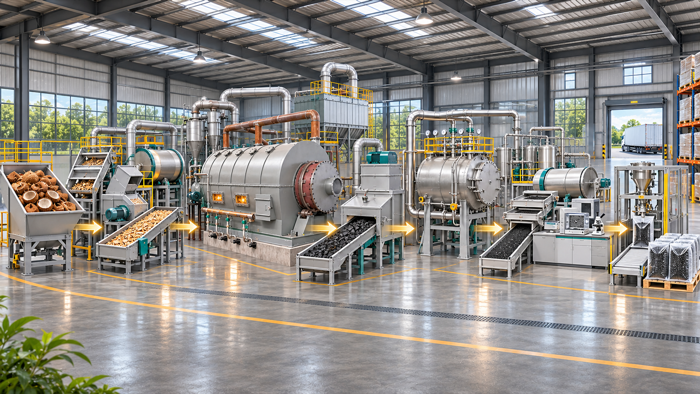
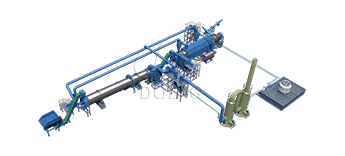
Conceptual process illustration: feedstock preparation, carbonization, activation, finishing and delivery are project stages that require configuration confirmation. The visual is not an installed-line drawing, capacity guarantee or performance claim.
Incoming coconut shells and charcoal can vary in moisture, ash, impurities, particle size, hardness and carbonization degree. An activation project should establish receiving specifications, sampling procedures, batch records and supplier controls before construction.
Charging, high-temperature operation, discharge, cooling and maintenance require project-specific safety procedures, operator training and compliance with local occupational-safety requirements.
Carbonization can generate flue gas, tar and combustible gas. Dust collection, condensation, combustion treatment, gas handling and monitoring should be designed against the applicable site permit and local limits. Terms such as “smokeless” or “eco-friendly” do not replace engineering data, permits or emission testing.
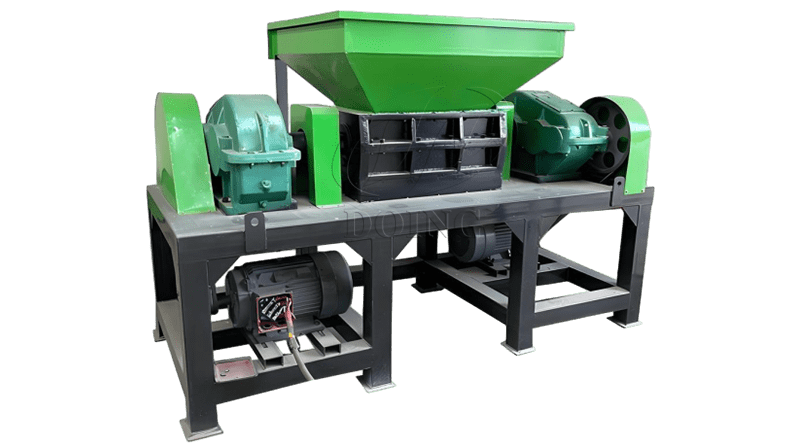
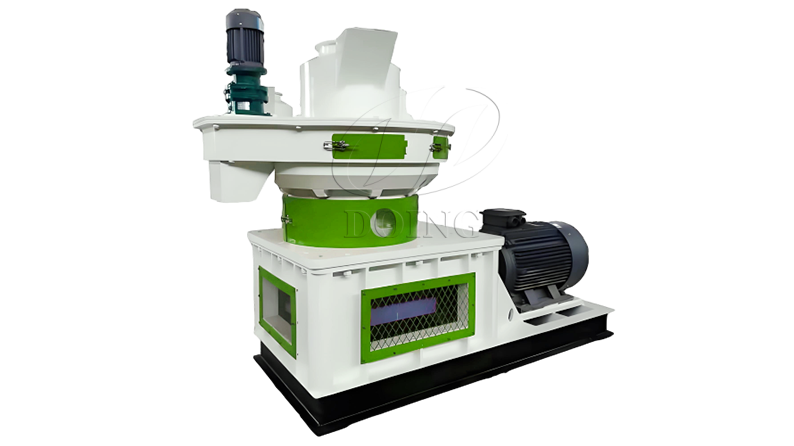
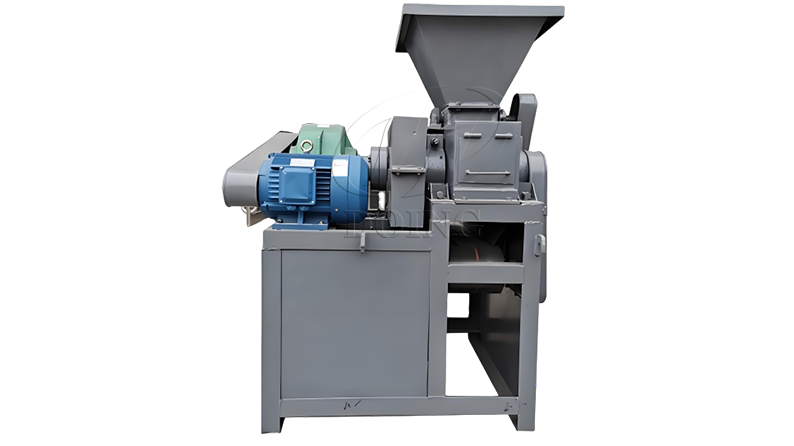
Depending on the feedstock and target product, a project may require confirmed equipment for preparation, drying, controlled feeding, carbonization, cooling, gas handling, dust control, product handling and controls. A supplier proposal should state exactly which units are included and which remain project-dependent.
Feedstock particle-size, moisture and impurity conditions
Definitions of design capacity and acceptance-test capacity
Target charcoal or precursor properties and test methods
Feedstock trials, material balances and energy-balance assumptions
Gas handling, cooling, dust control and high-temperature safety scope
Installation, commissioning, training, spare-parts and after-sales boundaries
Rated capacity or nominal residence time should not be treated as qualified-product output. Actual results depend on feedstock trials, engineering design, operating conditions and the formal proposal.
Operational illustration only. Actual capacity, energy consumption and product specifications require feedstock trials, engineering design and a formal technical proposal.
Equipment price, conversion yield, activated-carbon yield, market price, ROI, IRR and payback are project-specific. A useful investment model must define its feedstock condition, activation route, product grade, trade terms, capacity basis, energy source, labour, environmental-control cost, logistics, financing and taxes. Generic values should be treated as preliminary references rather than investment commitments.
| Scenario | What to test | Purpose |
| Base case | Documented feedstock, energy, logistics and product assumptions | Primary investment baseline |
| Upside case | More favourable but supportable assumptions | Understand potential, not guarantee returns |
| Stress case | Higher input costs, lower price, delays or lower utilization | Test cash-flow resilience |
If a project works only at full utilization, high selling prices and low input costs, its investment case remains fragile.
Activated-carbon markets should be segmented by functional requirement, not simply by “high-end” or “low-end” labels. The buyer’s application determines the relevant quality indicators, test methods, documentation and sample-approval process.
| Application category | Typical buyer focus | Pre-project validation |
| Gold-recovery circuits | Adsorption performance, attrition resistance, particle size, ash | Customer specification and sample qualification |
| Water treatment | Iodine number, particle size, ash, pH, leachables | Local market-access and laboratory requirements |
| Food and beverage | Adsorption performance, cleanliness and hygiene documentation | Applicable food-contact and customer requirements |
| Air, vapour or VOC treatment | Pore structure, strength and operating conditions | Match grade to pollutant and process requirements |
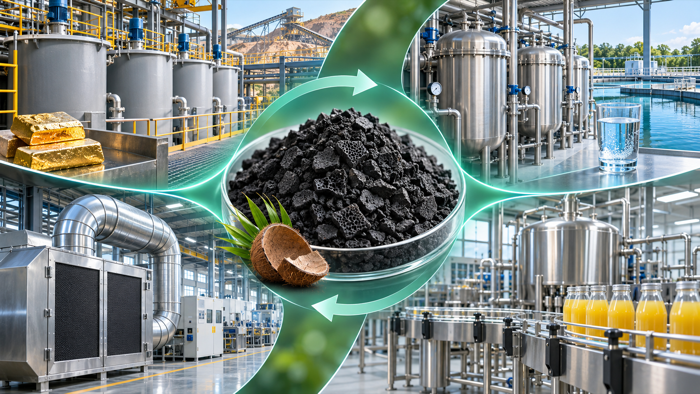
Conceptual illustration of possible industrial application categories. It is not a customer-site photograph, food-contact approval, water-treatment performance result, mining-project evidence or certification claim.
Obtain representative feedstock samples and test moisture, ash, particle size and contamination.
Run carbonization and activation trials against the intended customer specification.
Prepare material and energy balances for the selected route.
Confirm gas, tar, dust, cooling and high-temperature safety scope.
Obtain formal customer requirements and sample-qualification procedures.
Stress-test feedstock cost, energy cost, logistics, product price and utilization assumptions.
Confirm local environmental, occupational-safety, land-use and export requirements.
Require a clear supplier scope, acceptance basis, training boundary and after-sales responsibility.
Coconut-shell activated carbon sits at the intersection of feedstock supply, carbonization, activation know-how, engineering controls and end-market qualification. Modern carbonization equipment can support a controlled project design, but it cannot replace disciplined raw-material management, product testing, permits or customer development.
The prudent order is to validate the feedstock, validate the product, obtain customer specifications, complete material and energy balances, and then test project economics under downside assumptions. Only after those inputs are aligned should a project move into formal investment appraisal.
No. Coconut-shell charcoal is carbonized material and can be a precursor. Activated carbon normally needs a separate activation step to develop the pore structure required for adsorption applications.
No. An integrated line may suit an operator with secure feedstock and a need for stronger process control. An activation-and-finishing project may suit a company with verified charcoal suppliers and customer channels.
Carbonization generally produces charcoal or a carbonized precursor. A separate activation step is normally required for activated-carbon applications.
It may be evaluated for certain gold-recovery uses, but the product must meet the buyer’s requirements for properties such as particle size, ash, adsorption performance and attrition resistance.
No. Returns depend on project-specific capital cost, operating cost, utilization, product price, financing, logistics, taxes and customer qualification.
If you are assessing a coconut-shell charcoal, activated-carbon or continuous-carbonization project, share your feedstock origin and monthly supply, moisture and particle-size information, target product, intended market, project location, utilities and required equipment scope. This information supports a preliminary technical review and quotation discussion before any formal proposal is prepared.

Please provide us with project information as much as possible.



Copyright © 2015-2026 Doing Holdings - Henan Doing Environmental Protection Technology Co., Ltd | Privacy Policy | All Rights Reserved