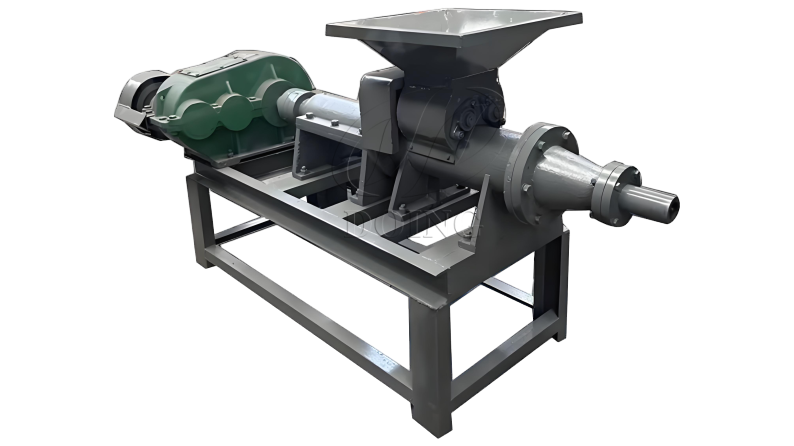

A charcoal making project can be profitable, but profitability cannot be determined from the machine price alone. Buyers need to evaluate feedstock availability, preparation requirements, plant capacity, product quality, energy use, labor, environmental controls, logistics, and the selling market. A charcoal making machine may be the core of the project, but the commercial result depends on the complete production system and local operating conditions.
This guide answers the questions commonly shown in Google’s “People also ask” results for “charcoal making machine,” while separating household charcoal questions from industrial equipment decisions.
It can be, when a project has a reliable low-cost feedstock, a defined product market, stable operation, and a realistic cost model. Typical project variables include:
• the cost and seasonal availability of wood or agricultural residues;
• feedstock moisture, particle size, ash, and contamination;
• preparation, drying, conveying, and storage requirements;
• plant capacity and operating schedule;
• charcoal, biochar, briquette, gas, or optional liquid-product specifications;
• labor, electricity, fuel, maintenance, packaging, transport, and compliance costs;
• local selling prices and the buyer’s acceptance criteria.
A supplier should not promise a universal profit margin or payback period. Before investment, calculate revenue and operating costs using your own feedstock, site, product specification, and market data.
There is no responsible single price for every charcoal making machine. A quotation depends on the machine type, capacity, feedstock, automation level, auxiliary equipment, environmental-control requirements, installation scope, shipping destination, and project specification.
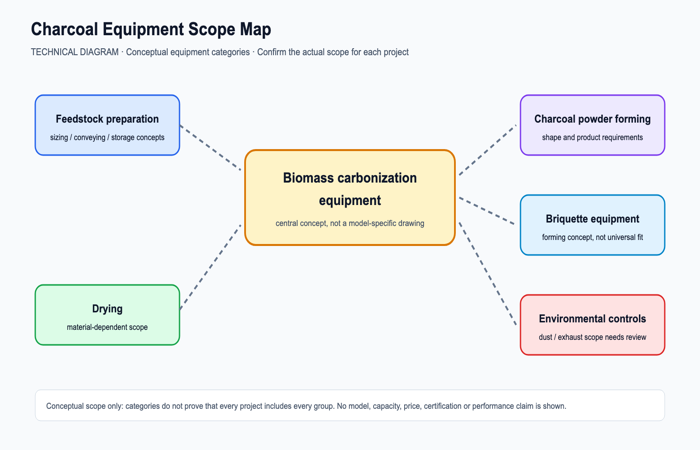
The equipment scope may include the carbonization unit, feedstock preparation, drying, conveying, cooling, charcoal forming, gas handling, dust control, exhaust-gas treatment, storage, electrical controls, installation, and commissioning. Two machines described as “charcoal making machines” may therefore have very different boundaries and prices.
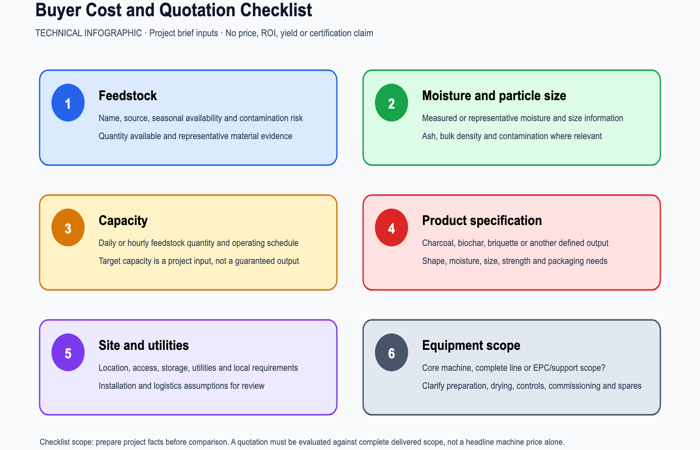
For a useful quotation discussion, prepare the feedstock type, moisture, particle size, available quantity, target capacity, desired product, working hours, project location, utilities, and whether you need a complete line or only the core machine.
“Charcoal making machine” can refer to several different equipment categories:
| Equipment category | Main function | What affects the specification |
|---|---|---|
| Biomass carbonization equipment | Converts prepared biomass into a solid carbon-rich product and gaseous products | Feedstock, moisture, particle size, capacity, product requirements |
| Feedstock preparation equipment | Sizes, dries, conveys, or stores raw material | Raw-material dimensions, moisture, bulk density, site layout |
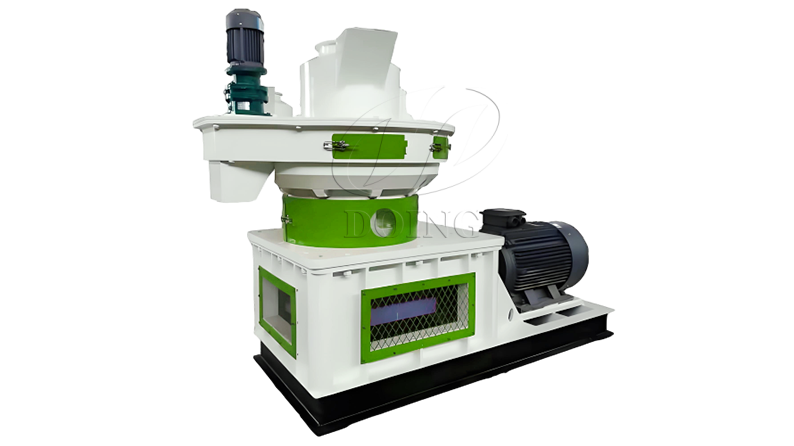
| Charcoal powder forming equipment | Forms carbonized material into a specified shape | Powder properties, product shape, binder and market requirements |
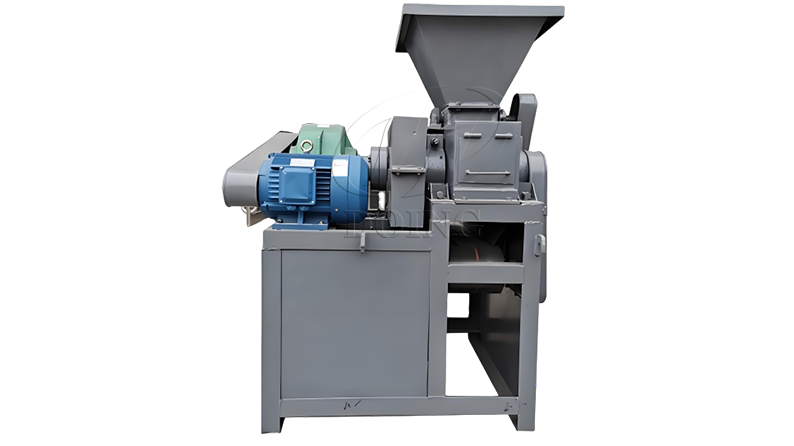
| Briquette equipment | Compresses suitable material into briquettes or other formed products | Material preparation, density, size, output specification |
| Environmental-control equipment | Supports dust, exhaust-gas, or other project controls | Local requirements, process design, emission-control conditions |
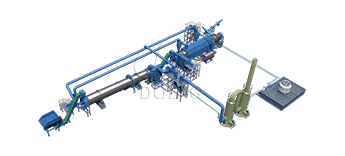
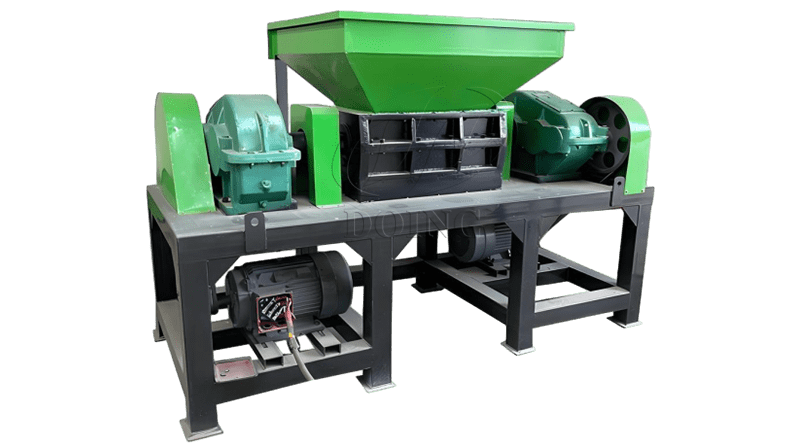
DOING ECO’s product information describes integrated biomass-to-charcoal/biochar carbonization solutions, including core carbonization equipment, auxiliary systems, environmental controls, and downstream processing equipment. The listed product context includes single-drum and double-drum carbonization lines, as well as supporting shredding, drying, briquetting, forming, and wood-vinegar refining options. The exact combination must be confirmed for each project.
The cost of one ton is not the same as the equipment purchase price. It should be calculated from the project’s actual production cost:
Cost per ton = feedstock cost + preparation + energy + labor + maintenance + environmental operation + packaging + storage + transport, divided by saleable output.
The calculation must use measured or agreed project assumptions. Wet feedstock may require more drying; irregular material may require more preparation; and a product that needs briquetting, screening, packaging, or further refinement will have additional costs. Do not substitute a general industry estimate for a site-specific cost model.
The answer depends on whether the question concerns homemade charcoal or industrial carbonization equipment. Small homemade methods may take several hours or longer and vary greatly with container size, material, moisture, airflow, and heating conditions. They should not be compared directly with a continuous industrial plant.
An industrial project includes more than the carbonization residence time. The full schedule may include feedstock preparation, drying, feeding, carbonization, cooling, discharge, product handling, cleaning, and storage. Continuous feeding and discharge can support an organized production flow, but actual throughput and operating conditions must be confirmed for the selected feedstock and configuration.
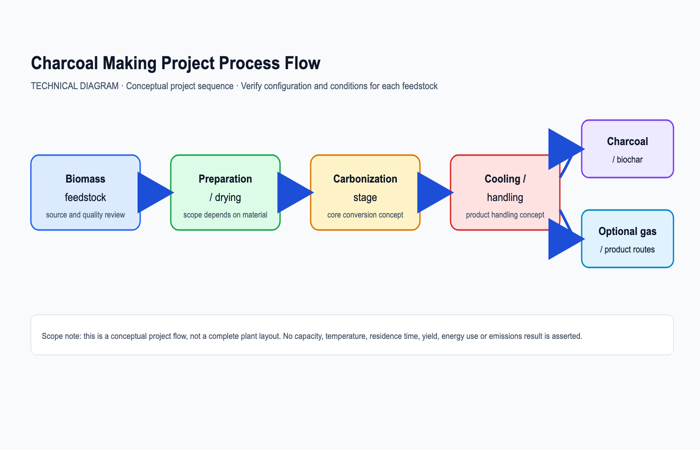
Charcoal briquettes are usually made through a sequence rather than one universal machine. Carbonized material may first require crushing or powder preparation, followed by mixing or conditioning, forming or briquetting, drying or curing when required, screening, and packaging.
The correct forming machine depends on the material properties and required product shape. A buyer should define briquette diameter or shape, density, moisture, strength, packaging, binder requirements, and target market before selecting equipment. A machine designed for one material or product geometry should not be assumed to work for every charcoal powder.
A small briquette machine does not have one universal price. Capacity, forming method, motor and electrical configuration, feedstock preparation, molds, automation, spare parts, packaging, and shipping can all change the total cost.
Ask for a quotation based on a clearly defined product and test material. If the supplier quotes only the press while the project also needs crushing, mixing, drying, or packaging, the quoted machine price will not represent the complete investment.
The price of 1 kg of “bio coal” varies by country, product definition, moisture, shape, packaging, quality, buyer, transport distance, and whether the material is sold as charcoal, biochar, or a formed briquette. These terms are not automatically interchangeable.
A carbonized product should not be marketed as meeting a specific biochar standard without the relevant testing and buyer or regulatory confirmation. For a commercial project, compare the required product specification with local market quotations rather than using a global average price.
The cheapest seller is not necessarily the lowest-cost supplier for an industrial buyer. Compare the same product specification, moisture, packaging, delivery terms, quality evidence, after-sales support, and legal requirements.
For machinery, compare the complete delivered scope rather than the advertised price of the main unit alone. A lower initial price may exclude preparation, drying, gas handling, environmental controls, commissioning, training, or spare parts.
For household or small-scale experiments, wood suitability depends on moisture, density, contamination, size, and local rules. Clean, untreated material is generally a more appropriate starting point than painted, glued, or chemically treated wood. Local fire, air-quality, and waste-handling requirements must be followed.
Industrial buyers should not select a plant from a household wood recommendation. A commercial design requires representative feedstock data and a defined product target. Wood residues are only one broad feedstock category; agricultural and agro-processing residues may require different preparation and project validation.
There is no single answer. Consumption depends on the appliance, heat setting, ventilation, cooking method, charcoal moisture, piece size, and use duration. A household fuel-use estimate should not be used to size an industrial charcoal plant.
For industrial planning, focus instead on available feedstock, target processing capacity, operating hours, saleable product requirements, storage, and the customer’s purchasing schedule.
A reliable distributor list depends on the product category and market segment: barbecue charcoal, restaurant fuel, heating fuel, activated carbon, biochar, or industrial briquettes. Distributor rankings and current market positions change, so buyers should verify current suppliers independently.
A machinery project should first define the product and intended market. Then it can identify potential buyers, distributors, import requirements, packaging expectations, and quality documentation. The equipment supplier cannot guarantee market access merely by supplying a machine.
Prepare a concise project brief containing:
1. Feedstock name, source, seasonal availability, and contamination risk.
2. Representative moisture and particle-size information.
3. Daily or hourly feedstock quantity.
4. Desired product: charcoal, biochar, briquette, or another defined output.
5. Required product shape, moisture, size, strength, and packaging.
6. Planned operating hours and target capacity.
7. Site location, utilities, storage, access, and local environmental requirements.
8. Whether you need a core machine, a complete production line, or EPC support.
9. Any requirement for gas reuse, dust control, exhaust-gas treatment, or optional liquid recovery.
10. The evidence needed before investment, such as feedstock testing or a technical review.
Possibly, but not automatically under identical conditions. Each material should be reviewed for moisture, particle size, ash, contamination, bulk density, supply stability, and product requirements. A mixed-feedstock project needs its own technical confirmation.
Not necessarily. The terms can describe overlapping equipment, but the final product name depends on the intended use, specification, testing, and market. Carbonization alone does not prove that a product meets a particular biochar standard.
No. A continuous configuration describes the feeding and discharge organization. Actual throughput and product results depend on feedstock and confirmed operating conditions.
Choose based on the material you already have and the product you intend to sell. If you already have suitable carbonized powder, a forming machine may be sufficient. If you need to convert raw biomass into charcoal and then form it, a wider line may be required.
If you are comparing charcoal making machines, briquette equipment, or a biomass carbonization line, send DOING ECO your feedstock type, moisture, particle size, available quantity, target product, target capacity, project location, and desired equipment scope. These details support a preliminary technical review and quotation discussion before any formal proposal is prepared.
If you are comparing charcoal making machines, briquette equipment, or a biomass carbonization line, send DOING ECO your feedstock type, moisture, particle size, available quantity, target product, target capacity, project location, and desired equipment scope. These details support a preliminary technical review and quotation discussion before any formal proposal is prepared.

Please provide us with project information as much as possible.



Copyright © 2015-2026 Doing Holdings - Henan Doing Environmental Protection Technology Co., Ltd | Privacy Policy | All Rights Reserved