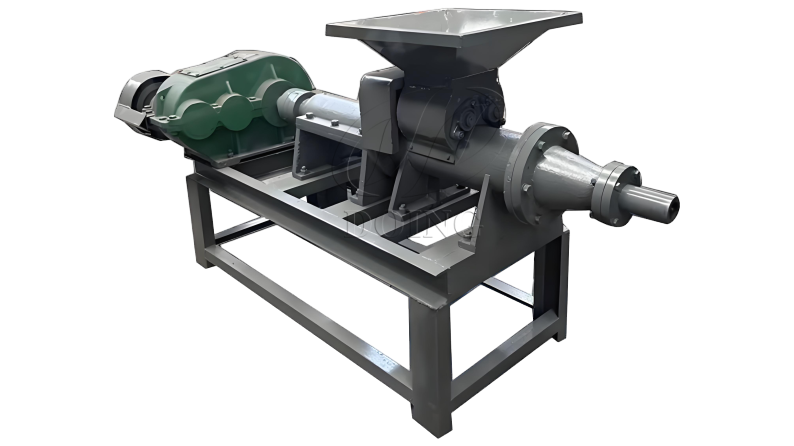

Waste biomass can create industrial value when a project treats it as a controlled feedstock rather than an undefined disposal problem. A biomass carbonization plant can prepare suitable residues, convert them through a project-specific controlled carbonization process, and produce a solid carbon-rich product while combustible gas may be reused within the system. The commercial result depends on the actual feedstock, product specification, local demand, site conditions, and confirmed project design—not on a generic yield or payback promise.
For an industrial buyer, the first question is therefore not simply “How much biochar can the plant make?” It is “Can the project reliably supply suitable biomass and sell or use the resulting products?”
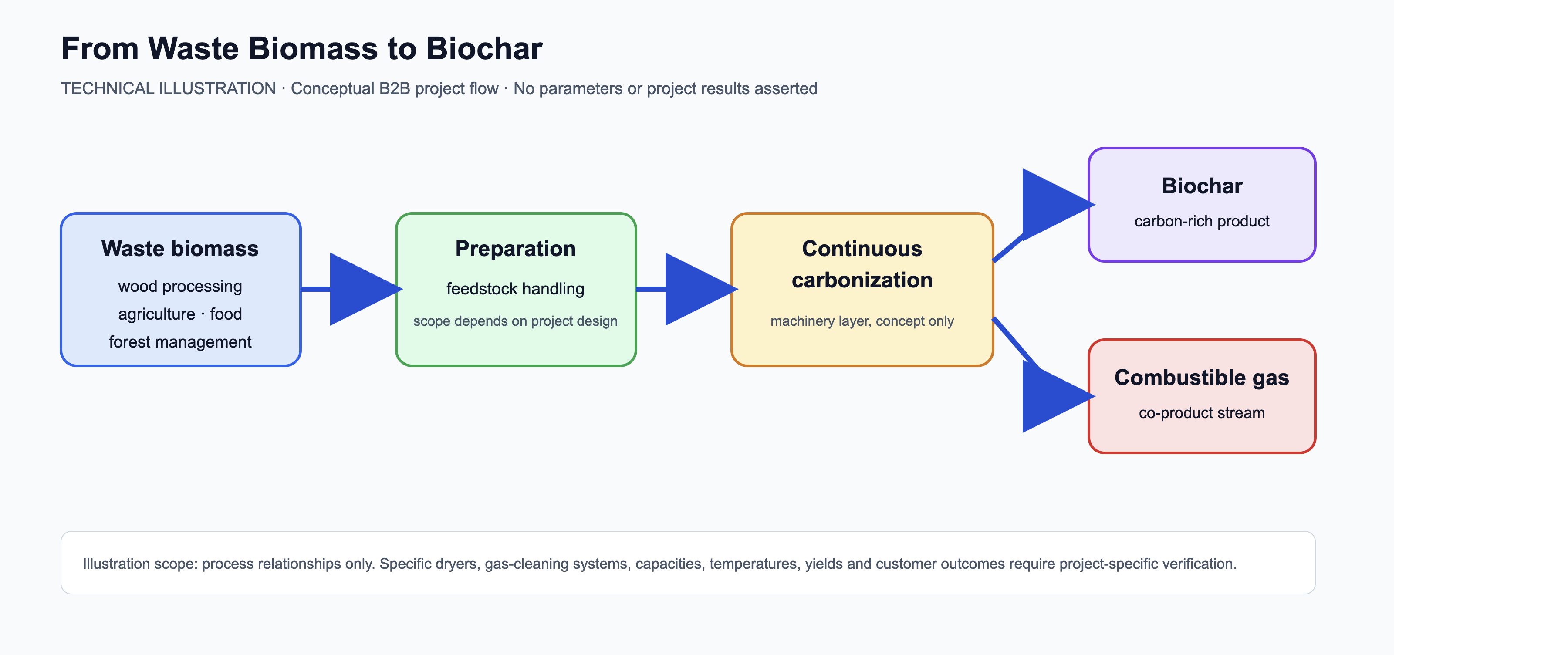
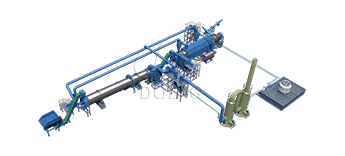
Illustration: carbonization flow
This does not mean that every residue can be mixed and processed under identical conditions. Moisture, particle size, ash content, bulk density, contamination, seasonal availability, and the required final product can all affect the project design. A buyer should provide representative feedstock information before asking for a final configuration.
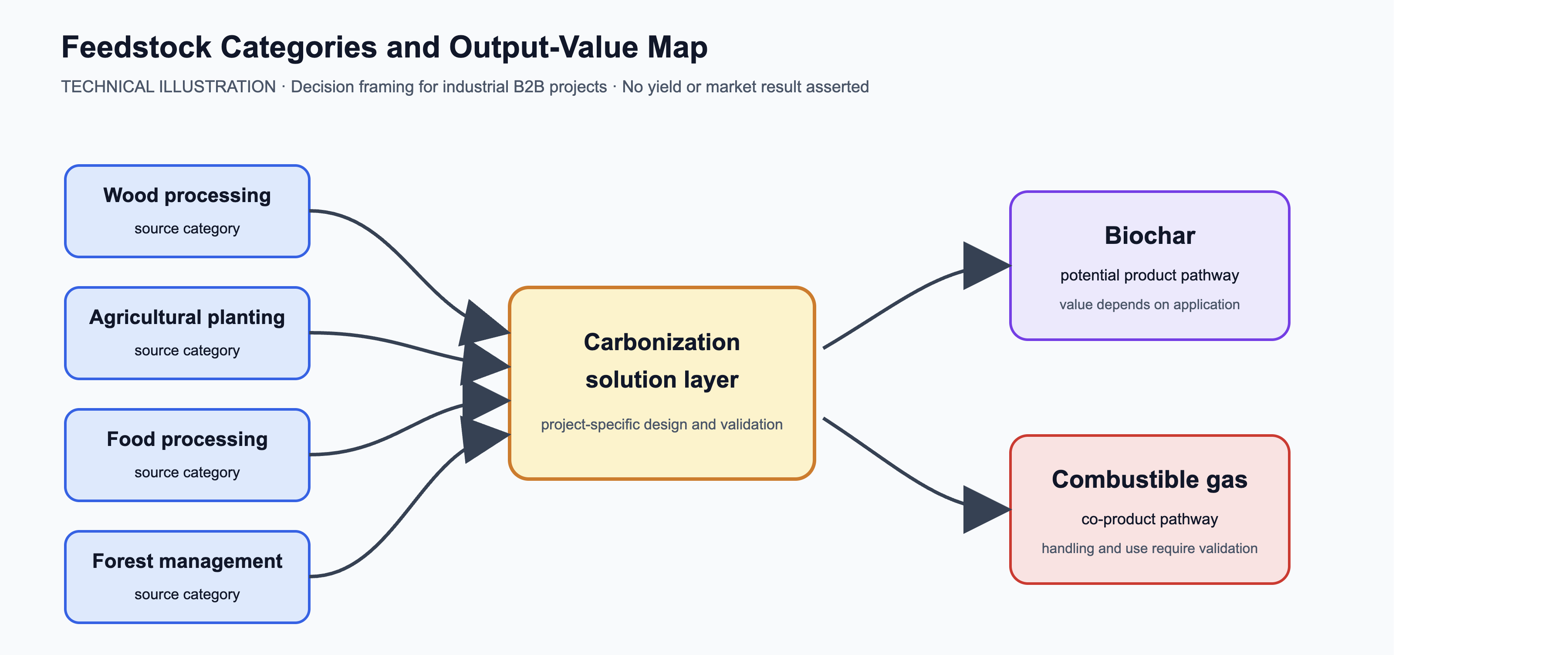
Illustration: feedstock map
At a high level, a conceptual project boundary may include four stages. The exact sequence and equipment scope are project-dependent and must be confirmed for the selected feedstock and site:
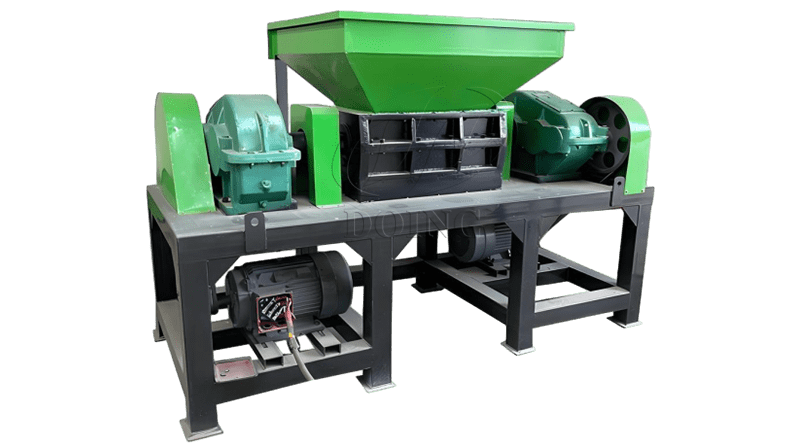
Feedstock reception and preparation: The project may receive, store, size, and—when necessary—dry the biomass.
Controlled carbonization: Prepared material enters the carbonization equipment, where heat converts part of the biomass into a solid carbon-rich product and gaseous products.
Product cooling and handling: The solid product may be cooled and discharged for the planned storage or downstream handling.
Gas and optional liquid-product management: Combustible gas may be reused. Wood vinegar and tar recovery may be included when the project requires and confirms those options.
The listed equipment information describes continuous feeding and discharge, combustible-gas reuse, and optional wood-vinegar and tar recovery. It does not establish a universal product yield, operating temperature, energy balance, or emissions result. Those items require project-specific technical confirmation.
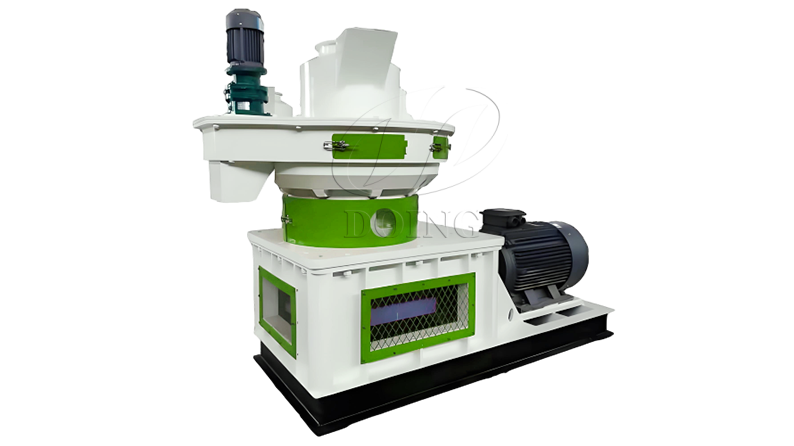
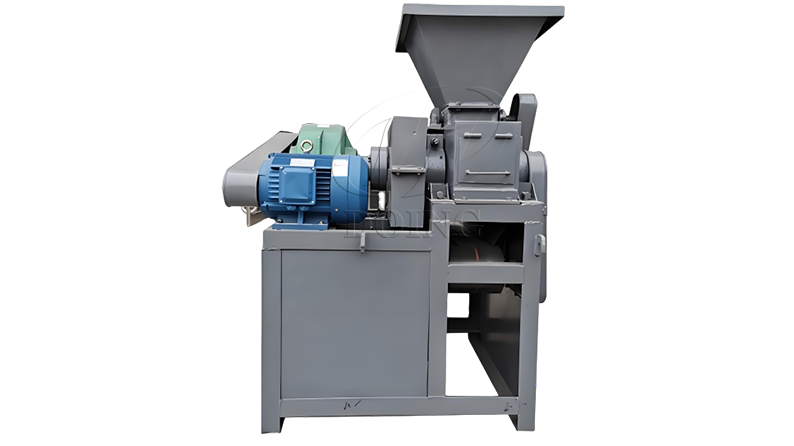
The solid output may be called biochar or charcoal depending on the project’s product specification, intended use, and market terminology. Carbonization alone does not automatically mean that a product meets a particular biochar standard. Potential downstream uses are subject to product testing, buyer requirements, and applicable local rules. A project should define the required form, moisture, particle size, quality indicators, packaging, and buyer acceptance before selecting downstream equipment.
The verified PR-011 record includes combustible-gas reuse. Reusing gas may influence the plant’s fuel arrangement and operating concept, but it is not the same as a guaranteed energy surplus. Actual gas composition, startup fuel, operating controls, heat losses, and site conditions must be confirmed during engineering.
The exact equipment boundary should be agreed after reviewing:
feedstock type and daily availability;
particle size and moisture test results;
target processing capacity;
desired solid-product form and specification;
gas-reuse requirements;
optional wood-vinegar or tar recovery;
site utilities, storage, safety, and local environmental requirements.
The listed product capacity range is 1–5 t/h. This is a product-range reference, not a promise that every feedstock will reach the same throughput. A quotation should state the design basis and conditions attached to any capacity figure.
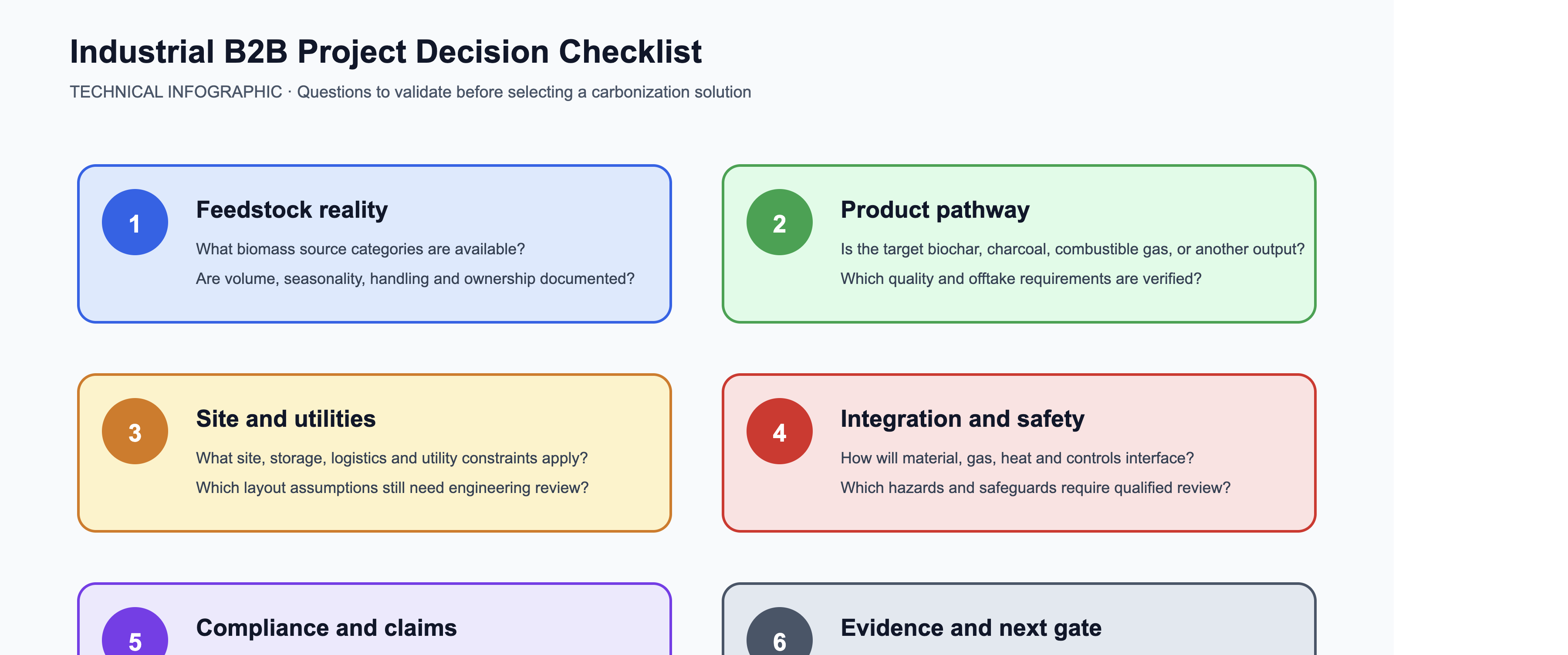
Illustration: project checklist
A responsible pre-feasibility review should connect five questions:
Supply: Is suitable biomass available in a stable quantity and quality throughout the year?
Preparation: What size reduction, drying, conveying, and storage are required?
Products: Who will use or buy the biochar/charcoal, gas, or optional liquid products?
Site: Can the location support utilities, material movement, safety controls, storage, and local approvals?
Evidence: Which performance data must be confirmed by feedstock testing, pilot work, supplier design, or local compliance review?
This approach gives an investor a more useful decision basis than a generic payback period. Until feedstock data, product requirements, local costs, and buyer arrangements are known, ROI and carbon-credit outcomes should remain project-dependent estimates rather than published promises.
DOING ECO provides biomass carbonization equipment and project-oriented carbonization solutions. Its product information covers equipment for wood, agricultural, and agro-processing residue categories. A technical discussion should use these broad categories as a starting point and then confirm the customer’s actual material.
No. Suitability depends on moisture, size, ash, contamination, supply stability, product requirements, and local handling conditions. Representative samples should be reviewed before final equipment selection.
No universal guarantee should be made. The listed equipment information describes combustible-gas reuse, but the actual energy balance depends on gas quality, startup conditions, heat losses, controls, and the project design.
No. The 1–5 t/h range is a product-range reference. Actual throughput and product results depend on the feedstock and operating conditions that are confirmed for the project.
Only if the project has a defined product use, storage and safety plan, quality requirements, and commercial rationale. Wood-vinegar and tar recovery may be considered as optional routes, not mandatory equipment for every project.
If you are evaluating a waste-biomass-to-biochar project, send DOING ECO the feedstock type, moisture, particle size, available quantity, target processing capacity, desired product, gas-use plan, and project location. These details support a preliminary technical review and quotation discussion, during which the biomass carbonization equipment scope and configuration assumptions can be checked before any formal proposal is prepared.

Please provide us with project information as much as possible.



Copyright © 2015-2026 Doing Holdings - Henan Doing Environmental Protection Technology Co., Ltd | Privacy Policy | All Rights Reserved