
As the rice harvesting season begins across major rice-producing countries from July to November, including India, Vietnam, Thailand, Indonesia, and the Philippines, large quantities of rice husks are generated within a short period. For rice mills and agricultural processing enterprises, instead of treating rice husks as waste or burning them in the open, more companies are converting them into biochar to create additional value while reducing environmental impact.
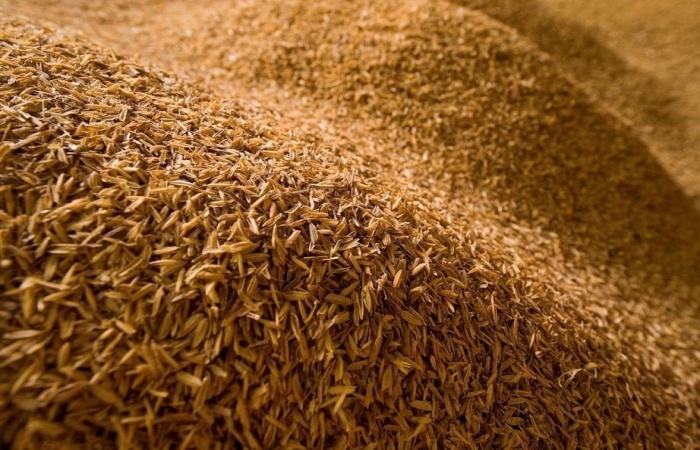 Rice husk for making biochar
Investing in a rice husk making machine has now become a highly profitable business venture rather than just a waste disposal solution.
Why Is Rice Husk an Ideal Raw Material for Biochar?
Rice husk is renewable, widely available, and produced in large volumes every year. Compared with many other biomass feedstocks, it provides a stable and reliable raw material supply for rice husk biochar production. Another advantage is its relatively high carbon content and silica-rich structure. After carbonization, the resulting biochar has a porous structure and good adsorption properties, making it suitable for a wide range of applications while increasing the value of agricultural waste.
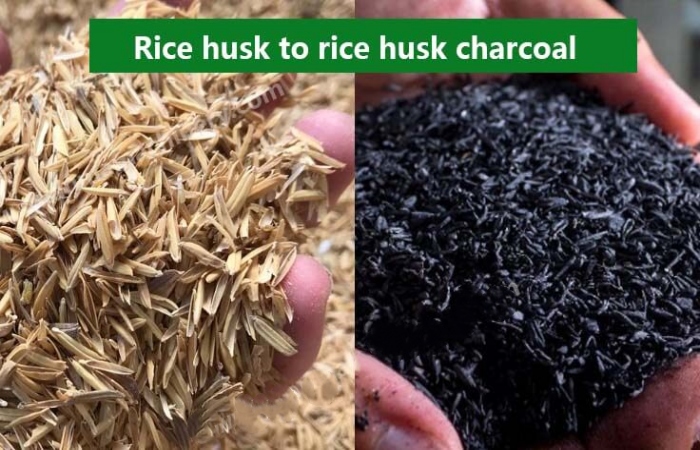 Producing biochar from rice husks
What Can Rice Husk Biochar Be Used For?
Rice husk biochar is used in far more than traditional fuel applications, making it one of the most valuable products produced by modern biochar production equipment. The diverse range of rice husk made charcoal applications drives its high market demand and ensures multiple revenue streams for investors:
· Soil Amendment & Organic Farming: It improves water retention, reduces fertilizer leaching, and neutralizes soil acidity, making it a premium product for organic fertilizer manufacturers.
· Carbon Sequestration Projects: With global carbon credit markets booming, rice husk biochar qualifies for lucrative carbon offset credits.
· Industrial Applications: It is highly sought after as a thermal insulation material in steel mills, a raw material for activated carbon production, and an eco-friendly industrial fuel.
For businesses located in rice-producing regions, converting rice husks into biochar not only reduces waste disposal costs but also creates an additional source of revenue from an abundant local resource.
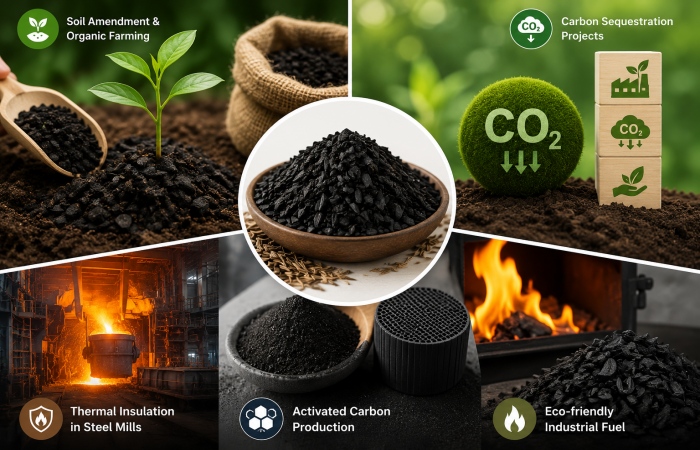 Rice husk made charcoal application
Profit Margin & ROI of Rice Husk Production Business: Is It Worth the Investment?
From an investment perspective, the rice husk to charcoal project boasts a remarkably short payback period. Rice husk is often a zero-cost or even negative-cost (due to disposal fees) waste product for rice mills. However, after processing through a rice husk making machine, the market price of high-quality biochar ranges from $200 to over $600 per ton, depending on the target market (agricultural vs. industrial grade). Combined with the potential sale of by-products like wood vinegar and carbon credits, investors can expect a highly profitable return on investment (ROI) within the first year of operation.
How It Works: The Simple 4-Step Rice Husk Carbonization Process
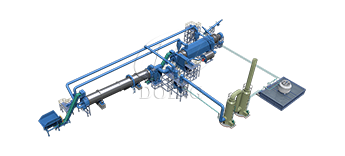
The core process of rice husk carbonization into charcoal is essentially a thermal cracking process in which biomass undergoes the removal of volatile components under oxygen-deficient conditions to produce a carbon-rich solid. To help investors understand the production efficiency, HENAN DOING's biochar making equipment simplifies the rice husk conversion process into four automated steps:
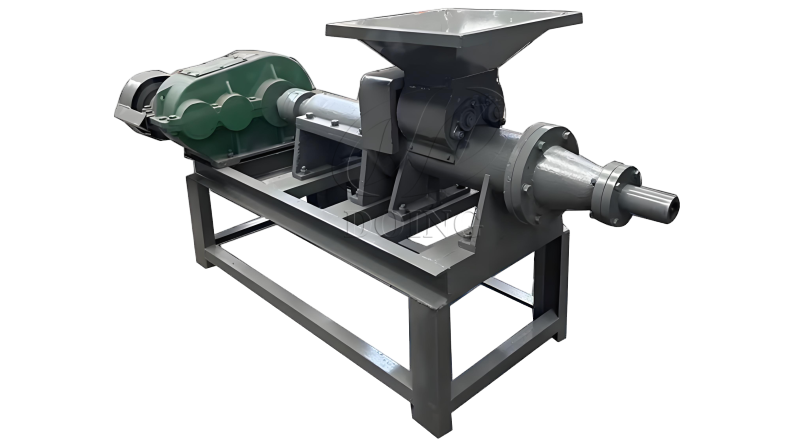
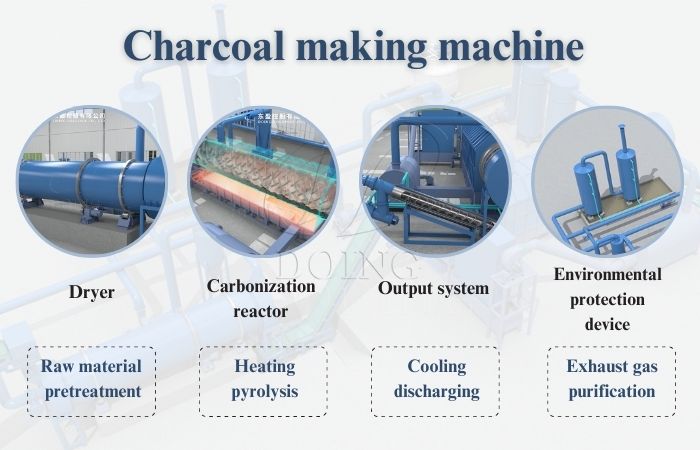 HENAN DOING charcoal making machine
1. Drying and Dehydration Zone (120°C–150°C): Reduces the moisture content of rice husks to below 15% (typically using a rotary dryer), ensuring stable feeding and uniform carbonization.
2. Pyrolysis and Carbonization Zone (250°C–600°C): Heating occurs in an oxygen-free or oxygen-limited environment, causing the organic matter in the rice husks to undergo destructive distillation:
250°C–350°C: Dehydroxylation and structural rearrangement;
350°C–450°C: Formation of a benzene ring network and rapid release of volatiles (tar, acidic liquids, and combustible gases);
450°C–600°C: Further expulsion of volatiles and increased fixed carbon content, resulting in a stable carbon structure.
3. Flue Gas Treatment and Self-Heating: Combustible gases (CO, methane, etc.) generated during the process undergo dust removal and condensation to separate wood vinegar and tar; they are then fed back into the furnace to provide heat for carbonization, achieving smokeless, eco-friendly operation and energy self-sufficiency.
4. Cooling and Discharge: High-temperature carbon is cooled via a sealed system before discharge to prevent re-ignition, yielding the final rice husk charcoal product.
Equipment Designed for Efficient Rice Husk Carbonization
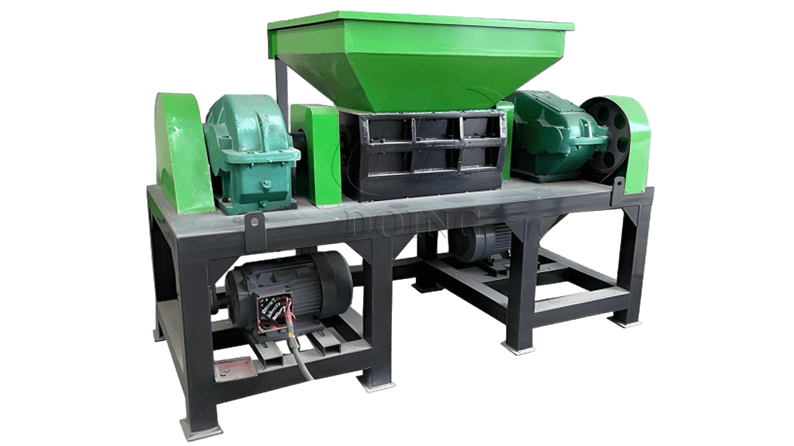
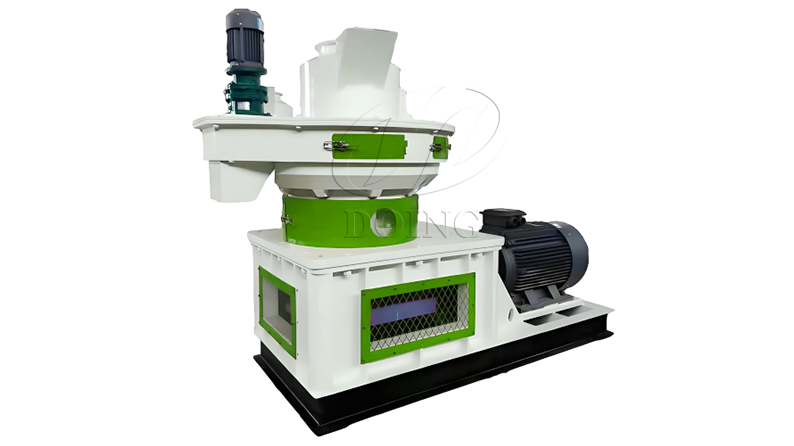
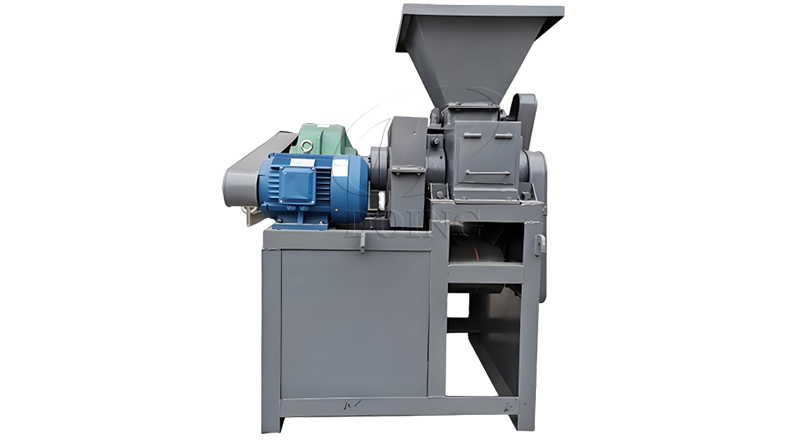
To make the most of seasonal rice husk resources, choosing suitable carbonization equipment is essential. HENAN DOING provides both continuous and batch-type rice husk charcoal making machines as well as complete biochar production equipment, allowing customers to select the most suitable solution according to their production capacity, investment budget, and project requirements. Whether for small-scale production or large industrial projects, our equipment delivers stable operation, consistent biochar quality, and reliable production performance.
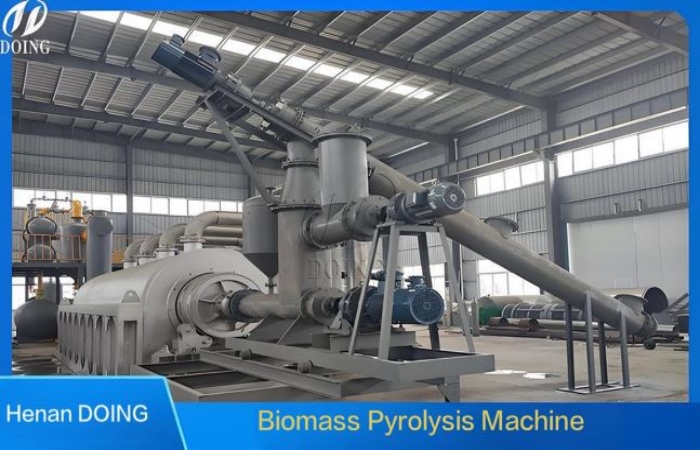 DOING biomass pyrolysis machine
In addition to flexible equipment configurations, DOING's biomass carbonization equipment features a high level of automation, energy-efficient operation, and an environmentally friendly design. The combustible gases generated during the carbonization process can be recycled as a heat source, helping reduce fuel consumption and operating costs. Depending on customer requirements, the system can also recover valuable by-products such as wood vinegar and wood tar, further improving the overall economic return of the project.
Beyond rice husks, DOING's biomass carbonization equipment can process a wide variety of agricultural and forestry residues, including sawdust, wood chips, bamboo, coconut shells, palm kernel shells, corn cobs, straw, peanut shells, fruit shells, and many other biomass materials. This flexibility enables customers to make full use of locally available biomass resources throughout the year, improving equipment utilization and maximizing investment returns.
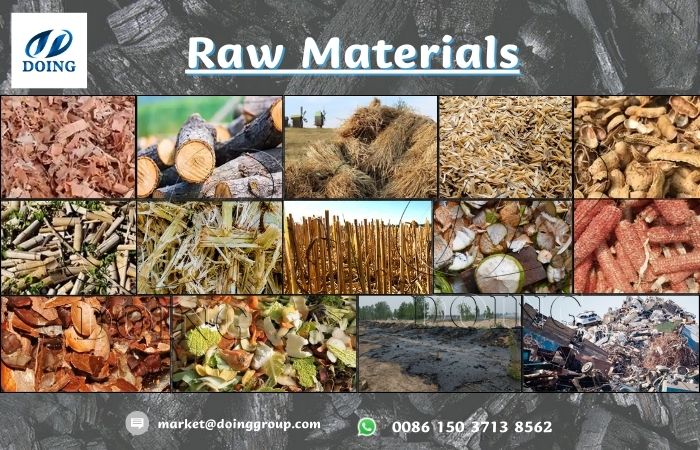 Carbonizable biomass feedstock
Whether you are planning a new rice husk biochar production project or looking for an efficient rice husk charcoal making machine, DOING can provide customized biochar production equipment and biomass carbonization solutions based on your raw materials, production capacity, and business goals.
If you would like to learn more about our biomass carbonization equipment or discuss your project requirements, feel free to contact the DOING team. We will recommend a suitable solution based on your raw materials, capacity requirements, and investment plan to help you produce high-quality rice husk biochar efficiently.

Please provide us with project information as much as possible.



Copyright © 2015-2026 DOING Holdings - Henan Doing Environmental Protection Technology Co., Ltd | Privacy Policy | All Rights Reserved