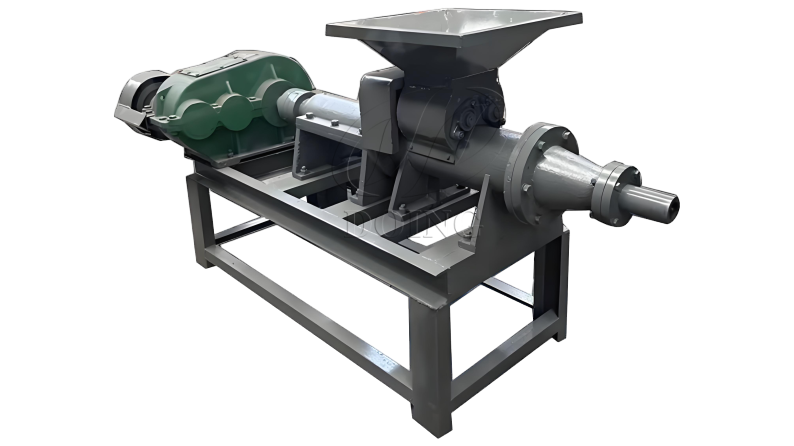

One carbonization system may be able to process both sugarcane bagasse and press mud, depending on feedstock properties, pretreatment requirements, and equipment compatibility. For a sugar mill, the key considerations are moisture content, material consistency, feeding stability, processing capacity, and the required biochar properties.
A practical solution is to evaluate separate pretreatment routes for the two feedstocks before determining whether they can share one continuous biomass carbonization system.
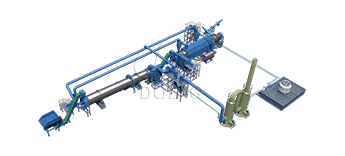
DOING ECO (Henan DOING) provides biomass carbonization equipment and integrated processing solutions. The following guide explains how to evaluate the equipment setup and pre-drying requirements for a sugar mill handling these two by-products.
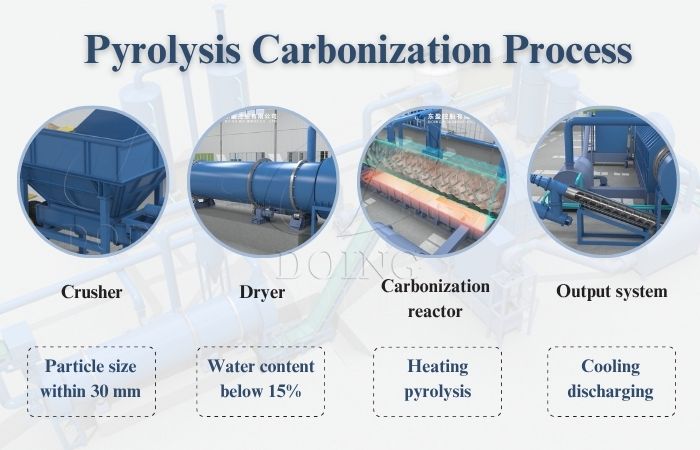 DOING ECO biomass carbonization processing solutions
Although both materials come from sugar production, their physical properties can create different processing requirements.
| Feedstock | Main Characteristics | Pretreatment Considerations |
| Sugarcane bagasse | Fibrous material with variable particle sizes and moisture content | Cutting or size reduction, screening, drying, and stable feeding |
| Press mud (filter cake) | Moist, cake-like residue whose properties vary with the mill's clarification and dewatering process | Moisture testing, further dewatering if needed, cake breaking, drying, and feeding preparation |
Moisture is particularly important. A 2025 research article of sugarcane bagasse discusses the effects of moisture and feedstock characteristics on thermochemical equipment selection. Research on sugar mill press mud has also reported high moisture levels in particular samples. These figures are not universal specifications, so the actual materials from your mill should be tested before equipment selection.
Pre-drying helps reduce the amount of heat consumed by water evaporation before the biomass reaches carbonization conditions. Excessive moisture can increase energy consumption, slow heating, and make process control more difficult.
The drying process in the DOING ECO biomass carbonization process typically aims to reduce the moisture content of the raw materials to below 15%. However, this is not a universally applicable final moisture content guarantee standard for all bagasse or filter press projects.
First, measure the moisture content of the bagasse at its actual collection point. If the material is too wet for the selected system, a suitable drying stage should be added before feeding.
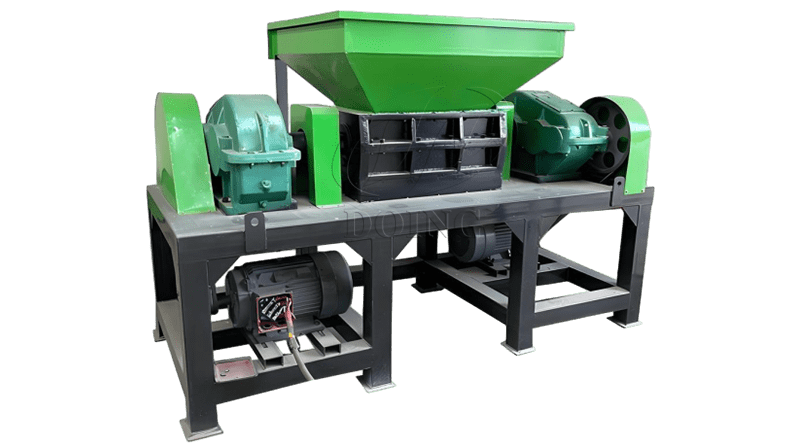
Because bagasse contains fibers of different shapes and sizes, cutting or screening may also be necessary to improve feeding consistency. The final preparation requirements depend on the material's actual condition and the selected equipment.
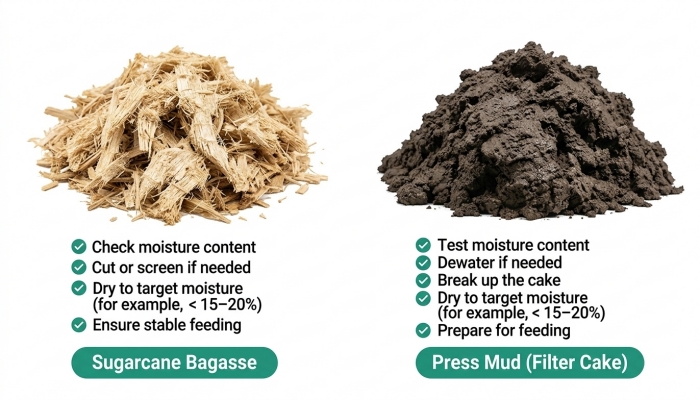 Pretreatment of bagasse and press mud before carbonization
Press mud may require more extensive moisture removal because it can leave the clarification process as a wet filter cake.
Where applicable, evaluate whether the existing filtration or mechanical dewatering equipment can remove additional water before thermal drying. The cake may also need to be broken up to support more uniform drying and stable feeding.
The required dryer configuration and final moisture target should be determined from the initial moisture content, daily throughput, available heat source, and carbonization system design. A moisture test of representative samples is the best starting point.
A carbonization system for sugarcane bagasse and press mud can be designed around two main configurations: separate pretreatment with a shared carbonization unit, or blended feeding after drying. The better option depends on feedstock conditions, production targets, and the intended use of the biochar.
This is the recommended starting point for most projects requiring flexibility. Sugarcane bagasse and press mud have separate crushing, conveying, and pre-drying arrangements as needed. Once prepared, the materials can enter a shared feeding system or be processed in batches through the same carbonization unit.
This setup allows drying conditions to be adjusted independently for each feedstock and helps maintain more consistent processing conditions. It also gives the sugar mill greater flexibility to control production and produce biochar from each material separately according to market demand.
Alternatively, dried sugarcane bagasse and press mud can be mixed at a suitable ratio before entering the carbonization system. Bagasse fibers may help improve the mixture's structure and handling characteristics, depending on the material properties and mixing ratio. However, the blending ratio should be established through preliminary testing based on moisture, ash content, feeding behavior, and the required biochar properties.
Blended feeding is less suitable when the two feedstocks serve different markets—for example, fuel biochar and soil-amendment biochar—because mixing can reduce the flexibility to control product properties separately.
For most sugar mills, separate pretreatment with a shared carbonization unit is the more flexible option to evaluate first. DOING ECO can assess the appropriate configuration based on feedstock samples, moisture content, daily throughput, and target biochar applications. The final equipment arrangement should be confirmed through feedstock testing and engineering evaluation.
Planning to carbonize sugarcane bagasse and press mud at your mill in Brazil? Contact DOING ECO to evaluate a suitable carbonization machine system for your feedstocks.
To help us assess your project, please share:
Feedstock moisture: Current moisture content of bagasse and press mud.
Daily capacity: Processing quantity of each feedstock.
Biochar application: Intended use of the final product.
Based on these details, DOING ECO can evaluate the required pretreatment, pre-drying arrangements, and carbonization system configuration for further technical assessment.
Not automatically. Different feedstocks can produce biochar with different physical and chemical properties. Suitability should be evaluated through product testing against the intended application requirements.
Not necessarily. Sugarcane bagasse is commonly used as a fuel for steam and electricity generation in sugar mills. Before allocating it to carbonization, the mill should assess its existing energy demand, available surplus bagasse, and overall process economics.
Testing should be selected according to the intended use and applicable local requirements. Relevant parameters may include pH, ash content, fixed carbon, selected contaminants, and other application-specific properties. The feedstock name alone is not sufficient to establish agricultural suitability.

Please provide us with project information as much as possible.



Copyright © 2015-2026 DOING Holdings - Henan Doing Environmental Protection Technology Co., Ltd | Privacy Policy | All Rights Reserved