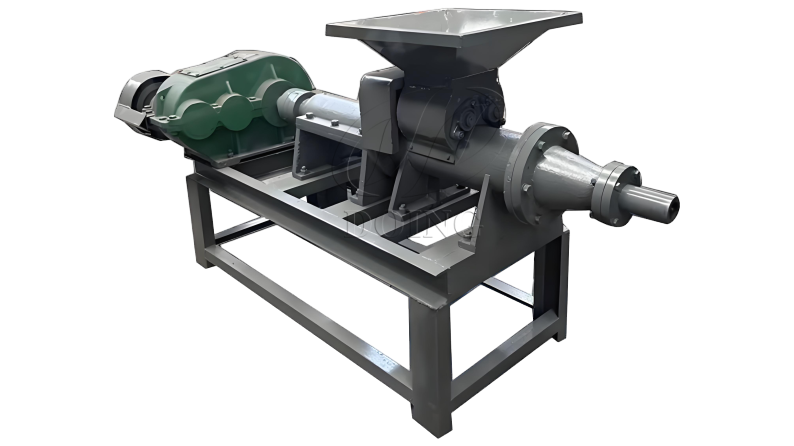

Biomass carbonization produces valuable biochar as well as combustible gas, wood vinegar, and tar. For operators, the challenge is not only producing biochar at the required capacity. A reliable carbonization plant also needs to control condensable products and keep gas-handling and auxiliary systems stable.
Tar buildup is a key concern because deposits can restrict gas flow and increase cleaning or maintenance requirements. Poorly managed condensates can also complicate corrosion management and raise the risk of unplanned downtime. The practical answer is to manage the whole process, from feedstock preparation and carbonization to condensation, tar separation, gas recovery, and control.
Several operating conditions can contribute to tar-related problems in a biomass carbonization plant.
Feedstock condition is the first factor. Excessive moisture or inconsistent particle size can affect heat transfer and carbonization stability, which may make downstream gas handling more difficult.
Carbonization conditions are another factor. Biomass carbonization produces combustible gas and condensable products. If temperature and process conditions are unstable, the composition and flow of downstream gas can also fluctuate.
Condensation and separation are particularly important. When condensable products are not effectively collected and separated, tar can enter downstream gas-handling components and gradually accumulate.
Poorly controlled deposits can then increase cleaning and maintenance requirements. Depending on the equipment and operating conditions, accumulated condensates can also increase corrosion-management concerns and contribute to unexpected shutdowns.
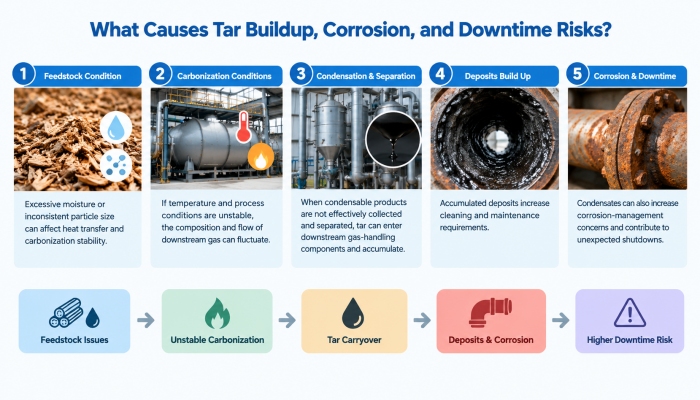 Reasons for the risk of tar buildup during the carbonization process
Therefore, reducing these risks is not simply a matter of cleaning tar more frequently. The better approach is to control the process from feedstock preparation through carbonization, condensation, tar separation, gas recovery, and automatic monitoring.
This is where DOING ECO (Henan DOING) integrates several process stages into its biomass carbonization solutions.
DOING ECO approaches biomass carbonization as an integrated process. The objective is to control tar and condensable products before they become a downstream operating problem.
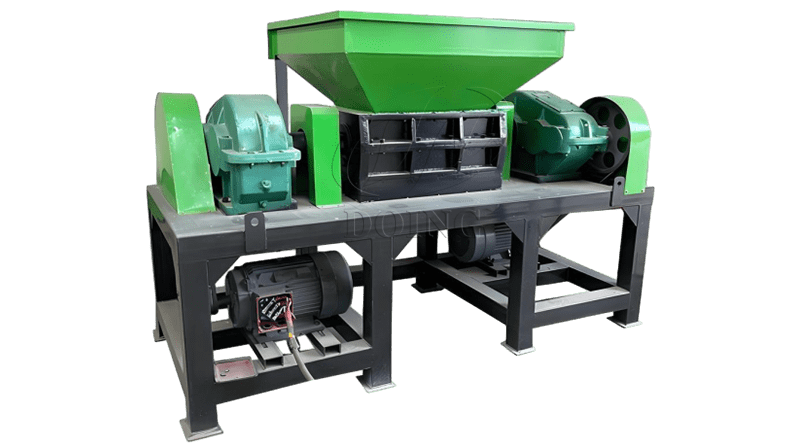
Feedstock condition affects the stability of the carbonization process. DOING ECO’s biomass carbonization solution uses shredding and drying as needed, with feedstock normally prepared to below 15% moisture before carbonization.
A biomass shredder helps provide more consistent feed size, while a biomass dryer reduces excessive moisture. These steps create a more stable feed condition and support consistent carbonization and biochar production.
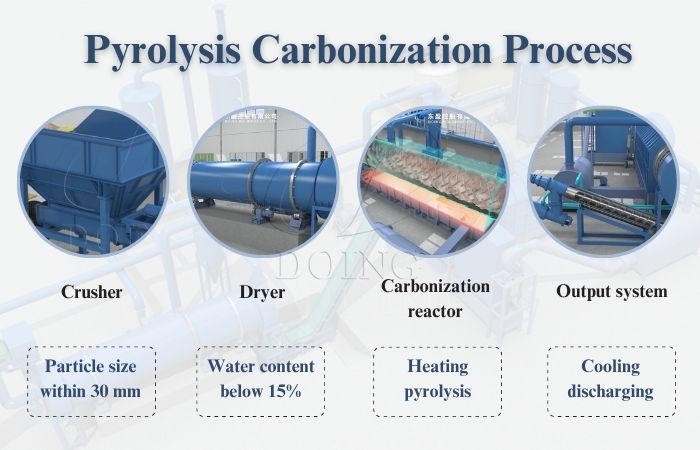 Raw material preparation for carbonization
DOING ECO biomass carbonization equipment operates at 400–700°C in an oxygen-free environment. Its continuous models include DY-T-1, DY-T-3, and DY-T-5, covering 1–5 t/h.
Temperature stability matters because uneven carbonization can affect biochar quality and make downstream gas and condensable handling less consistent. The equipment uses a PLC intelligent control system for monitoring, data collection, display, processing, automatic correction, and alarms.
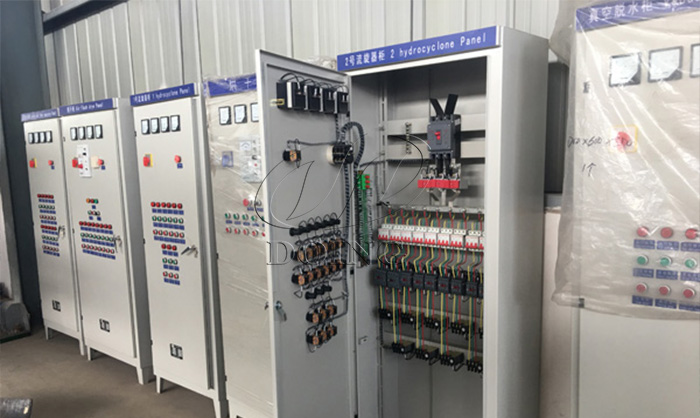 PLC intelligent control carbonization system
Tar control is closely connected with the downstream condensation system. DOING ECO can configure a condensation system, wood vinegar collection system, and tar separation system for biomass carbonization projects.
The purpose is simple: condense and collect condensable products, then separate tar before the remaining gas moves to later stages. This reduces unnecessary tar carryover and helps operators manage the gas path more effectively.
A real example is DOING ECO’s 5 t/h beechwood carbonization project in Romania, which includes a wood vinegar separation system. It demonstrates that condensable-product handling can be included in the original plant configuration rather than added only after operating problems appear.
The carbonization process also produces combustible gas. DOING ECO can recover part of this gas for heat supply, helping the system achieve energy self-balance.
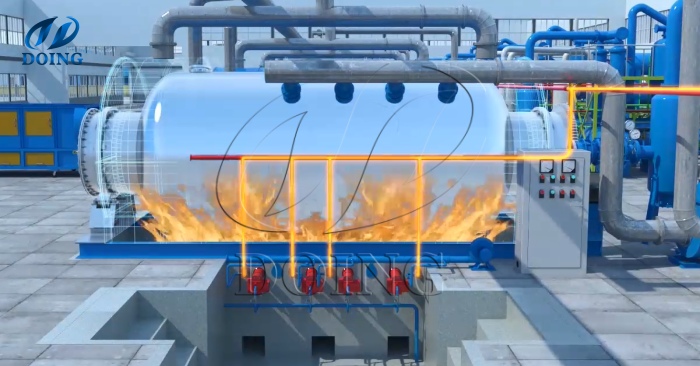 Combustible gas recovery in carbonization process
Gas recovery is connected with tar management: the gas path must be coordinated with condensation and separation so that condensable products are handled before gas reuse. This integrated approach helps keep the plant’s thermal and gas systems working together.
Downtime is rarely caused by one component alone. Problems with feeding, temperature, gas handling, condensation, or discharge can develop into a larger process interruption.
PLC control gives operators a way to monitor key operating conditions and use alarms or automatic correction when abnormal conditions occur. For continuous carbonization, this supports more consistent operation and helps operators identify problems earlier rather than waiting for severe buildup or process instability.
Tar buildup and corrosion are related operational concerns, but they are not the same problem. A carbonization system should pay attention to areas exposed to hot gas, condensable products, and accumulated deposits.
Three practical measures are important:
Control condensates. Effective condensation and tar separation reduce unnecessary accumulation in downstream equipment.
Match materials to operating conditions. Material selection should consider the temperature, gas composition, condensable products, and service conditions of each section.
Inspect key gas-handling components. Gas lines, condensers, and separation equipment should be checked for abnormal deposits, blockage, or signs of deterioration.
The purpose of maintenance is not only to repair equipment after a failure. It is to prevent small deposits or operating deviations from developing into longer shutdowns.
Reducing tar buildup, corrosion risks, and downtime is more effective when these issues are considered during plant design rather than treated separately after commissioning.
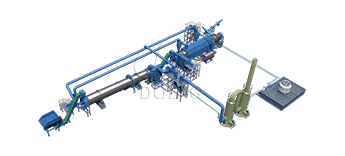
A typical DOING ECO configuration can integrate: Feedstock preparation → continuous carbonization → condensation → tar separation → combustible gas recovery → biochar collection → gas treatment → PLC control
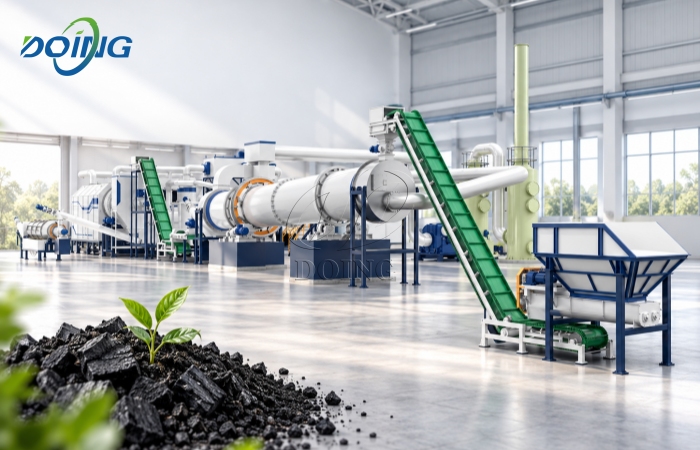 DOING ECO biomass carbonization plant
The equipment range includes continuous, semi-continuous, and batch carbonization systems. Continuous models DY-T-1, DY-T-3, and DY-T-5 are designed for 1–5 t/h, while the wider configuration can be matched to the feedstock, required capacity, and project conditions.
For a biomass carbonization plant, the goal is not to eliminate tar generation. It is to control where condensable products go, keep the process stable, and make maintenance more predictable.
A reliable biomass carbonization plant needs more than a carbonization furnace. Tar buildup, corrosion risks, and unplanned downtime should be managed through coordinated feedstock preparation, stable carbonization, condensation, tar separation, gas recovery, and PLC monitoring.
DOING ECO can provide biomass carbonization equipment and supporting systems based on the feedstock, moisture level, target capacity, and required products. For a project assessment, provide the biomass type, moisture level, and target capacity so the process configuration can be discussed around actual operating conditions.
Tar generation itself is part of the carbonization process. The operating issue is uncontrolled accumulation. A well-designed system therefore focuses on collecting and separating condensable products rather than assuming tar can be eliminated completely.
No. Material selection is only one part of corrosion management. Condensate control, equipment drainage, deposit removal, operating temperature, and inspection practices also affect long-term equipment condition.
There is no single inspection interval that fits every project. Maintenance planning should consider the actual biomass feedstock, operating hours, throughput, deposit conditions, and the performance of gas-handling and condensation components. Condition-based inspection can be more useful than relying only on a fixed calendar schedule.
For projects where condensable products are expected, integrating condensation and tar separation into the original process design can make gas handling and maintenance easier to manage than adding separation equipment after repeated buildup problems occur.

Please provide us with project information as much as possible.



Copyright © 2015-2026 DOING Holdings - Henan Doing Environmental Protection Technology Co., Ltd | Privacy Policy | All Rights Reserved