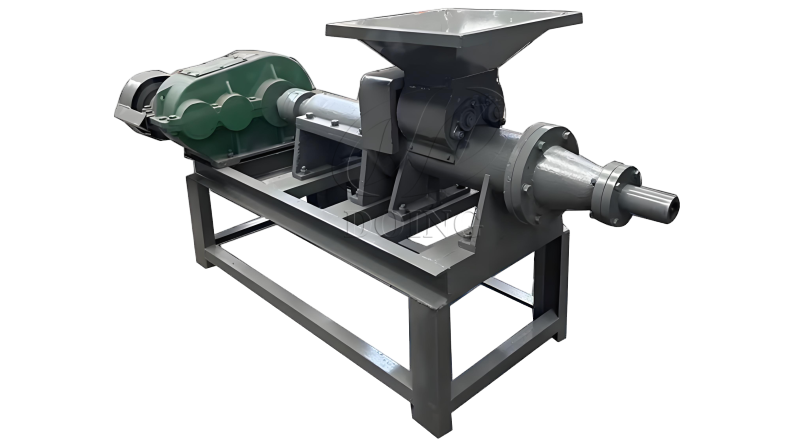

When people first learn about "charcoal production," a common and important point of confusion arises: the assumption that charcoal is the same as coal. While both fuels share a similar appearance—black, solid, and capable of producing heat when burned—they differ entirely in their origin, composition, and environmental impact. Understanding the difference between coal and charcoal helps consumers make informed fuel choices and allows investors to recognize the significant potential of modern charcoal production.
Coal is a fossil fuel that formed underground over millions of years from decayed plants under high pressure. It is mined from the earth and is considered a nonrenewable energy source.
Charcoal, on the other hand, is a man-made fuel produced by pyrolyzing organic matter in an oxygen-deficient environment. Traditional biomass charcoal is made from wood, but modern biomass charcoal utilizes a wider variety of raw materials. Today, using an advanced charcoal making machine, charcoal can be produced from various renewable resources, such as wood, bamboo, coconut shells, fruit pits, crop residues (like straw and rice husks), and even treated organic sludge. This method transforms waste into valuable fuel and can be produced anytime, anywhere using sustainably managed biomass, making it a versatile and renewable energy solution.
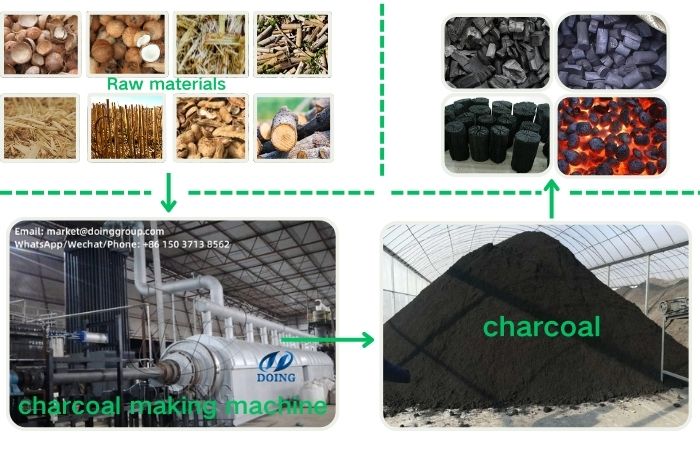 Biomass raw materials for charcoal making
Coal contains not only carbon but also sulfur, phosphorus, and other impurities. These substances release harmful gases like sulfur dioxide during combustion, contributing to air pollution and acid rain.
Charcoal, by contrast, has a much cleaner composition. When produced by Henan Doing Holdings Co., Ltd.’s advanced charcoal making machine, it burns with little smoke and odor, producing stable heat and leaving less ash. That’s why it is widely used for barbecue, metallurgy, water purification, and even in agriculture as biochar.
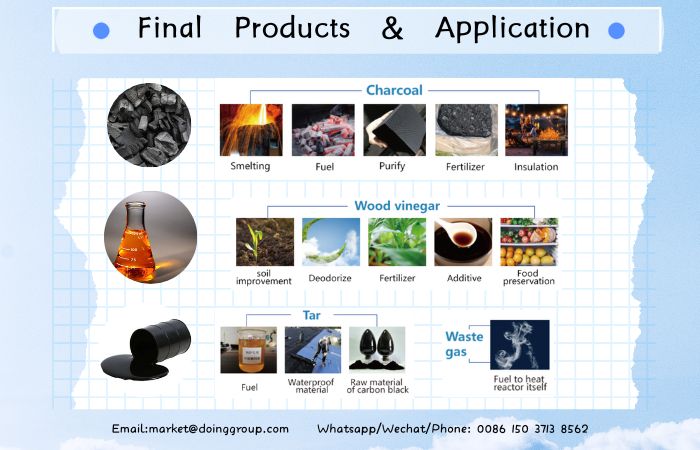 Clean charcoal products and their applications
Mining coal consumes natural resources and destroys landscapes. Once burned, it emits large amounts of carbon dioxide and other greenhouse gases.
Charcoal made from renewable biomass is different. It turns agricultural waste into value and can even help capture carbon in the form of biochar. When used properly, it is an eco-friendly fuel that supports a circular economy — turning waste into wealth. This is one of the key benefits of making biomass charcoal.
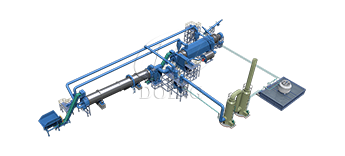
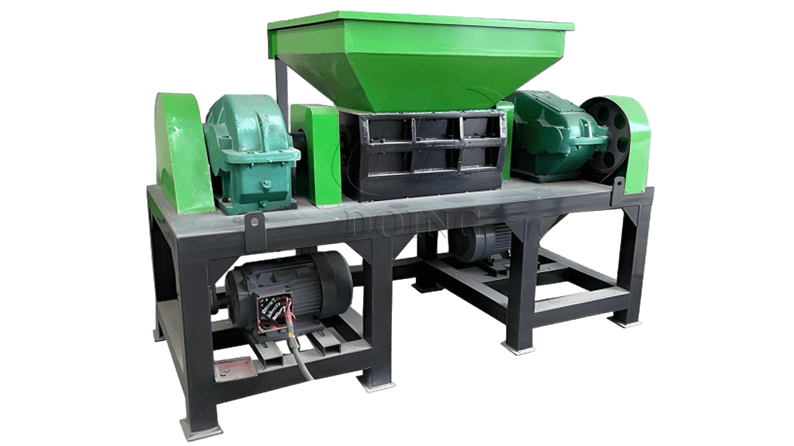
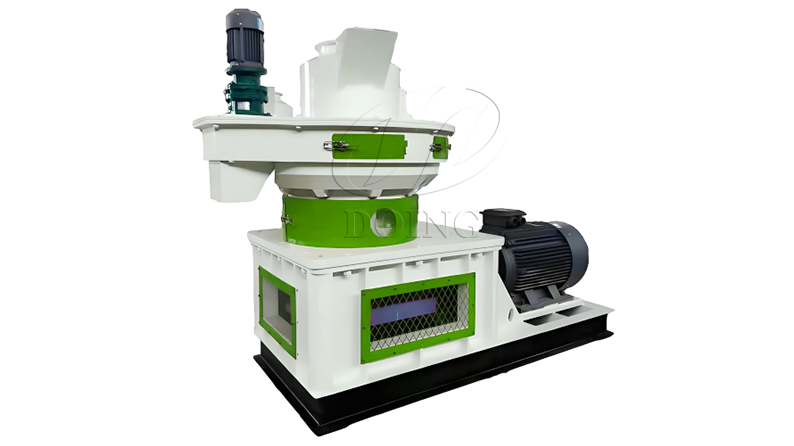
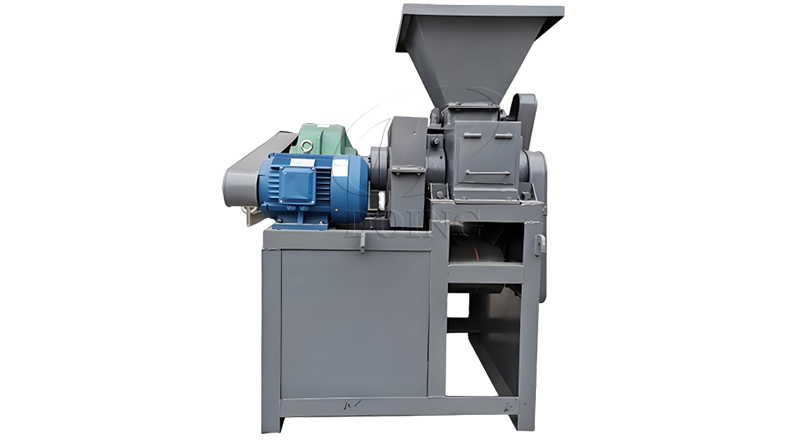
Producing such clean and versatile charcoal, however, requires efficient and reliable technology. Henan Doing Holdings Co., Ltd. specializes in designing and manufacturing biochar and charcoal making machine. Our equipment adopts high-temperature pyrolysis technology, ensuring complete carbonization with low emissions. We provide multiple production models — batch type, semi-continuous, and fully continuous — suitable for different raw materials like wood, coconut shells, rice husks, or sawdust. Each system includes smoke purification, heat recovery, and energy-saving designs to ensure stable operation and environmental compliance.
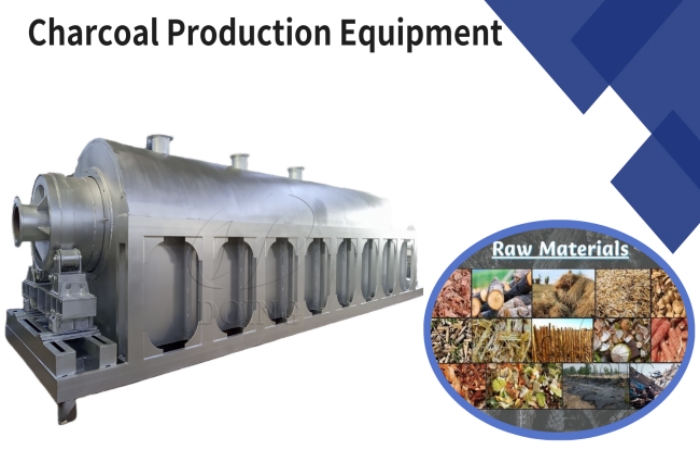 Henan Doing modern charcoal production plants
As the world transitions to renewable energy, charcoal and biochar are gaining increasing attention. For producers, this means a stable and reliable business. There's no need to worry about raw material shortages—using wood, coconut shells, or agricultural waste means continuous production and profitability. These are clear benefits of making biomass charcoal for any business owner.
Henan Doing Holdings is committed to helping global partners build modern charcoal production plants that are efficient, profitable, and environmentally friendly. With our expertise in providing tailored carbonization solutions using our professional charcoal making machine, we support businesses in transforming renewable biomass into lasting value. If you are interested in entering the charcoal production industry and experiencing the benefits of making biomass charcoal firsthand, we cordially invite you to contact us. Our technology will help you transform biomass resources into energy and opportunities, clearly demonstrating the difference between coal and charcoal in practice.

Please provide us with project information as much as possible.



Copyright © 2015-2026 DOING Holdings - Henan Doing Environmental Protection Technology Co., Ltd | Privacy Policy | All Rights Reserved