
A piece of biochar may look perfectly carbonized on the outside, but how can you tell whether its carbon structure is stable enough to remain in the environment for decades—or potentially much longer? One useful clue comes from a number that is easy to overlook: the hydrogen-to-carbon (H/C) molar ratio. In an SGS laboratory test, DOING ECO’s biochar recorded an H/C molar ratio of 0.27, a result that indicates a high degree of carbonization and a highly stable carbon structure.
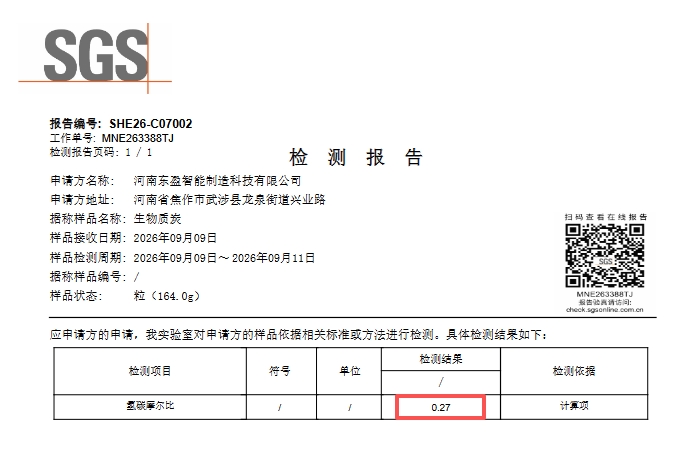 SGS test results confirm an H/C molar ratio of 0.27
For biochar intended for carbon sequestration, this is more than just a laboratory number. The lower the H/C ratio, the more aromatic and condensed the carbon structure generally becomes, making the carbon less prone to decomposition. Generally, high-quality biochar has a hydrogen-to-carbon molar ratio of approximately 0.2 to 0.4, which effectively enhances its ability to adsorb and fix carbon dioxide. In simple terms, a biochar H/C molar ratio below 0.3, such as DOING ECO’s tested result of 0.27, indicates a highly carbonized carbon structure that is favorable for producing stable biochar for carbon sequestration and long-term carbon storage. DOING's carbonization process produces char that is SGS certified and meets stringent carbonization ratio requirements.
The H/C molar ratio compares the amount of hydrogen and carbon in biochar. During pyrolysis, biomass loses hydrogen-rich and oxygen-containing compounds, while the remaining carbon becomes increasingly aromatic and condensed.
DOING ECO’s engineers explain it simply:
The lower the H/C molar ratio, the more aromatic rings are present in the carbon structure. This makes the carbon skeleton stronger and less likely to decompose.
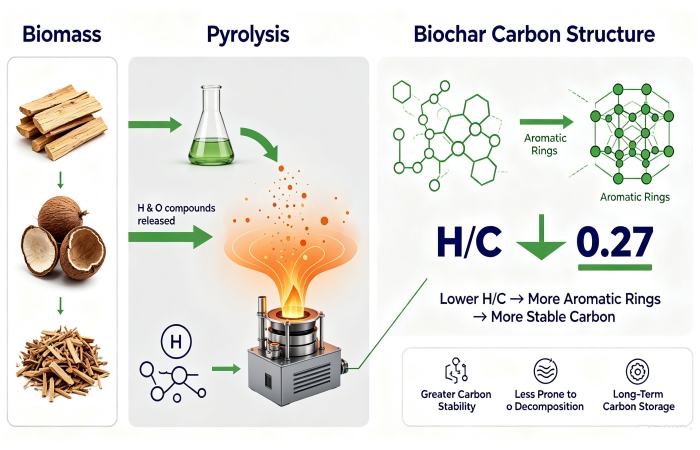 Lower H/C means more aromatic rings and greater carbon stability
This is particularly important for carbon-removal projects. If biochar is being used as a carbon sink, the goal is not simply to produce carbon-rich material—it is to keep that carbon stored for a very long time. A lower H/C ratio therefore generally indicates a more stable form of carbon that is better suited to long-term sequestration.
Put simply: an H/C ratio of 0.27 means the carbon has been highly carbonized and is more resistant to breaking down.
For a customer investing in a commercial carbonization plant, the H/C ratio can provide useful information about the quality of the final biochar.
A low H/C ratio can help you:
Evaluate carbon stability: A more aromatic carbon structure is generally more resistant to decomposition.
Support carbon-sequestration applications: Stable carbon is important when the business model depends on keeping carbon stored for the long term.
Verify process performance: Laboratory results provide evidence of the actual biochar produced, rather than relying only on furnace specifications.
Build a stronger basis for certification: H/C is one of the parameters considered by biochar and carbon-removal standards, although specific thresholds vary between certification systems.
Importantly, H/C should not be considered the only indicator of biochar quality or carbon-removal eligibility. Other properties and testing requirements may also apply depending on the intended application and certification methodology.
A low H/C result ultimately depends on the carbonization process. Temperature, residence time, feedstock moisture, heat distribution and operating stability can all influence the characteristics of the final biochar.
DOING ECO’s biomass carbonization equipment is designed to provide controlled and consistent thermal conditions, helping customers produce biochar with more predictable characteristics at commercial scale.
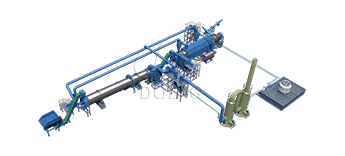
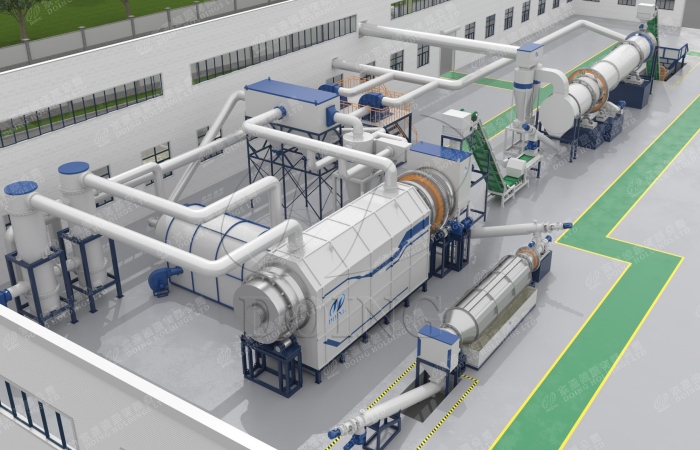 Continuous equipment for controlled biomass carbonization
Controlled Carbonization Temperature
DOING ECO’s continuous carbonization furnace typically operates at around 500°C, with operating conditions adjustable according to the feedstock and desired biochar characteristics. Stable temperature control helps ensure that biomass receives sufficient and relatively uniform heat during carbonization.
More Than 50 Minutes of Residence Time
The system provides a residence time of more than 50 minutes, allowing the biomass to undergo sufficient thermal decomposition before the finished biochar leaves the furnace. For customers, this provides greater control over the carbonization process and helps produce more consistent biochar from batch to batch.
Double-Cylinder Furnace Design
The furnace uses a double-cylinder structure. The inner cylinder helps preheat and dry the biomass, while the outer cylinder provides the heating environment for carbonization. This arrangement improves heat utilization and helps create a more stable carbonization environment.
Syngas Reuse for Heating
The carbonization process generates combustible syngas, which can be reused as a heat source after startup. This reduces the need for continuous external fuel input and helps lower operating costs, making the biomass carbonization equipment more practical for industrial-scale biochar production.
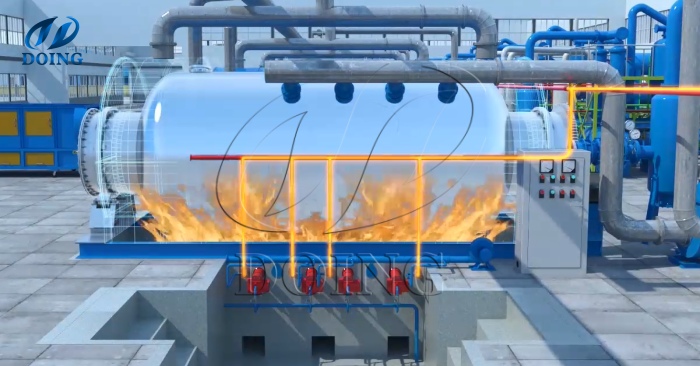 Recovered syngas is burned to provide heat for carbonization
The H/C molar ratio of 0.27 measured by SGS provides third-party laboratory evidence that DOING ECO’s carbonization process can produce highly carbonized biochar.
For customers developing a biochar production plant, the result can serve as a useful reference when evaluating biomass carbonization equipment and designing a process for long-term carbon storage. It can also provide useful supporting evidence when developing stable biochar for carbon sequestration, although the final certification or carbon-removal eligibility of a biochar product should always be assessed against the complete requirements of the applicable standard or methodology.
In other words, the equipment produces the biochar, while laboratory testing tells you what that biochar is actually like.
If your goal is to produce biochar for carbon sequestration, soil applications or other commercial uses, equipment selection should start with the feedstock and the required biochar properties—not simply the rated capacity of the furnace.
DOING ECO provides continuous biomass carbonization equipment for materials such as wood, coconut shells, nutshells, sawdust, rice husks, palm residues, corn cobs and other biomass feedstocks, with customized solutions available for different capacities and production requirements.
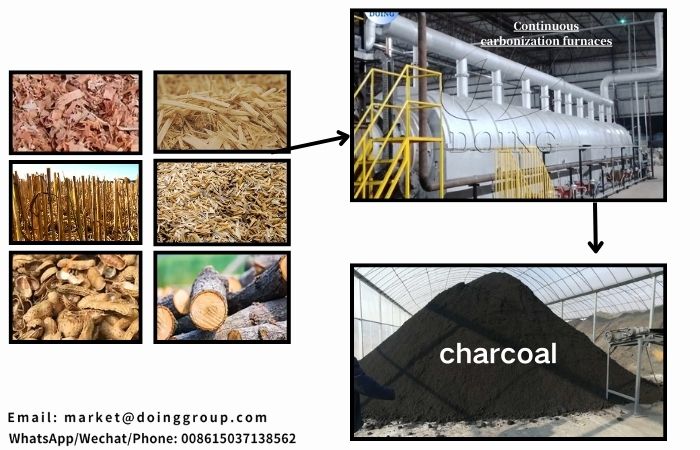 Biomass feedstock is converted into biochar through carbonization
If you have a specific feedstock, production capacity or target biochar specification, contact DOING ECO to discuss your project and find a suitable carbonization process and equipment configuration.
There is no single H/C ratio requirement for every biochar application. EBC generally requires an H/Corg ratio below 0.7, while stricter EBC-Feed and FeedPlus applications use a limit of 0.4. The EU’s 2026 permanent carbon-removal methodology also uses 0.7 as a key H/Corg threshold for its decay-function permanence assessment. Therefore, an H/Corg ratio of 0.27 is well below these commonly used thresholds.
Generally, yes. An H/C ratio below 0.3 indicates a highly carbonized and aromatic carbon structure, which is generally associated with greater resistance to decomposition. This makes it particularly relevant when biochar is intended for long-term carbon storage or carbon-removal applications.
Biochar with a low H/C ratio can be particularly relevant to carbon sequestration and carbon-removal projects, where long-term carbon stability is important. It can also be used in agricultural, soil-improvement and other commercial biochar applications, provided that the product meets the additional quality, contaminant and certification requirements for the specific application.
No. A low H/C ratio is an important indicator of biochar carbonization and stability, but it does not by itself guarantee certification or carbon-removal credits. Certification may also require testing of organic carbon content, contaminants, production batches, feedstock and other properties depending on the applicable standard or methodology.
Yes, it can, provided that the biomass carbonization equipment provides appropriate control of temperature, residence time, feedstock moisture and other process conditions. DOING ECO’s SGS-tested biochar achieved an H/C molar ratio of 0.27, providing a practical example of the biochar quality achievable through controlled carbonization.

Please provide us with project information as much as possible.



Copyright © 2015-2026 DOING Holdings - Henan Doing Environmental Protection Technology Co., Ltd | Privacy Policy | All Rights Reserved