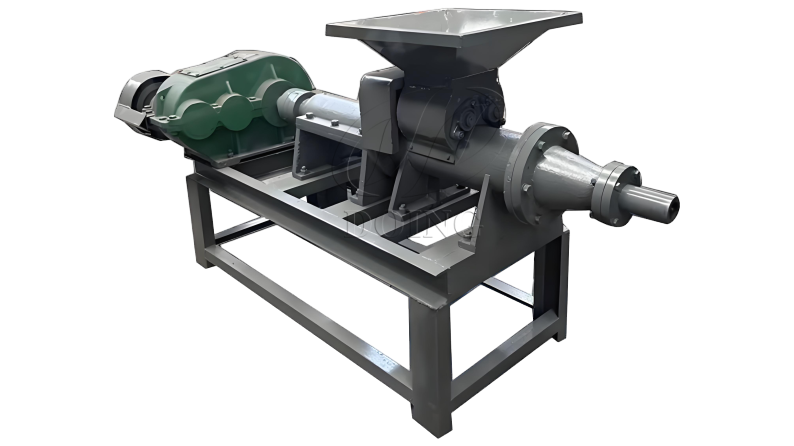

Agricultural waste is converted into biochar through a controlled pyrolysis process, which heats biomass under limited-oxygen conditions to produce a carbon-rich solid. The complete process typically includes feedstock preparation, drying, pyrolysis or carbonization, gas handling, biochar cooling, and final processing.
The exact process depends on the agricultural waste being treated, its moisture content and particle size, the required processing capacity, and the intended use of the biochar. For commercial production, these factors determine the appropriate equipment configuration and operating conditions.
Common feedstocks for agricultural waste pyrolysis include rice husks, straw, corn stalks, sugarcane bagasse, nut shells, and orchard pruning residues. These materials contain organic components that can be thermally converted into biochar and gaseous or condensable by-products.
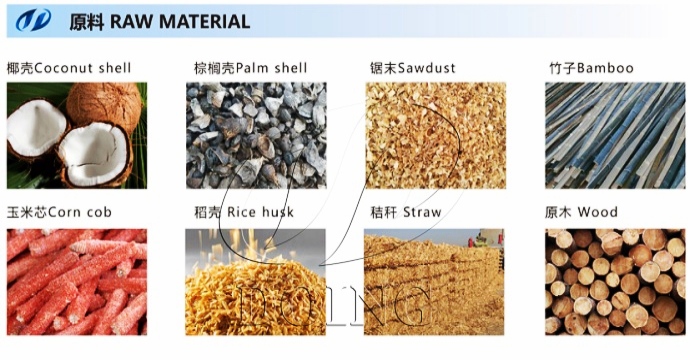 Agricultural waste feedstocks
However, different feedstocks do not behave identically during pyrolysis. Moisture content, ash content, density, particle size, and chemical composition can influence material handling, carbonization performance, and the properties of the resulting biochar.
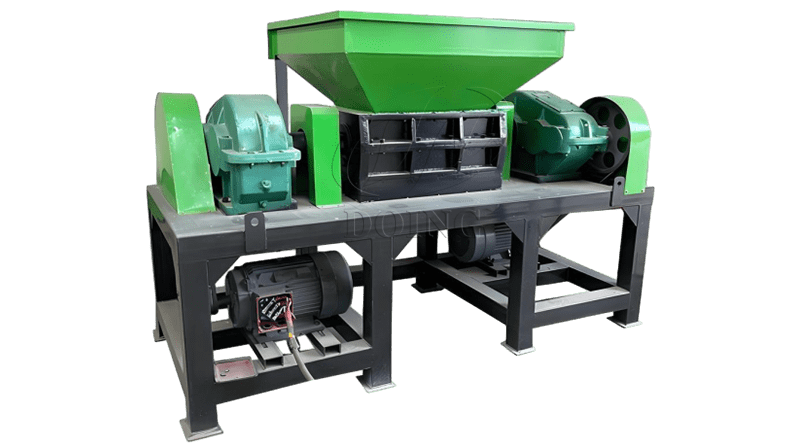
Agricultural waste may contain soil, stones, metal fragments, or other contaminants that need to be removed before processing. Depending on the material, crushing may also be necessary to achieve a suitable particle size.
For continuous biomass carbonization, consistent feed size helps maintain stable feeding and heat transfer. Fibrous materials such as straw and bagasse may require particular attention to feeding behavior, while larger stalks or branches may need size reduction.
Drying is another important stage in the biochar production process. Excess moisture consumes heat during evaporation and can reduce the efficiency of the carbonization system. If the feedstock moisture content exceeds the equipment's requirements, a dryer may be needed before carbonization.
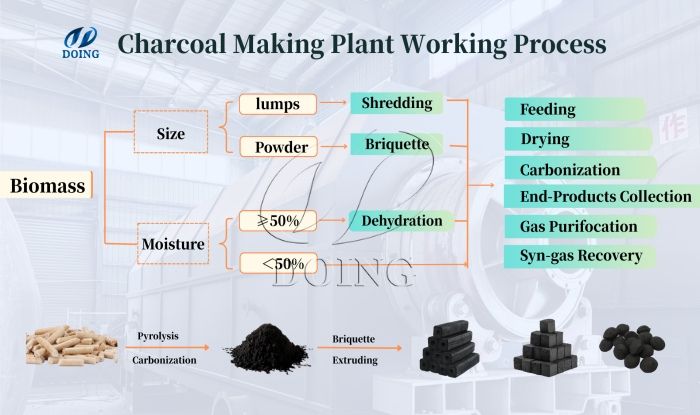 Agricultural waste pretreatment process for pyrolysis
For DOING ECO's continuous biomass carbonization systems, a general feed preparation reference is a particle size of around 2–3 cm or smaller and a moisture content no higher than 15%. Actual requirements should be confirmed according to the specific feedstock and system configuration.
Not every project requires the same pretreatment equipment. The goal is to prepare the agricultural waste for stable carbonization rather than install unnecessary processing stages.
Pyrolysis is the key stage of agricultural waste-to-biochar production. Prepared biomass is heated in a low-oxygen environment, where heat decomposes organic matter into three main products: solid biochar, combustible gas, and condensable vapors.
For biochar production, temperature and residence time must be controlled according to the feedstock and target product. In a continuous carbonization system, biomass is fed into the reactor while biochar is discharged continuously, supporting steady production.
After carbonization, hot biochar must be cooled under controlled conditions before handling or storage. Proper cooling helps prevent oxidation or reignition when the material is exposed to air while still hot. It can then be stored or packaged according to transportation and usage requirements.
Agricultural waste pyrolysis produces combustible gas alongside the solid biochar. Depending on the system design, this gas can be collected and used as a heat source for the carbonization process. Recovering usable process energy can help reduce the need for external fuel.
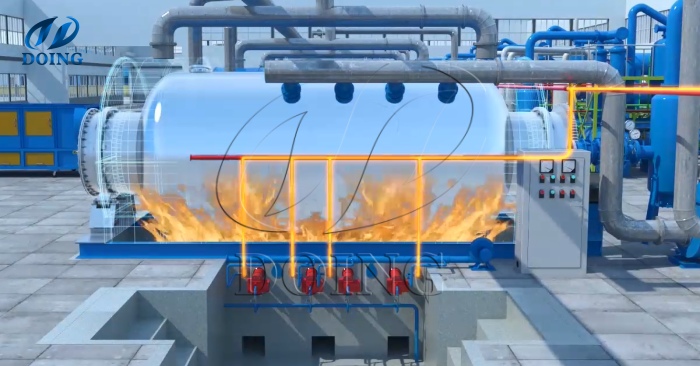 Agricultural waste pyrolysis combustible gas recovery
Gas utilization and emissions treatment must nevertheless be considered separately. A complete production line may require gas collection, combustion equipment, dust removal, and exhaust-gas treatment according to the process design and applicable local environmental requirements. Condensable vapors may also be collected as liquids such as wood vinegar or tar when the feedstock and equipment configuration permit. These by-products require appropriate collection and handling arrangements.
For commercial projects, the performance of an agricultural waste pyrolysis system should therefore be assessed as a complete process. The reactor itself is only one part of the system; gas handling, heat use, and emissions management are also important to reliable operation.
A commercial agricultural waste-to-biochar production line may include the following equipment:
| Process stage | Typical equipment |
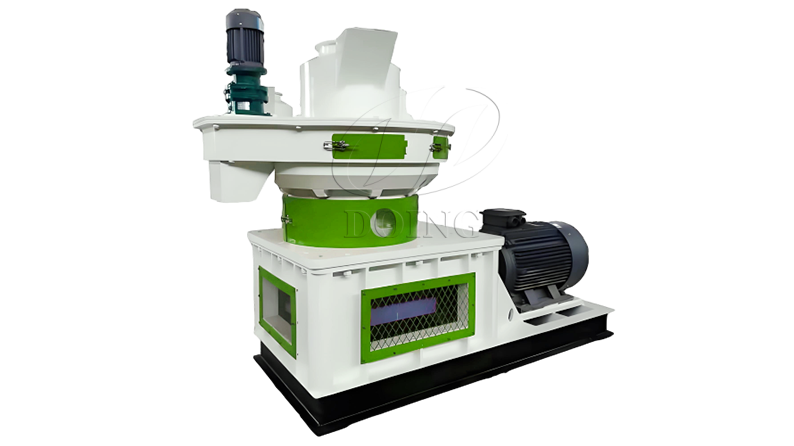
| Feedstock preparation | Conveyors, screening equipment, crusher, and granulator as required |
| Moisture control | Biomass drying system, when needed |
| Pyrolysis | Biomass carbonization machine |
| Gas management | Gas collection, gas cleaning, combustion equipment, and exhaust-gas treatment as required |
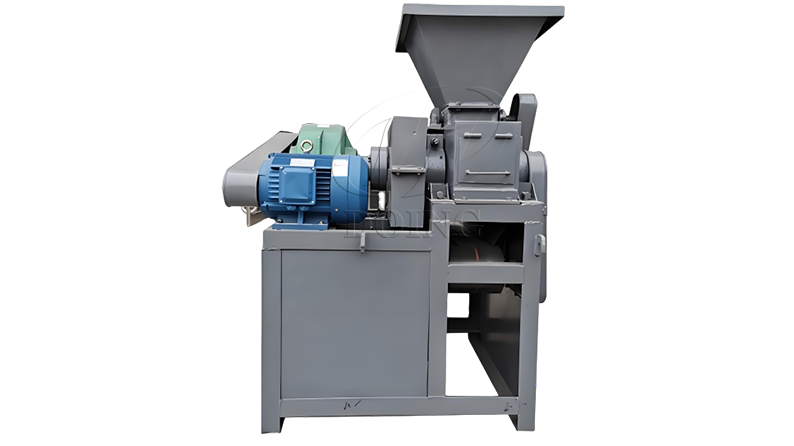
| Biochar finishing | Cooling equipment, and screening or packaging equipment as required |
The production line should be configured as an integrated process to avoid bottlenecks between feedstock preparation, carbonization, gas handling, and biochar cooling.
Choosing the right agricultural waste pyrolysis system starts with five practical considerations.
Feedstock type: Different residues have different densities, ash contents, and feeding characteristics. The system must be suitable for the actual materials being processed.
Moisture content and particle size: These determine whether drying, crushing, or other pretreatment is needed before the biomass enters the reactor.
Processing capacity: The required daily or hourly throughput influences the choice of equipment and supporting systems.
Biochar requirements: The intended application affects the required product characteristics and the operating conditions that need to be evaluated.
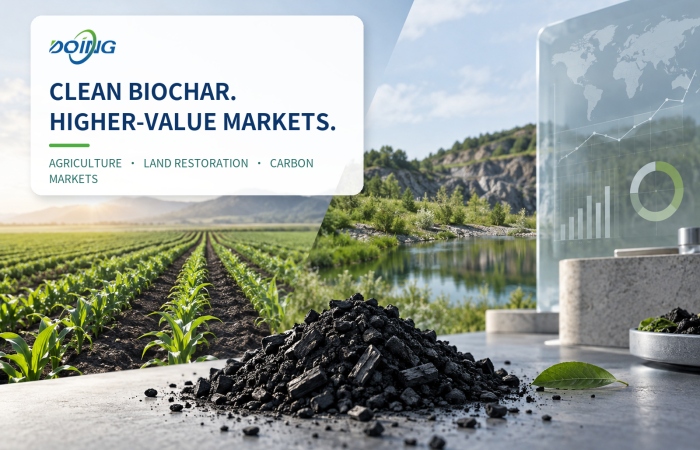 Agricultural waste to biochar product market
Gas handling and environmental requirements: The system design should account for combustible gas utilization, exhaust treatment, and applicable local standards.
Continuous carbonization is worth evaluating for projects with a steady feedstock supply and a need for ongoing production. The final decision should be based on feedstock testing, production targets, and the complete system configuration rather than capacity alone.
DOING ECO (Henan DOING) provides biomass carbonization machine for converting agricultural and other biomass waste into carbonized products. For commercial biochar projects, its continuous carbonization systems can be evaluated according to feedstock characteristics, processing capacity, and target product requirements.
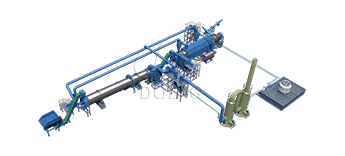
DOING ECO's continuous double-drum carbonization plant is designed for biochar-focused production. The inner cylinder handles low-temperature drying and pre-carbonization, while the outer cylinder completes the carbonization process. This arrangement is designed primarily to improve fixed-carbon yield, while also supporting more consistent processing conditions.
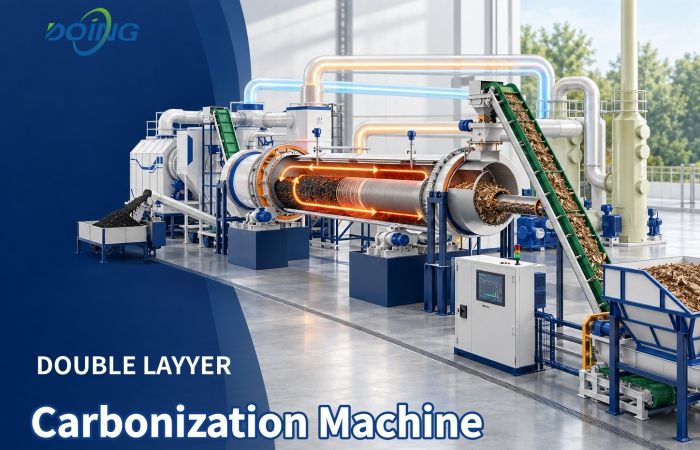 DOING ECO continuous double-drum carbonization machine
A suitable production line may require additional feed preparation, gas utilization, emissions treatment, and biochar cooling equipment. The appropriate combination should be determined from the actual project conditions rather than assumed to be identical for every agricultural residue.
For projects planning to convert agricultural waste into biochar, DOING ECO can evaluate the required carbonization solution based on the feedstock type, moisture content, particle size, processing capacity, and intended biochar application. Contact DOING ECO to discuss a suitable biomass carbonization solution.
Many types of agricultural residues can be used for biochar production, including straw, rice husks, corn stalks, bagasse, and nut shells. However, suitability depends on the material's composition, contamination level, moisture content, and the required biochar properties.
Not always. Drying is required when the feedstock moisture content exceeds the carbonization system's operating requirements. The need for a dryer and the target moisture level depend on the feedstock and equipment configuration.
Biochar yield depends on feedstock composition, moisture content, pyrolysis temperature, heating conditions, and residence time. Higher temperatures can increase the decomposition of organic matter but may also reduce the proportion of solid char, depending on the process conditions.
Yes. Combustible gas can be collected and used for process heating when the system is designed for gas recovery and utilization. Actual energy recovery depends on gas production, system configuration, and operating conditions.
A system may be suitable for several biomass feedstocks, but compatibility should be verified. Different residues can require adjustments to pretreatment, feeding, and carbonization conditions. Feedstock testing and technical evaluation help determine whether one configuration can handle the intended materials.

Please provide us with project information as much as possible.



Copyright © 2015-2026 Doing Holdings - Henan Doing Environmental Protection Technology Co., Ltd | Privacy Policy | All Rights Reserved