
A biomass pyrolysis project can look straightforward on paper, but permitting and environmental compliance can take longer than equipment installation. Before construction begins, developers may need to address air emissions, waste handling, fire safety, land use, and local community concerns.
For this reason, biomass pyrolysis project permits should be considered during the early planning stage rather than after the equipment has been selected. Feedstock characteristics, process temperature, gas handling, emissions control, and expected operating hours can all affect the information required by local authorities. Understanding these requirements early can help avoid redesigns, repeated testing, and delays after equipment delivery.
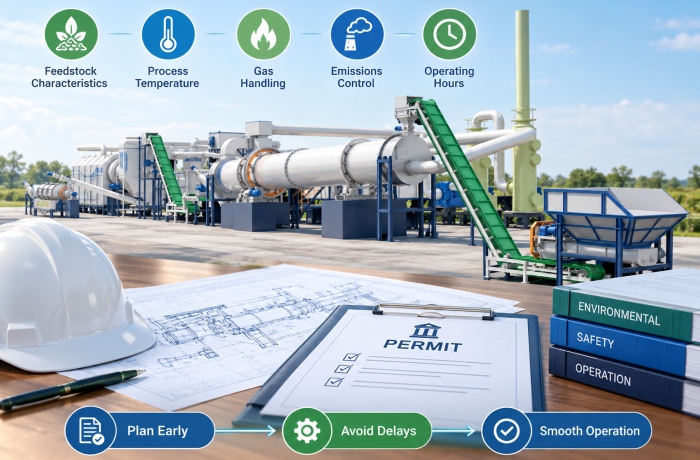 Biomass pyrolysis project planning and compliance
Permit requirements vary by country, state, and local authority, but several areas commonly need attention.
A biomass pyrolysis system may produce combustible gases and exhaust gases during operation. Depending on the process and local regulations, the project may need an air permit or emissions-related approval covering pollutants such as particulate matter, carbon monoxide, nitrogen oxides, volatile organic compounds, and other regulated substances.
The application may require information about:
Feedstock type and annual consumption
Planned processing capacity and operating hours
Pyrolysis temperature and process conditions
Syngas generation and utilization
Combustion equipment
Dust and exhaust gas control
Expected emission concentrations
This is why it is important to define the process before submitting the permit application. Changing the feedstock, throughput, furnace configuration, or gas-treatment system later can require additional engineering work or regulatory review.
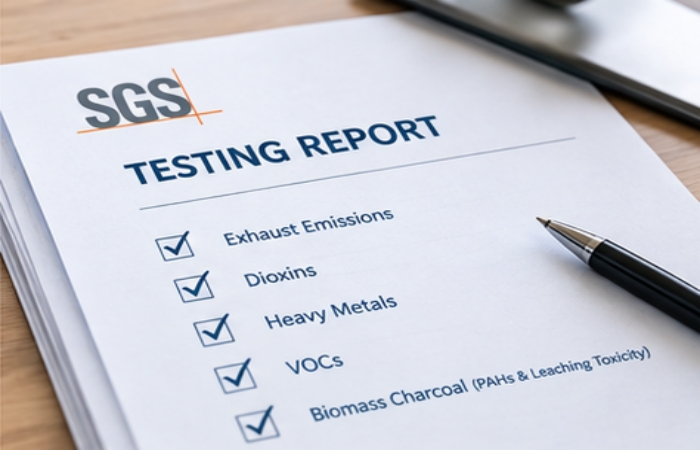 SGS testing of emissions and biomass charcoal
Other approvals may involve biomass storage, fire prevention, wastewater or stormwater management, solid residues, building construction, and land use.
Biomass storage deserves particular attention because large quantities of dry feedstock can create fire and dust risks. A project may therefore need a clear storage layout, fire protection measures, dust-control strategy, and emergency procedures.
The exact biomass pyrolysis project requirements depend on the local jurisdiction, so developers should confirm the applicable permits with the relevant environmental and planning authorities before finalizing the project design. This early review can also clarify which biomass pyrolysis project permits will be needed before construction and commissioning.
Emissions testing is often one of the areas that requires the most coordination because actual operating conditions matter. A permit application may use engineering calculations or expected emission factors, but authorities may also require testing after the plant is commissioned. If measured emissions do not meet the applicable limits, additional adjustments and testing may be necessary.
Typical concerns include:
Particulate emissions from biomass handling and processing
Dust from crushing, drying, or conveying
Combustion-related CO and NOx
VOCs and other organic compounds
Odor from feedstock storage or incomplete gas combustion
Visible emissions from exhaust systems
For a biomass pyrolysis emissions testing program, stable process operation is important. DOING ECO's continuous carbonization systems use PLC-based process control, controlled feeding and heating, slightly negative-pressure operation, syngas recovery, and supporting environmental equipment such as dust collection and exhaust treatment systems to help maintain stable operation and control emissions.
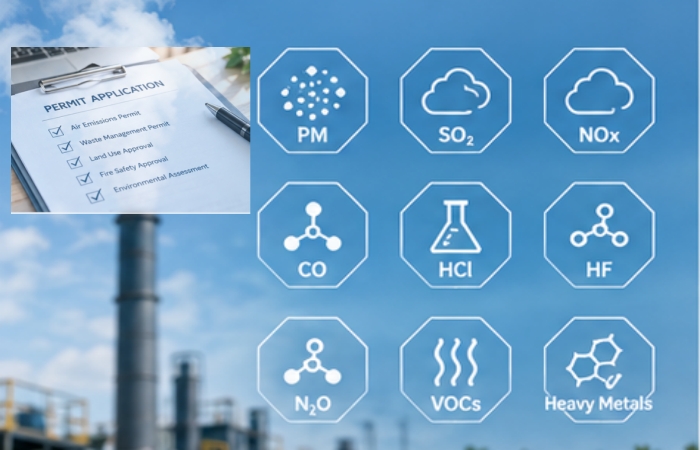 Emissions monitoring and permit preparation
The environmental system has also undergone SGS third-party testing. The testing covers key exhaust indicators including particulate matter, SO₂, NOx, CO, HCl, HF, N₂O, heavy metals, mercury, and VOCs. The measured results included 6.5 mg/m³ particulate matter, 12 mg/m³ SO₂, 128 mg/m³ NOx, 5 mg/m³ CO, 9.15 mg/m³ HCl, and less than 0.08 mg/m³ HF. Dioxin testing recorded a toxic equivalent concentration of 0.0009 ng TEQ/m³. In addition, SGS testing of biomass charcoal covered PAHs and leaching toxicity, with most tested PAH indicators not detected and phenanthrene measured at 0.01 μg/L.
These test results provide useful technical support when preparing environmental documentation, while actual compliance requirements still depend on the feedstock, process configuration, site, operating conditions, and applicable local regulations.
Even when a project meets technical requirements, local concerns can influence the approval timeline.
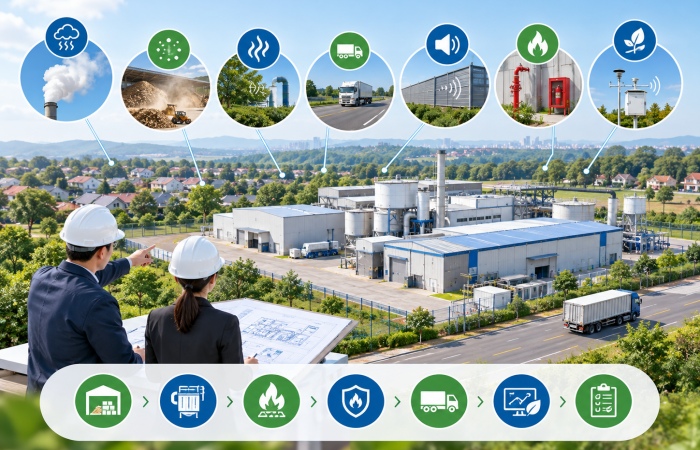
For biomass pyrolysis projects, nearby residents may be concerned about odor, smoke, dust, truck traffic, noise, fire risk, and potential air pollution. These concerns are especially important when a facility is planned close to residential areas or other sensitive locations.
A practical response is to address these issues before construction rather than waiting for complaints after startup.
For example, project planning can include:
Enclosed or controlled biomass handling areas
Pulse dust removal for dusty process points
Controlled combustion of combustible process gas
Proper biomass storage and fire protection
Defined truck routes and operating schedules
Regular emissions monitoring and maintenance
Clear procedures for abnormal operating conditions
The equipment design should support these measures, but the final requirements should always be based on the project's site conditions and local regulations.
 Environmental risks and community concerns
The biggest advantage of early compliance planning is that it connects the permit application with the actual plant design.
Before purchasing a biomass pyrolysis system, it is useful to prepare a basic technical package covering the feedstock, moisture content, particle size, daily and annual processing volume, operating hours, pyrolysis conditions, gas utilization, emission-control measures, and expected products.
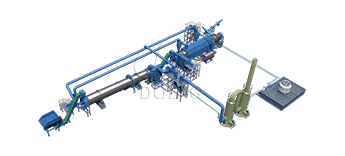
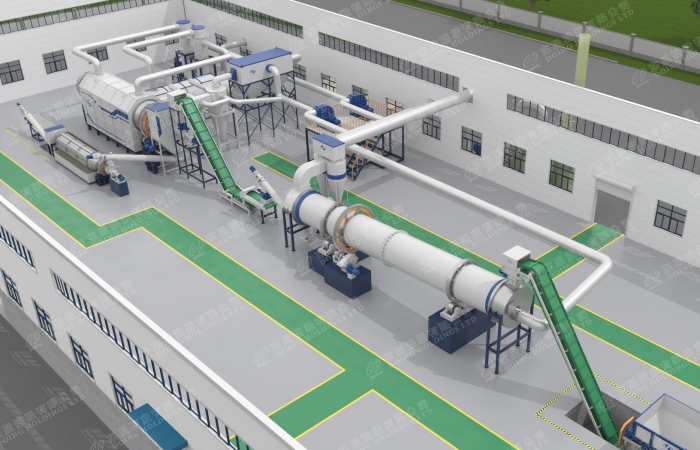
For example, DOING ECO's continuous carbonization equipment can be configured according to different biomass types and project capacities. A typical system uses a drying and carbonization process, with the generated syngas recycled for heating. PLC control helps monitor key operating parameters, while pulse dust removal can be incorporated where dust control is required.
 DOING ECO biomass carbonization equipment
For larger projects, capacity should also be expressed in both hourly and annual terms. For example, a xxxDY-1Ton/Hour system can be planned around its expected daily and annual processing volume based on actual operating hours. This information is useful when preparing both the equipment specification and the supporting permit documentation.
Most importantly, equipment selection should follow the project's actual feedstock and regulatory requirements—not simply the target tonnage.
The technical package should also be reviewed against the applicable biomass pyrolysis project requirements before equipment specifications are finalized. This helps ensure that the selected process configuration and supporting documentation are consistent with the project's permitting conditions.
Biomass pyrolysis project permits, emissions testing, and community concerns can all affect the project schedule if they are addressed too late. The safest approach is to identify applicable permits, define the expected emissions, assess site-specific concerns, and align the equipment configuration with those requirements before construction begins.
For developers planning a new biomass carbonization or pyrolysis project, DOING ECO can provide equipment selection, process design, emissions-control considerations, and technical support based on the feedstock and project capacity. Contact DOING ECO with your biomass type, moisture content, target capacity, and project location to discuss a suitable carbonization system and the technical information needed for project planning.
The timeline varies by location, project scale, feedstock, and permit requirements. Air emissions reviews, environmental assessments, public consultation, and additional technical documentation can all extend the schedule. Starting the permitting process before equipment procurement can help identify potential delays earlier.
In many jurisdictions, emissions testing may be required during commissioning or routine operation, depending on the applicable regulations and permit conditions. Testing can cover pollutants such as particulate matter, CO, NOx, VOCs, and other locally regulated emissions.
Authorities may request information about feedstock type and quantity, moisture content, processing capacity, operating hours, pyrolysis conditions, fuel or syngas use, emission-control systems, waste generation, and site conditions. The exact requirements depend on the local regulatory authority.
Yes. Moisture content can affect drying energy requirements, process stability, fuel consumption, and overall system performance. Providing representative feedstock data during the planning stage helps engineers select appropriate drying and carbonization equipment and prepare more accurate technical documentation.
Common measures include controlled biomass storage, enclosed material handling, dust collection, proper ventilation, stable pyrolysis operation, and controlled combustion of process gas. The appropriate combination depends on the feedstock, site layout, and local environmental requirements.
It is useful to provide the biomass type, moisture content, particle size, available feedstock quantity, target processing capacity, expected operating hours, desired biochar output, and project location. These details allow the manufacturer to recommend a more suitable process configuration and identify technical issues that may affect permitting or project implementation.

Please provide us with project information as much as possible.



Copyright © 2015-2026 DOING Holdings - Henan Doing Environmental Protection Technology Co., Ltd | Privacy Policy | All Rights Reserved