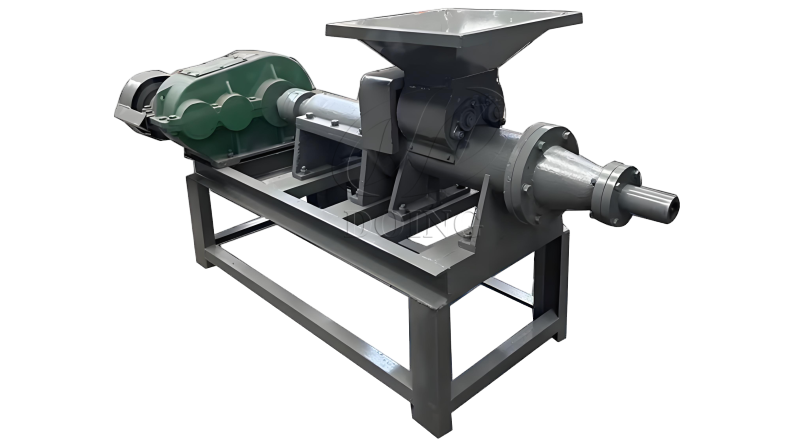

Ghana has a wide range of biomass resources that can be turned into useful products instead of being left to waste. Sawmills produce large amounts of sawdust and wood residues, while palm oil processing, coconut processing and agriculture generate other types of biomass waste. At the same time, charcoal remains an important cooking fuel in Ghana, creating an established market for charcoal products.
This makes charcoal production a practical way to add value to locally available biomass. Instead of selling or disposing of sawdust, wood waste, coconut shells or agricultural residues at a low value, businesses can use a carbonization system to turn suitable biomass into charcoal.
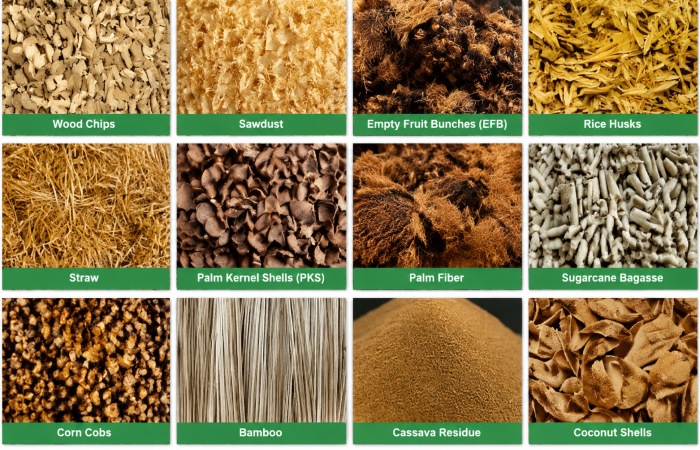 Biomass carbonization feedstock
But having biomass available is only the starting point. Before investing in a charcoal making machine in Ghana, you need to answer a few practical questions: What raw materials can you use? How much biomass can you process? What will the equipment cost? And what kind of production line actually fits your project?
Here is a closer look at each factor.
The best raw material for a charcoal production project is usually the biomass you can obtain consistently and economically.
Ghana has a variety of agricultural, forestry and agro-processing residues that can potentially be used for carbonization. Besides conventional wood materials, several locally available residues are worth considering.
| Raw material | Common source in Ghana | Preparation considerations |
| Sawdust | Sawmills and wood-processing plants | May require drying when moisture is high |
| Wood chips / wood waste | Timber and wood-processing industries | Large pieces may need crushing or chipping |
| Coconut shells | Coconut processing | Dense feedstock with good carbonization potential |
| Palm kernel shells (PKS) | Palm oil processing | Hard and dense, so feeding should be properly designed |
| Palm fiber | Palm oil mills | Moisture and particle size may need adjustment |
| Bamboo | Bamboo-growing and processing areas | Usually needs suitable size preparation |
| Corn cobs and stalks | Agricultural production | Moisture and particle size should be checked |
| Rice husks | Rice mills | Fine and lightweight, requiring suitable feeding |
| Cocoa pod husks | Cocoa farms and cocoa processing | Abundant in Ghana's cocoa-growing areas; moisture and particle size may need to be adjusted before carbonization |
The name of the biomass is only part of the story. Its size, moisture content and physical form are just as important.
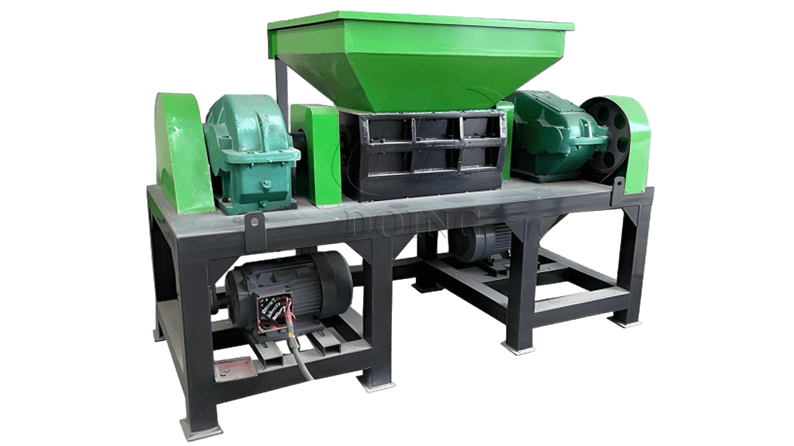
For example, large wood waste may need a crusher or chipper before it enters the carbonization system. Biomass with high moisture normally needs a dryer, while very fine and loose materials may require a different feeding method or, depending on the process, pelletizing or briquetting before carbonization.
This is why a reliable equipment supplier should first look at the actual biomass condition, rather than simply recommending a machine based on its name.
Charcoal machine capacity should be matched to your available biomass supply and target output.
This sounds simple, but it is one of the easiest things to get wrong when planning a new project.
Suppose you can reliably collect only a few tons of biomass per day. A large industrial carbonization line may look attractive on paper, but part of its capacity could remain unused. On the other hand, if you operate a sawmill, palm processing plant or biomass collection business with a stable supply of dozens of tons per day, a small machine could quickly become a production bottleneck.
For commercial biomass carbonization projects, equipment can be designed to process several tons to dozens of tons of biomass per day, depending on the feedstock, moisture content, operating hours and required output.
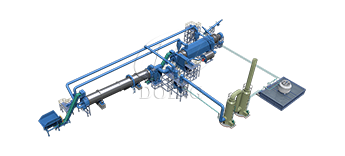
HENAN DOING mainly provides continuous biomass carbonization and charcoal production equipment, with the processing capacity customized according to the customer's raw material supply and production target.
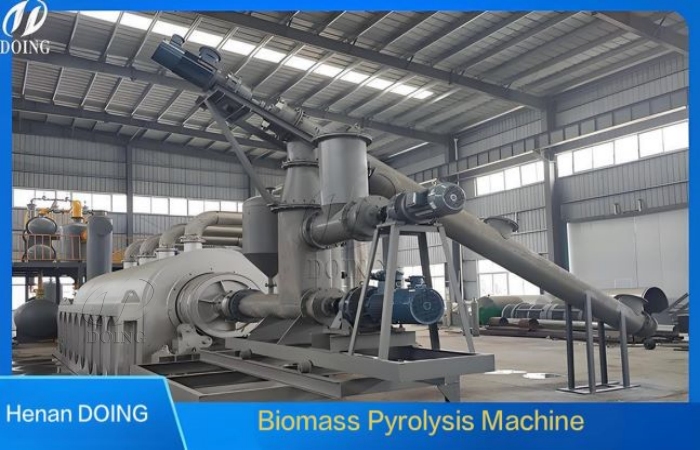 Charcoal production equipment
So instead of asking only, “What is the biggest charcoal making machine I can buy?”, it is better to ask:
“How much suitable biomass can I supply consistently, and how much charcoal do I actually need to produce?”
That number gives you a much more useful starting point for equipment selection.
There is no single price for a charcoal making machine in Ghana because the complete production line can be configured very differently from one project to another.
As a general reference, a basic batch/intermittent charcoal production line may start at around US$50,000–80,000, while a larger continuous charcoal production line may range from around US$120,000 to over US$300,000.
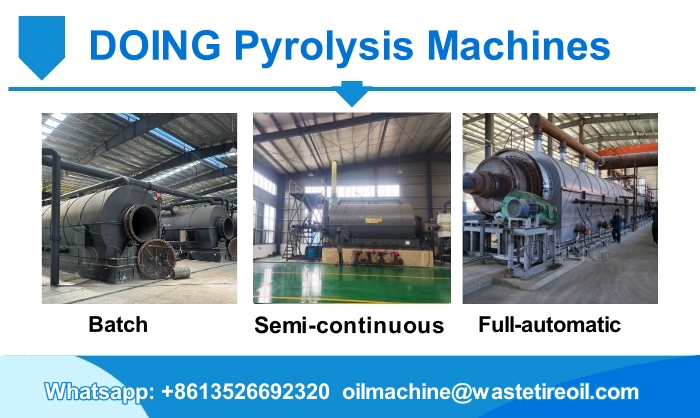 HENAN DOING biochar making machine
These figures are indicative rather than fixed prices. The actual quotation depends mainly on the processing capacity, raw material condition, required auxiliary equipment and final charcoal product.
What Determines the Cost?
Several factors can make a significant difference to the final equipment price:
| Cost factor | How it affects the production line |
| Production capacity | Higher-capacity projects require larger carbonization systems, feeding equipment, cooling systems, conveyors and other supporting equipment, so the initial investment is generally higher. |
| Raw material size and moisture | Large wood waste may require a crusher or chipper. High-moisture biomass normally needs a dryer. Very fine or loose materials may require a suitable feeding or forming system. |
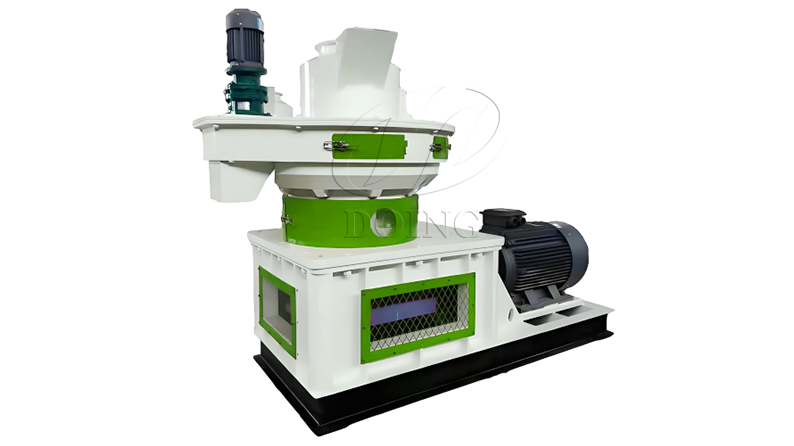
| Final charcoal product | Lump charcoal requires relatively simple downstream processing, while charcoal briquettes, blocks or sticks need additional crushing, mixing, forming and, in some cases, drying equipment. |
For example, two customers may both want a charcoal production line with the same processing capacity, but their final quotations can still be different. One may already have dry, properly sized biomass, while the other may need a crusher + dryer + feeding system before the material can enter the carbonization furnace.
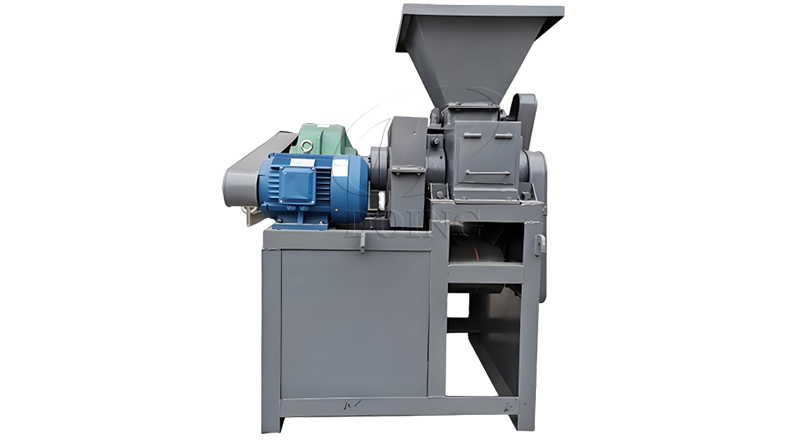
The final product also matters. If you only need lump charcoal, the downstream process can be relatively simple, usually involving cooling, screening and packaging. If you plan to produce charcoal briquettes, blocks or sticks, additional forming equipment will be required.
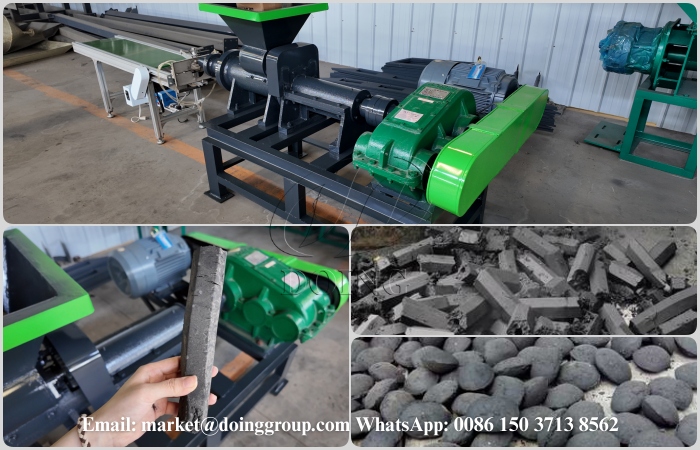 Charcoal briquettes making machine
For this reason, when comparing the charcoal making machine price in Ghana, don't compare the furnace price alone. Compare what is actually included in the complete production solution.
A lower quotation may look attractive at first, but if it excludes equipment that your raw material or final product requires, the final project cost can end up being much higher.
Once you have worked out your raw material, capacity and approximate budget, the choice becomes much clearer.
Start with the biomass supply. How much can you obtain every day? Is the supply available year-round? How far does it need to be transported? These questions matter because a charcoal plant can only run economically when there is a reliable feedstock supply.
Then check the physical condition of the material. Large pieces, high moisture and very fine materials can all affect the equipment configuration. A crusher, chipper or dryer may be necessary before carbonization.
Next, decide what you actually want to sell. If the target is lump charcoal, the production line can remain relatively simple. If you want standardized briquettes, blocks or sticks, you will need additional forming and processing equipment.
For larger commercial projects with a stable biomass supply and high daily processing requirements, a continuous charcoal production line is generally worth considering. Continuous feeding and discharge make it better suited to sustained industrial operation than a system that has to be repeatedly loaded and unloaded.
You should also look beyond the machine itself. Installation space, labor requirements, energy use, emission control, spare parts and after-sales technical support can all affect the long-term performance and operating cost of a project.
Most importantly, don't choose a machine simply because it has the lowest purchase price. The right machine is the one that fits your raw material, production target and overall business plan.
There is no one-size-fits-all charcoal making machine in Ghana.
A practical equipment recommendation comes from looking at the whole picture:
Raw material + moisture + particle size + processing capacity + final product + investment budget.
HENAN DOING specializes in biomass carbonization and continuous charcoal production equipment, with production lines customized around different feedstocks and processing requirements.
If you already have a biomass source in Ghana, you can send us:
·What raw material you have
·How much is available per day
·The approximate moisture content, if known
·The required processing capacity
·The final charcoal product you want to make
Our engineering team can use this information to recommend the appropriate equipment configuration and provide a project-specific quotation.
Have biomass available in Ghana and want to know how much a suitable charcoal making machine would cost? Contact HENAN DOING with your raw material and capacity requirements, and let us work out the right production solution for you.
1. How much does a charcoal making machine cost in Ghana?
A charcoal making machine in Ghana can cost from around US$50,000–80,000 for a basic batch system to US$120,000–300,000+ for a larger continuous production line. The final price depends on capacity, raw material preparation, and the required final product.
2. What raw materials can be used in a charcoal making machine?
Common biomass feedstocks include sawdust, wood chips, coconut shells, palm kernel shells, palm fiber, bamboo, corn cobs and other agricultural residues. The suitable equipment configuration depends on the material's size, moisture content and physical form.
3. What capacity charcoal making machine is suitable for a Ghana project?
The suitable capacity depends mainly on the amount of biomass available consistently and the desired production output. HENAN DOING provides customized biomass carbonization systems ranging from several tons to dozens of tons of processing capacity per day.
4. Does biomass need to be dried before carbonization?
High-moisture biomass generally needs to be dried before carbonization. If the raw material is already sufficiently dry, a separate drying system may not be necessary. The required moisture level should be determined based on the specific feedstock and production process.
5. Can HENAN DOING customize a charcoal production line for Ghana?
Yes. HENAN DOING can customize the charcoal production line according to the customer's raw material, processing capacity, moisture content, particle size and final charcoal product. Customers can provide their biomass information and production requirements for an equipment recommendation and quotation.

Please provide us with project information as much as possible.



Copyright © 2015-2026 DOING Holdings - Henan Doing Environmental Protection Technology Co., Ltd | Privacy Policy | All Rights Reserved