
With biochar becoming increasingly popular for soil amendment, carbon sequestration, and industrial applications, more and more investors are looking into biochar production. But when setting up an actual operation, one core question always comes up: Which biomass feedstock has a high biochar yield after pyrolysis? After all, your output ratio directly impacts the project's economic benefits.
Before we dive into specific materials, let's look at the basic structure of biomass. Biomass is primarily made up of cellulose, hemicellulose, and lignin. During pyrolysis, cellulose and hemicellulose easily vaporize into syngas and wood vinegar. Lignin, on the other hand, has a complex aromatic ring structure that makes it much harder to break down, allowing it to remain intact and form solid biochar.
The golden rule here is simple: the higher the lignin content in your feedstock, the higher your biochar yield will be.
Based on this principle, the following types of biomass consistently deliver excellent biochar yields during pyrolysis:
Nut shells are incredibly dense and packed with lignin. Under the right pyrolysis temperatures, these materials boast an impressive biochar yield of 30% to 40%. Beyond just quantity, the resulting biochar is highly durable with a well-developed porous structure, making it the perfect raw material for high-end activated carbon and water filtration adsorbents.
Forestry residues and scrap wood from sawmills are go-to materials for carbonization. Specifically, dense hardwoods such as oak, hickory, beech, and maple are particularly favored for their exceptional carbon conversion rates. Under suitable pyrolysis conditions, the biochar yield typically hits around 30% to 40% on a dry basis, making woody biomass an excellent choice when you need both high production volume and stable carbon content. Furthermore, the biochar produced from wood has a high heating value, making it ideal for use as an industrial fuel or soil amendment.
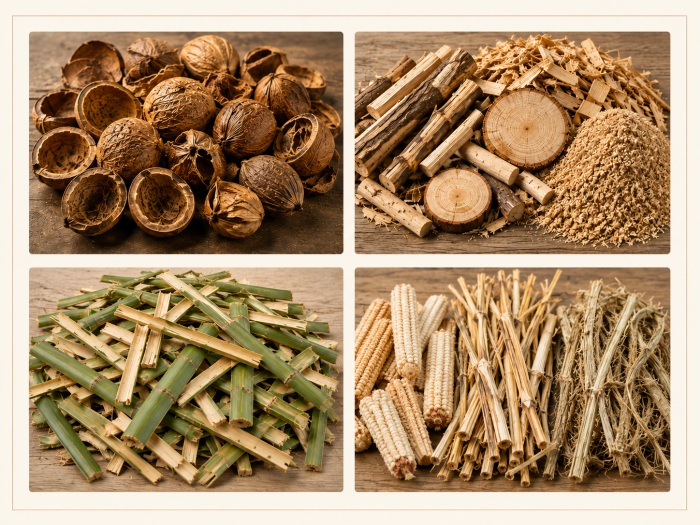 Biochar high-yield biomass feedstock
Bamboo grows incredibly fast and features a tight, dense fiber structure. Pyrolyzing bamboo yields "bamboo charcoal," typically netting a solid 25% to 35% yield. Thanks to its unique micro-porous structure, bamboo charcoal is in high demand across markets like odor control, air purification, and water treatment.
While most standard agricultural residues (like rice straw or corn stalks) are high in cellulose and low in lignin—meaning lower biochar yields—"hard" agricultural wastes are the exception. Corncobs, cotton stalks, and hemp stalks have a much higher degree of lignification. They deliver surprisingly good biochar yields and represent a highly cost-effective, locally sourced option for agricultural regions.
Picking the right high-yield feedstock is only half the battle. In practice, pyrolyzing the exact same batch of coconut shells or wood chips using different methods will give you drastically different yields and quality. Beyond the raw material itself, your pyrolysis conditions are critical:
Pyrolysis Temperature: As a general rule, yield drops as the temperature rises. Lower temperatures (350°C–500°C) maximize the production of solid biochar, while excessively high temperatures convert more of the carbon into combustible gas.
Heating Rate: "Slow pyrolysis"—a gradual heating process with ample reaction time—allows the lignin to fully restructure and carbonize. This is the industry-standard method for achieving the highest possible biochar yields.
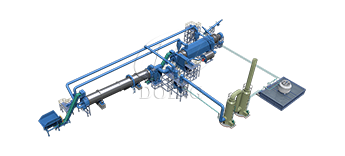
At DOING Company, our equipment R&D focuses specifically on "locking in" carbon and ensuring uniform processing. To achieve this, DOING biomass pyrolysis plants utilize a specialized Double-cylinder Structure designed specifically to maximize biochar yield:
①Precise Temperature Zoning: The inner cylinder handles low-temperature drying and pre-pyrolysis, while the outer cylinder manages the final carbonization. This design naturally creates a step-by-step heating curve that perfectly aligns with slow pyrolysis requirements.
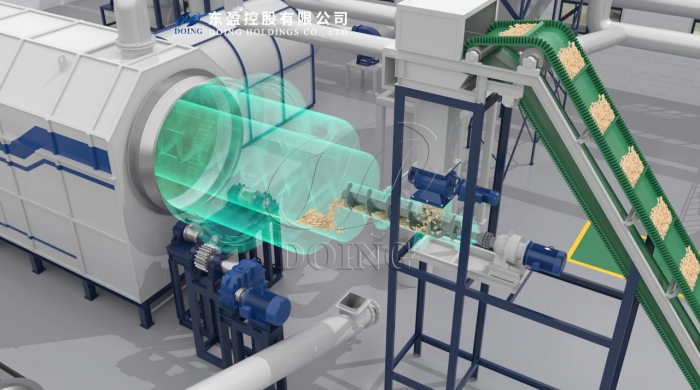 DOING double-cylinder structure biomass pyrolysis plant
②Boosted Yield and Consistent Quality: Indirect hot-air heating ensures a uniform furnace temperature, preventing localized, sudden temperature spikes that would cause large quantities of raw material to gasify and burn off; Zoned temperature control promotes the macromolecular condensation of lignin and prevents localized overheating (which would otherwise waste carbon as gas). This incredibly uniform furnace temperature not only drives up your overall biochar yield but also guarantees that the final product is consistently high-quality across the board.
If you want to maximize your biochar yield, prioritize high-lignin biomass like nut shells, woody wastes, and bamboo, and process them using professional, scientifically designed pyrolysis equipment.
If you are looking for an efficient, stable, and high-yielding carbonization machine, the team at DOING is here to help! Our engineers can evaluate your specific feedstock properties and tailor a pyrolysis solution perfectly suited to your business needs. Feel free to contact us today!
Biomass with higher lignin content generally produces more biochar. Coconut shells, other nut shells, woody waste, and bamboo are suitable high-yield feedstocks.
Generally, a lower pyrolysis temperature favors higher solid biochar yield. The article identifies 350°C–500°C as a suitable range for maximizing biochar production.
Yes. Slow pyrolysis allows more gradual heating and longer reaction time, which helps retain more carbon in the solid biochar.
A biomass pyrolysis plant with uniform heating and precise temperature control is suitable for high-yield biochar production. DOING can provide a customized solution based on the feedstock.

Please provide us with project information as much as possible.



Copyright © 2015-2026 DOING Holdings - Henan Doing Environmental Protection Technology Co., Ltd | Privacy Policy | All Rights Reserved