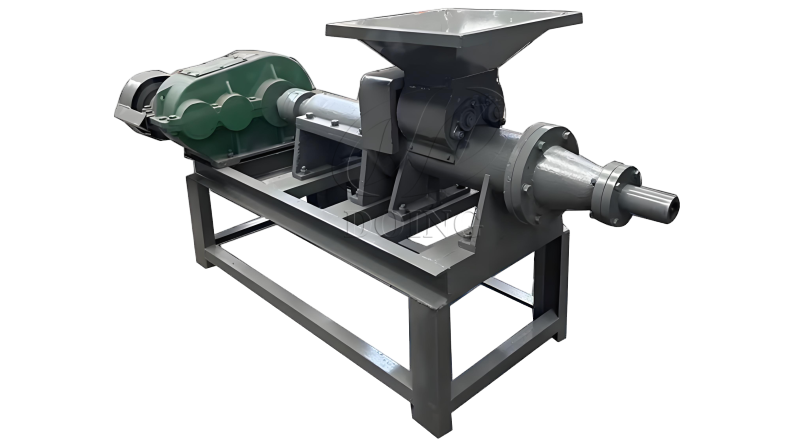

As the global market moves toward renewable energy and circular economy models, converting agricultural and forestry waste into useful products is becoming increasingly important. Biochar production provides a practical way to turn biomass residues into a carbon-rich material while recovering energy from the pyrolysis process. For projects requiring stable operation and larger processing capacity, industrial-scale biochar pyrolysis technology, particularly continuous carbonization stoves, offers an efficient solution for commercial biomass conversion.
A continuous carbonization stove converts biomass into biochar through controlled pyrolysis in an oxygen-limited environment. Materials such as bamboo, rice husk, wood chips, palm kernel shells, sawdust, and other agricultural or forestry residues can be processed after suitable preparation. The biomass is continuously fed into the reactor, heated under controlled conditions, and gradually converted into biochar before being discharged from the system.
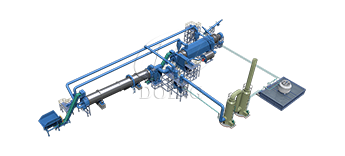
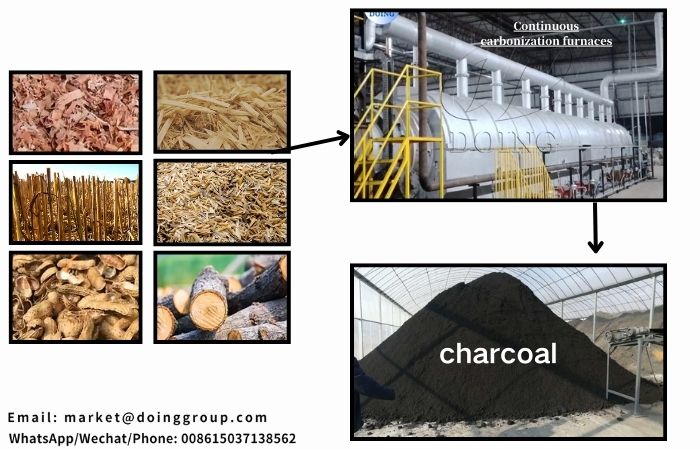 DOING ECO biomass continuous carbonization machine
The basic process is biomass preparation → continuous feeding → controlled pyrolysis → gas recovery → biochar discharge. Unlike batch operation, the material does not need to be loaded and unloaded for every carbonization cycle, allowing the system to maintain a more stable production flow for long operating periods.
For industrial biochar production, actual output depends not only on the rated capacity of the reactor but also on how consistently the feeding, heating, carbonization, and discharge processes operate. DOING ECO provides continuous carbonization stoves with processing capacities from 1 to 5 tons per hour, covering different scales of commercial and industrial biochar production projects. For projects requiring a larger processing capacity, customized carbonization equipment can also be designed according to the customer's biomass supply, production target, and site conditions. A continuous carbonization stove is designed to keep these processes running together, reducing interruptions caused by repeated loading and unloading.
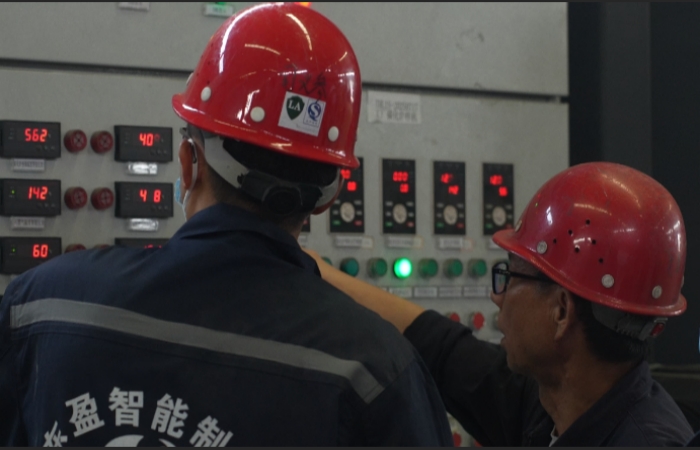 PLC automation control system
DOING ECO integrates automated feeding and discharge with PLC-based control in its continuous carbonization solutions. The control system helps operators monitor equipment status and coordinate key operating conditions, reducing dependence on constant manual adjustment and supporting more consistent operation.
Biomass pyrolysis generates combustible gas during carbonization. A properly designed continuous system can collect this gas and reuse it as a heat source for the reactor. Once the system reaches stable operating conditions, the recovered gas can provide a significant portion of the heat required for carbonization, reducing the need for continuously supplied external fuel.
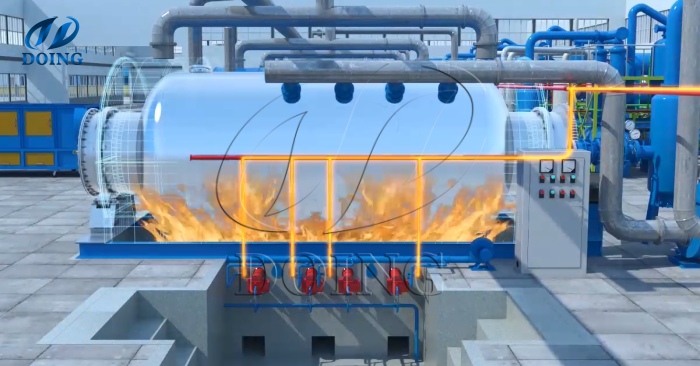 Heating of the exhaust gas recovery reactor
This energy-recovery approach is an important consideration when evaluating operating costs. However, external energy or fuel may still be required during startup or under certain operating conditions, so the actual energy balance depends on the feedstock and system design.
Biochar quality is affected by factors such as carbonization temperature, residence time, biomass moisture, particle size, and heating uniformity. If these conditions fluctuate significantly, the characteristics of the final biochar can also vary.
The reactor design and carbonization parameters therefore play an important role. DOING ECO's carbonization stove uses a double-cylinder structure: the inner cylinder is used for preheating and moisture removal, while the outer cylinder provides the main pyrolysis and carbonization zone. This arrangement helps reduce excessive water-gas reactions during carbonization and limits fixed-carbon loss. With a relatively long residence time of more than 50 minutes and a carbonization temperature of around 500°C, the biomass has sufficient time for condensation and polymerization reactions, which supports a higher biochar yield and higher fixed-carbon content.
Different biomass materials behave differently during thermal processing. Rice husk, bamboo, wood chips, and palm kernel shells can have significant differences in moisture, structure, bulk density, and heat-transfer characteristics. Excessive moisture is particularly important because part of the thermal energy will be consumed in water evaporation rather than carbonization.
For this reason, DOING ECO evaluates the customer's feedstock before determining the equipment configuration. Information such as biomass type, moisture content, particle size, available supply, required capacity, and intended biochar application helps engineers determine whether drying, crushing, screening, or other pretreatment is needed.
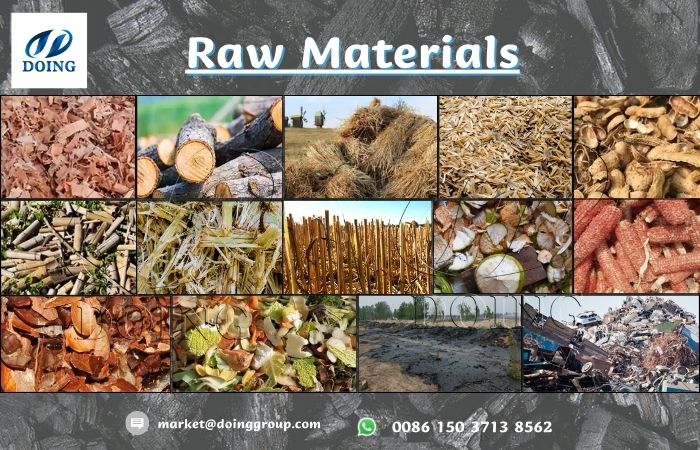 Carbonized biomass raw material
For industrial thermal equipment, specifications alone cannot show how a system will perform with actual biomass. Equipment testing provides a more practical way to evaluate feeding, reactor temperature, gas generation, heating performance, biochar discharge, and other operating conditions.
Before purchasing a continuous carbonization stove, it is important to evaluate the complete project rather than comparing machines only by price or advertised capacity.
| Factor | Why It Matters |
| Feedstock type | Determines suitable carbonization conditions and equipment configuration. |
| Moisture content | Affects drying requirements and overall energy consumption. |
| Particle size | Influences feeding, heat transfer, and material residence time. |
| Required capacity | Determines the appropriate reactor size and production configuration. |
| Biochar application | Different applications may require different product characteristics. |
| Energy utilization | Pyrolysis gas recovery can influence external fuel requirements. |
| Emission requirements | Determines the appropriate flue gas treatment system. |
| Site conditions | Affects plant layout, equipment arrangement, and installation. |
Providing these details to the equipment manufacturer can make the initial technical evaluation much more accurate and help avoid choosing a system that does not match the actual feedstock or production target.
The main value of industrial-scale biochar pyrolysis technology is its ability to combine continuous biomass conversion with energy recovery. Agricultural and forestry residues can be converted into a carbon-rich product, while combustible gas generated during pyrolysis can be reused within the process.
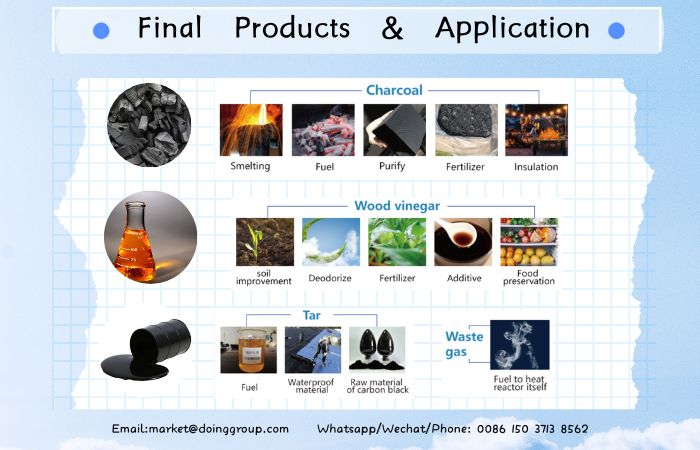 The final products and applications of biomass carbonization
For commercial projects, however, equipment is only one part of the investment decision. Feedstock cost and availability, biochar yield, product market, energy consumption, labor, transportation, maintenance, and environmental requirements all influence the final economics. A suitable carbonization system should therefore be selected according to the actual biomass and production requirements, rather than simply choosing the largest available machine.
Henan Doing Environmental Protection Technology Co., Ltd. (DOING ECO) provides biomass carbonization equipment and engineering solutions for agricultural, forestry, and other biomass residues. Our approach starts with the customer's feedstock and production requirements rather than a standard machine configuration.
If you are planning a continuous biochar production project, send us your biomass type, approximate moisture content, available feedstock volume, required processing capacity, and intended use of the biochar. Our engineers can use this information to evaluate the suitable carbonization process and equipment configuration for your project.
Contact DOING ECO to discuss your biomass carbonization project and find a continuous carbonization solution suited to your actual production conditions.

Please provide us with project information as much as possible.



Copyright © 2015-2026 DOING Holdings - Henan Doing Environmental Protection Technology Co., Ltd | Privacy Policy | All Rights Reserved