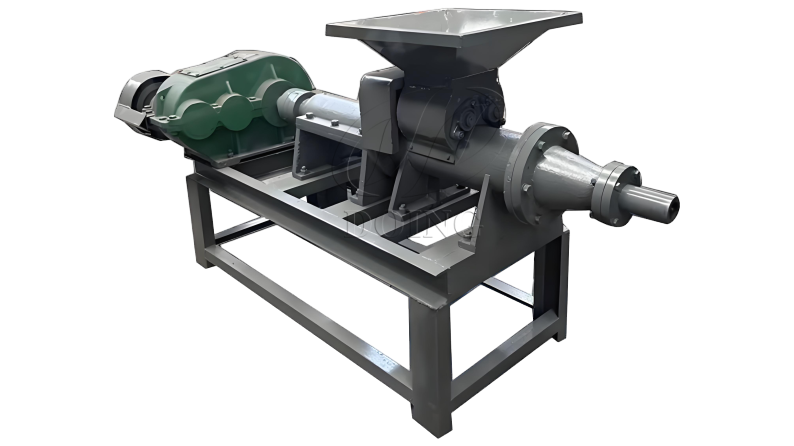

Continuous carbonization plants and batch charcoal kilns differ in production methods, process control, and emissions management. Continuous systems support steady production and consistent operating conditions, while batch kilns process biomass in separate cycles. However, biochar quality and carbonization emissions depend on more than the operating mode. Feedstock properties, temperature control, reactor design, and exhaust treatment all affect the results.
For industrial buyers, the key is to compare biochar quality, emissions control, production requirements, and operating costs before selecting biomass carbonization machine.
Continuous carbonization plants feed biomass into the reactor and discharge biochar during operation. Batch charcoal kilns process a fixed load through separate loading, carbonization, cooling, and unloading stages.
| Comparison | Continuous Carbonization Plants | Batch Kilns |
| Production | Continuous feeding and discharge | Separate production cycles |
| Process control | Automated monitoring supports stable operation | Depends on kiln design and operating procedures |
| Biochar quality | Stable operating conditions can improve consistency | Depends on heating uniformity and batch control |
| Emissions management | Gas recovery and exhaust treatment can be integrated | Similar systems can be installed according to the design |
Continuous carbonization plants are generally suitable for projects requiring sustained output and repeatable operating conditions. Batch charcoal kilns can be practical for smaller-scale production or operations with intermittent feedstock supplies. The right choice depends on production requirements and the performance of the complete system.
Biochar quality depends on feedstock type, moisture content, particle size, carbonization temperature, and residence time. Uneven heating or inconsistent feeding can result in under-carbonized material or excessive thermal treatment.
Continuous carbonization plants can help maintain more consistent biochar quality when feeding, temperature, and material residence time are properly controlled. Batch charcoal kilns can also produce biochar that meets defined specifications when each batch is managed effectively. Buyers should compare measured properties such as fixed carbon, volatile matter, and ash content rather than assuming that one operating mode always produces better biochar.
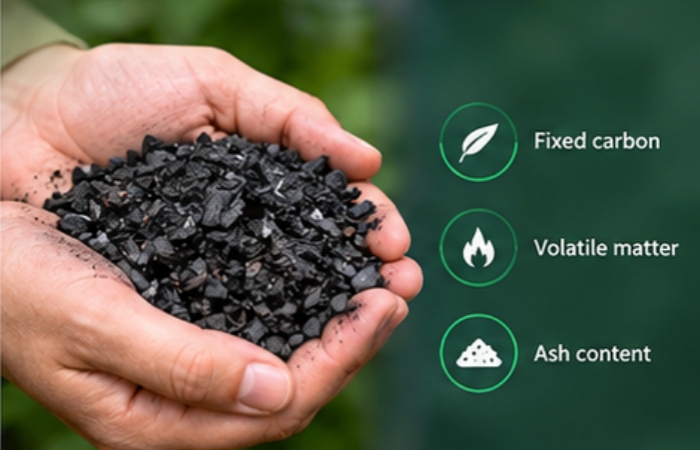 Biochar quality comparison
The main advantage of continuous carbonization is its potential to maintain consistent production conditions, not a guarantee of superior product quality. Proper feedstock preparation and process control remain essential in both systems.
Carbonization emissions depend on how process gases are collected, recovered, combusted, and treated. Continuous carbonization plants can integrate combustible gas recovery, condensation, wood vinegar collection, tar separation, and exhaust treatment into a coordinated production line. Batch charcoal kilns can also use these systems when configured for their operating cycles.
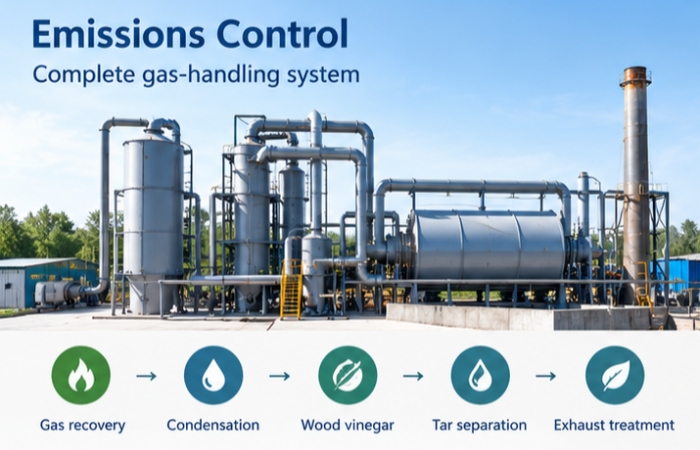 Carbonization emissions and gas control
For buyers comparing carbonization emissions, the key consideration is the complete gas-handling system rather than the equipment type alone. Continuous operation can support coordinated gas treatment, but actual emissions performance must be verified through relevant test results under specific operating conditions.
Continuous carbonization plants are worth evaluating when a project requires sustained production, stable operating conditions, and consistent biochar output. Batch charcoal kilns may be more suitable when feedstock supply is irregular or production is organized around individual batches.
Before selecting biomass carbonization equipment, buyers should consider feedstock characteristics, target capacity, biochar specifications, local emissions requirements, and operating costs. These factors help determine which system offers the most practical balance of production performance and environmental control.
DOING ECO (Henan DOING) provides both continuous and batch carbonization solutions for different feedstocks and production requirements. For projects seeking sustained production while balancing biochar consistency and emissions management, DOING ECO’s continuous carbonization machine is a key option.
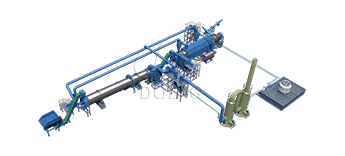
In DOING ECO’s solution, the continuous system features a double-cylinder design: the inner cylinder handles low-temperature drying and pre-carbonization, while the outer cylinder completes carbonization. Combined with PLC-based control, this configuration helps manage temperature distribution and material movement, supporting more consistent operating conditions and reducing the risk of local overheating or incomplete carbonization.
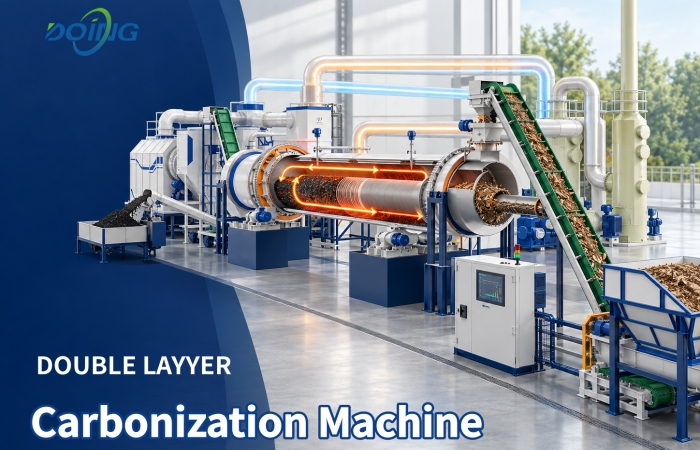 DOING ECO continuous double-cylinder carbonization machine
The system can also integrate combustible gas recovery, condensation, wood vinegar collection, tar separation, and exhaust treatment according to project requirements. Coordinating carbonization and gas handling within one system helps manage process gases while supporting efficient production. Actual biochar quality and emissions performance still depend on feedstock, operating conditions, and the selected treatment configuration.
For projects that require a different production schedule, DOING ECO's batch carbonization solution remains an alternative. The final configuration depends on feedstock properties, target capacity, biochar requirements, and emissions standards.
Contact DOING ECO with your biomass type, moisture content, target capacity, and intended biochar application to identify a suitable carbonization system and gas treatment configuration.
It can. Stable feeding and temperature control help maintain consistent operating conditions, but feedstock properties and process management also affect biochar quality.
No. Emissions depend on gas collection, combustion, condensation, and exhaust treatment. Actual performance should be verified through relevant testing.
Compare feedstock availability, required production capacity, target biochar properties, operating requirements, and local emissions standards before selecting a system.

Please provide us with project information as much as possible.



Copyright © 2015-2026 DOING Holdings - Henan Doing Environmental Protection Technology Co., Ltd | Privacy Policy | All Rights Reserved