
What are the key differences between wood vinegar recovery and biochar-focused carbonization systems? The main difference is the design priority. A carbonization system designed for wood vinegar recovery focuses on condensing and collecting liquid products from pyrolysis vapors, while a system focused on maximizing biochar yield prioritizes feedstock preparation, carbonization conditions, heat management, and solid product output.
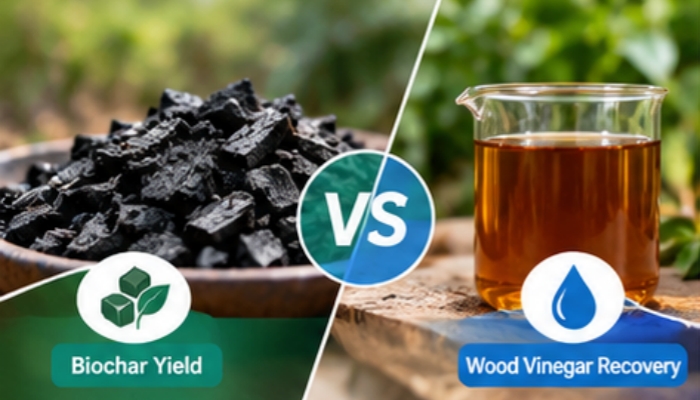 Wood vinegar recovery and biochar-focused production
These objectives are not mutually exclusive. A properly configured biomass carbonization system can produce biochar while also recovering wood vinegar. The suitable design depends on the raw material, target products, required capacity, and the project's economic priorities.
| Comparison Factor | Wood Vinegar Recovery | Biochar Yield |
| Primary objective | Recover and collect condensable liquid products | Increase solid biochar output |
| Main design focus | Condensation, liquid collection, and tar separation | Feedstock preparation, heating control, and carbonization conditions |
| Key performance indicators | Recovered liquid quantity, composition, and suitability for further processing | Biochar yield, product characteristics, and production consistency |
| Additional equipment considerations | Condensation, collection, separation, and refining equipment as required | Feeding, drying, carbonization, cooling, and biochar discharge systems |
| Main selection consideration | Potential value and intended use of recovered wood vinegar | Biochar market requirements, output, and production economics |
The distinction lies mainly in the system configuration and operating priorities rather than in two completely separate carbonization technologies. Both systems generate multiple products during biomass pyrolysis, but the equipment and process conditions determine how those products are managed.
Wood vinegar recovery requires more than generating pyrolysis vapors. The system must provide suitable condensation and collection arrangements to recover condensable products from the vapor stream.
Depending on the feedstock and project requirements, a biomass carbonization plant may include a condensation system, a wood vinegar collection system, and tar separation equipment. Additional separation or refining may be required before the recovered liquid can be used for a specific application.
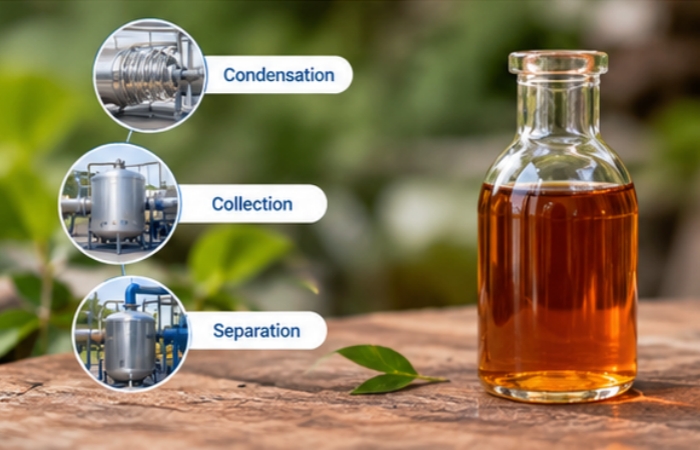 Carbonization device for wood vinegar recovery
Proper handling also matters for long-term operation. Uncontrolled tar deposits can restrict gas flow, increase cleaning requirements, and contribute to maintenance problems. Integrating condensation and tar separation into the original carbonization system design helps manage these condensable products before the remaining gas moves to subsequent processing or reuse stages.
Therefore, buyers evaluating wood vinegar recovery should consider the complete recovery process, including collection, separation, storage, and the intended use of the recovered liquid—not simply whether the carbonization machine produces wood vinegar.
A carbonization system focused on biochar yield aims to retain more feedstock carbon in the solid product while achieving the required biochar characteristics.
Several factors influence the result:
Feedstock preparation: Raw material type, moisture content, and particle size affect heat transfer and process stability. Suitable preparation helps establish consistent carbonization conditions.
Carbonization temperature and residence time: These parameters influence the distribution of solid, liquid, and gaseous products. Increasing the final temperature can reduce solid yield while changing fixed-carbon content and volatile matter. The actual result depends on the feedstock and operating conditions.
Heating uniformity and heat management: Stable heating helps reduce uneven carbonization and supports more consistent biochar production. Recovering combustible gas for process heating can also help reduce dependence on external fuel.
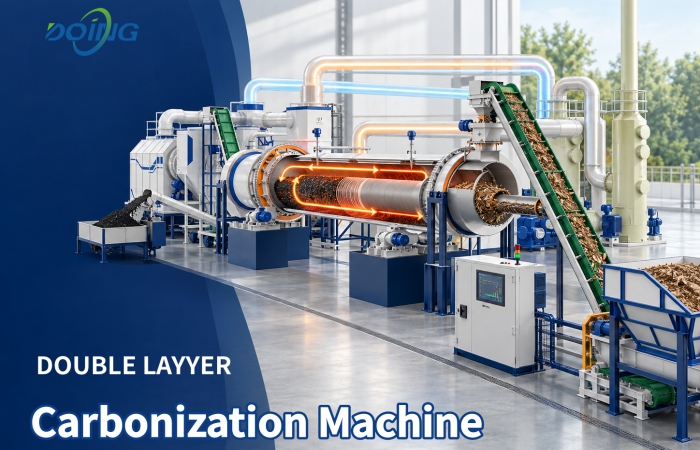 DOING double-cylinder biomass carbonization machine
For projects prioritizing solid biochar production, DOING ECO (Henan DOING) biomass carbonization machine uses a double-cylinder carbonization structure designed to improve fixed-carbon yield and maintain consistent biochar quality. The inner cylinder handles low-temperature drying and pre-pyrolysis, while the outer cylinder carries out carbonization. This staged process promotes the condensation of large molecules, supports more uniform furnace temperatures, and helps achieve higher biochar yield and more consistent product quality.
Maximizing biochar yield does not necessarily mean maximizing product quality at every possible operating condition. The appropriate target must balance solid output with the intended application and product specifications.
The right carbonization system should be selected according to the project's main revenue source and product requirements rather than a single equipment parameter.
Before selecting biomass carbonization equipment, buyers should clarify four points:
Feedstock: What type of biomass will be processed, and what are its moisture content and particle size?
Target products: Is biochar the primary product, or is wood vinegar recovery also an important part of the business plan?
Production requirements: What processing capacity and operating schedule are required?
Downstream utilization: Will the recovered wood vinegar be sold, further refined, or used for another application? What collection and treatment arrangements are needed?
For a biochar-focused project, the priority is to match the carbonization process to the required solid output and product specifications. For a wood vinegar recovery project, the condensation and collection system must also be considered as part of the overall plant configuration.
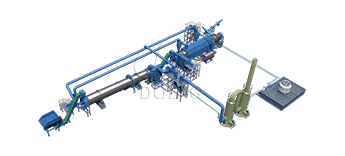
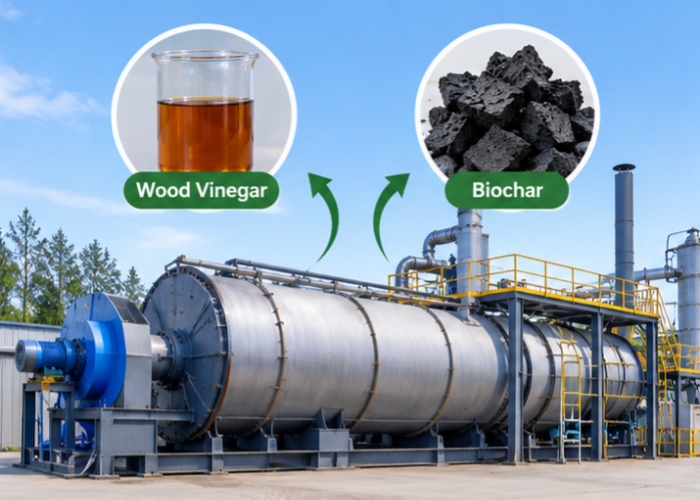 Carbonization system for wood vinegar recovery and biochar production
When both biochar and wood vinegar have commercial value, an integrated carbonization system may be a suitable option. The system design should consider feedstock conditions, product requirements, auxiliary equipment, energy use, and operating costs. For example, DOING ECO’s 5 t/h biomass carbonization project in Romania combines biochar production for carbon sequestration with wood vinegar recovery and refining for fertilizer applications, demonstrating how one project can address both product objectives.
The right carbonization system depends on your main product target: biochar yield, wood vinegar recovery, or both. Before selecting equipment, evaluate your feedstock type, moisture content, required processing capacity, desired biochar properties, and wood vinegar collection requirements.
Planning a biomass carbonization project? Contact DOING ECO with your feedstock details, target capacity, and product requirements. Our team can help assess a suitable carbonization system configuration for your project.
Yes. A carbonization system can produce both solid biochar and condensable liquid products. Appropriate condensation and collection equipment can recover wood vinegar while the carbonization process is configured to meet the required biochar specifications.
Not automatically. Biochar yield depends on factors including feedstock characteristics, carbonization temperature, and residence time. Recovering wood vinegar and producing biochar can be combined, but the process conditions and expected product distribution need to be evaluated together.
No. The best system depends on the intended biochar application, required product characteristics, and project economics. A higher solid yield should be evaluated alongside product quality, energy consumption, and the potential value of recovered by-products. For projects targeting both biochar production and wood vinegar recovery, the most suitable carbonization system is one that balances product requirements, recovery arrangements, and long-term operating costs.

Please provide us with project information as much as possible.



Copyright © 2015-2026 DOING Holdings - Henan Doing Environmental Protection Technology Co., Ltd | Privacy Policy | All Rights Reserved